
Peak & Pause: Wearing the Autumn Mountains, Creating Freedom Through Pop Colors
“Leaving behind the overwhelming signals of the concrete jungle, a new generation steps into rugged rock formations and cool autumn winds. Rather than simply conquering mountains, 21st-century K-youth ‘wear’ the outdoors through vibrant and stylish Gorpcore looks, breaking the boundaries between trails and cities while redefining the true balance of life.”
[PROLOGUE] The Moment to Unplug the Gray Concrete City
At the heart of Seoul, surrounded by towering buildings of glass and steel, there is a constant stream of noise echoing throughout the year: the alert sounds of work emails divided into seconds, endlessly updating digital data, and the invisible pressure of productivity.
The capital of Korea, a city celebrated for its extreme efficiency and speed, paradoxically demands continuous mental exhaustion from those who live within it. In a metropolitan routine that never stops for 24 hours, modern people’s minds continue to overheat, while their senses gradually become dulled by the cold pixels of digital media.
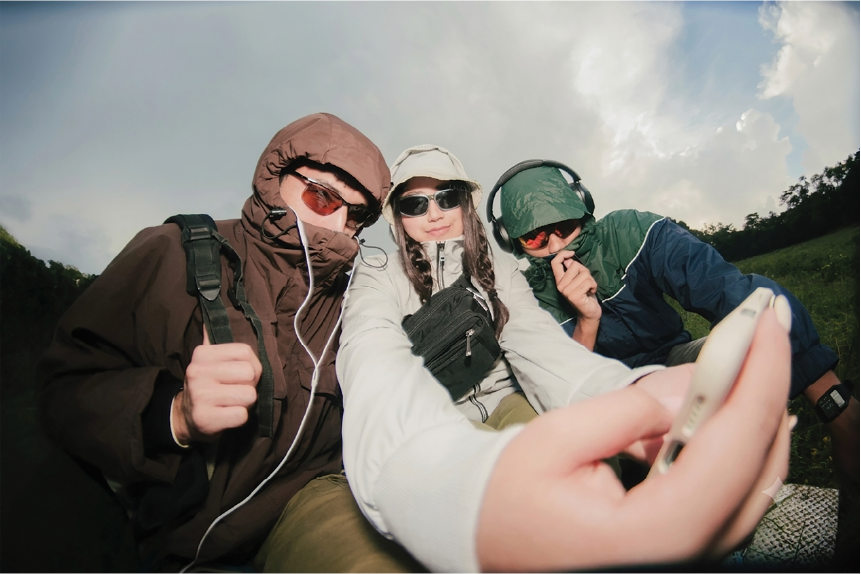
Yet only 30 minutes away by car — or just a few subway stops away — the dramatic scenery of Bukhansan and Dobongsan suddenly appears, where silver grass sways in the wind and cool mountain air washes away exhaustion.
In South Korea, where approximately 62% of the land is mountainous, “mountains” and “nature” are more than geographical features. They are deeply rooted in the subconscious of Koreans as the closest and most powerful sanctuary — a cultural refuge always within reach.
The unique contrast between skyscrapers rising at the center of the city and rugged natural landscapes surrounding them like a folding screen creates a landscape unlike any other. This rare geographical proximity allows Koreans to disconnect from everyday life at any moment and escape into nature.
In the past, Korean hiking culture was often associated with older generations wearing colorful hiking outfits while rushing toward mountain peaks, or with physically demanding challenges aimed at conquering high altitudes.
Today, however, outdoor culture has transformed into something entirely different.
For the modern generation in their 20s and 30s surviving Korea’s hyper-fast lifestyle, mountains and nature have become a stage where personal taste and fashion identity can be expressed in the most stylish way. They have become spaces for an “Outdoor Retreat” — a place where exhausted bodies and minds can quietly reboot.
The mountain is no longer something to overcome or defeat. Instead, it has become a massive analog studio where people can rest, recharge, and refine their senses.
A place where the adventure of reaching the Peak intersects perfectly with the moment of Pause — where one slows down, breathes, and allows nature to take over.
This is a closer look into the colorful and sophisticated outdoor culture of modern Koreans who wear nature and build their own moments of rest.
PART A (FASHION & TREND): The Hip Reinterpretation of Gorpcore and K-Outdoor Culture
1. Outdoor Wear Becomes Street Fashion: The Rise of Gorpcore from Mountains to Cities
Today, the boundaries between functional outdoor clothing and high-end street fashion have completely disappeared — from Seoul’s Seongsu-dong and Hongdae streets to the trails of Dobongsan.
The term Gorpcore, combining “GORP (Good Old Raisins and Peanuts)” — a reference to trail snacks eaten for energy during outdoor activities — and “Normcore,” meaning understated everyday style, has evolved beyond a simple fashion trend.
It has become one of the strongest lifestyle and fashion movements representing the outdoor culture of young Koreans.
While traditional outdoor clothing functioned as a “rough protective shield” designed to defend the body against harsh weather conditions, modern Gorpcore represents a playful urban aesthetic — combining advanced technical performance with refined silhouettes and either subtle or expressive color combinations.
2. The Evolution of K-Outdoor Gorpcore Styling Through Vibrant Colors
Recently, Korean Gorpcore has evolved beyond minimalist, monochrome “stealth wear” and embraced bold, vivid color combinations, creating a much more expressive outdoor style.
• Neon & Playful Color Blocking
Inspired by the original purpose of outdoor clothing — ensuring visibility and safety in mountainous environments — high-brightness colors such as tangerine orange, neon yellow, lime green, and electric blue are used as accent points on jacket zippers, pockets, and cord details.
These vibrant elements are often paired with off-white or pigment-dyed beige and khaki bottoms, maximizing a refreshing visual contrast.
• Mixed Textures and Silhouette Play
A new formula has become popular: oversized technical windbreakers paired with calm midi or maxi skirts, or parachute cargo pants featuring shirring details.
Completed with rugged trail-running shoes featuring bold silhouettes, styles such as “outdoor wear with skirts” and genderless Gorpcore have become mainstream trends.
• K-Outdoor & Global Brand Landscape
Premium International Technical Leaders
- Arc’teryx: Known for its flawless fit and advanced Gore-Tex technology
- Salomon: Famous for XT-6 trail running shoes
- Patagonia: Recognized for its iconic fleece products and environmentally conscious philosophy
- Keen and other outdoor footwear brands: Popular choices among the 2030 generation for their comfortable yet distinctive designs
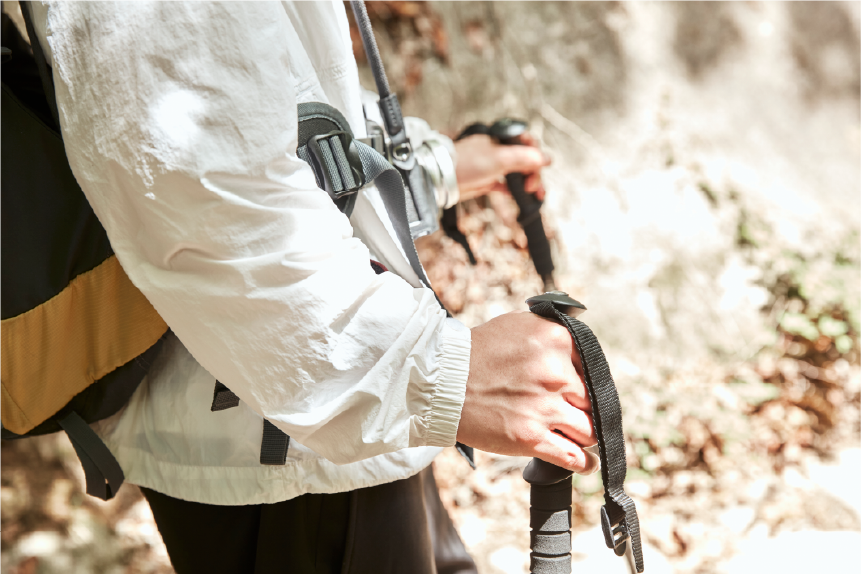
Korean Outdoor & Lifestyle Brands
- The North Face Korea: Trend-focused cooling and lightweight windbreaker collections
- K2 and Black Yak: Offering 3-layer rain jackets and modern outdoor sets
- Snow Peak Apparel, National Geographic, and Discovery Expedition: Leading natural yet sophisticated lifestyle wear that moves freely between mountains and cities
3. “Ounwan” and Summit Photos: Completing the Hiking Lifestyle Through SNS
For the 2030 generation, hiking has become a symbol of self-management alongside the popular phrase “Ounwan (오늘 운동 완료 / Workout Completed Today).”
Young hikers reaching Seoraksan’s Dinosaur Ridge, Naejangsan’s autumn foliage tunnels, or Bukhansan’s Baegundae Peak proudly reach for their smartphones even while catching their breath.
• Summit Marker Photo Culture
Standing beside a summit stone with breathtaking autumn mountains as a backdrop is no longer simply an act of showing off. It has become a visual proof of personal achievement.
Carefully styled photos featuring details such as carabiners, tumblers, and fashionable hats receive strong engagement on social media, representing a new image of a “stylish lifestyle that enjoys nature in a healthy way.”
• Crew Culture and Social Trekking
Instead of hiking alone, young Koreans increasingly join hiking crews where people with similar interests gather, climb together, and enjoy traditional Korean foods such as makgeolli and pajeon after descending the mountain.
These hiking communities have emerged as meaningful social networks where members respect each other’s hiking styles and participate in plogging (picking up litter while jogging or walking) to protect natural environments.
Through these efforts, Korea’s outdoor culture continues to evolve into a more sustainable and sophisticated lifestyle movement.
Here is the English translation, adapted for a global lifestyle magazine audience while maintaining the poetic and premium editorial tone.
PART B (OUTDOOR RELAXATION CULTURE): Expanding the Horizons of Rest Through Picnics, Car Camping, and Glamping
1. Autumn Picnics: Urban Foliage and Riverside Escapes Along the Han River
You do not have to travel deep into the mountains to find rest.
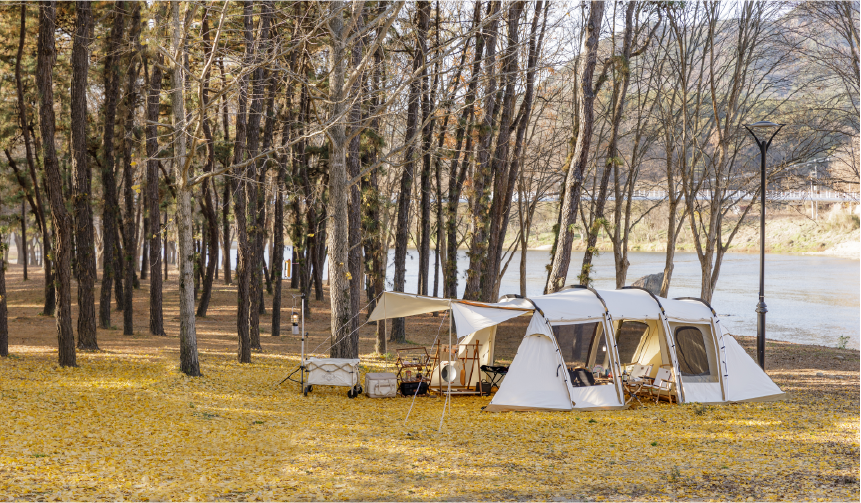
Modern Koreans are discovering moments of relaxation through light picnics in urban parks, along the Han River, and at autumn destinations such as Haneul Park, where silver grass creates breathtaking scenery, or Ttukseom Han River Park.
• The Evolution of Emotional Picnic Culture
A new picnic culture has taken root — one where people rent wine glasses, wooden lace tables, vintage picnic mats, and picnic baskets, then enjoy carefully prepared sandwiches or delivered meals in a beautifully styled outdoor setting.
Simply spreading a picnic blanket across the refreshing grass beside the Han River and listening to the sound of leaves moving in the breeze can relieve much of the fatigue accumulated from urban life.
• “Water Gazing” and “Autumn Leaf Gazing”
The Korean expressions “mulmeong” (quietly staring at water) and “danpungmeong” (peacefully admiring autumn foliage) represent simple yet meaningful forms of relaxation.
Watching the gentle waves of the Han River, lying beneath golden ginkgo trees while looking up at the sky — these moments require no complicated equipment, yet offer some of the deepest forms of healing and reflection.
2. Car Camping: A Personal Mobile Sanctuary
Maintaining a comfortable distance from others while still completely immersing oneself in nature — this is the essence of modern Korean car camping culture.
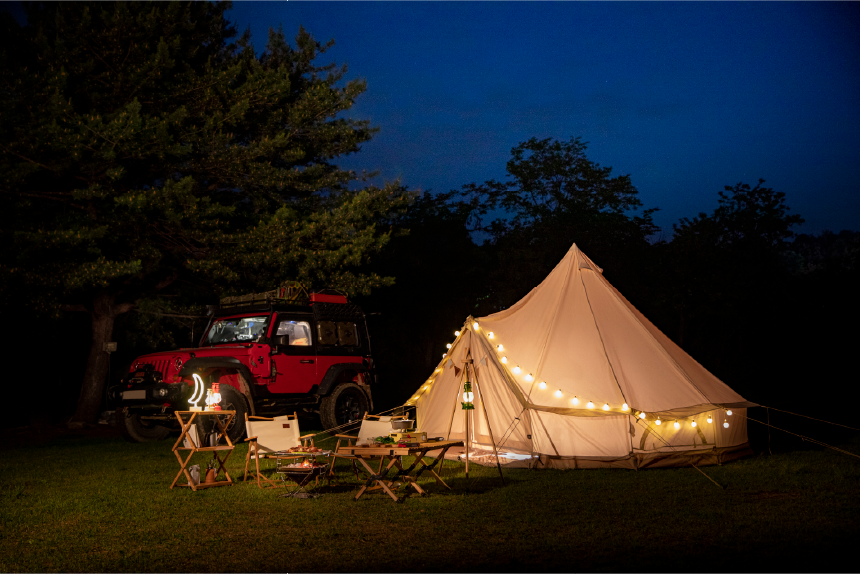
Car camping represents one of the freest and most private forms of outdoor relaxation today.
Moving away from traditional camping that required large tents and complicated equipment, car camping began with a simple yet creative idea: transforming the back seats of an SUV or CUV into a cozy mobile bedroom by creating a flat sleeping space.
The true charm of car camping lies in its complete sense of spatial freedom — escaping the limitations of standardized resorts and fixed hotel rooms.
Young Koreans decorate their vehicles with warm string lights, atmospheric curtains, wooden roll tables, and soft wool blankets, creating their own ambient retreats. They park their cars beside autumn-covered mountains in Gangwon Province or along beaches where cool waves roll across the East Sea.
The moment the trunk door opens upward, a private five-star view unlike anywhere else in the world unfolds inside the vehicle like a framed piece of artwork.
Inside this intimate and comfortable space, people enjoy small moments of happiness: the aroma of freshly brewed drip coffee, simple meal kits prepared on a mini burner, and the warmth of a cozy interior while raindrops fall outside the window or a cool autumn breeze passes by.
When the mechanical sounds of the city are replaced by the rustling of leaves and the gentle rhythm of ocean waves, car camping offers busy modern people a unique freedom — the ability to experience nature from exactly the perspective and place they choose.
3. Glamping & “Fire Gazing”: Premium Wellness and Digital Detox
For those who want to enjoy the romance and analog emotions of camping without the inconvenience of setting up tents or sleeping outdoors, glamping provides the perfect alternative.
Recently, Korean glamping facilities have evolved far beyond simple outdoor tents. Many have transformed into premium resorts equipped with hotel-quality bedding, private heating and cooling systems, personal bathrooms, and even beam projectors.
• “Fire Gazing”: Analog Therapy Through Flames
The Korean practice of “bulmeong” — peacefully staring into a campfire — has become an essential ritual of modern outdoor retreats.
By focusing on the irregular movements of flames, the gentle crackling sounds of burning wood, and the deep scent of oak, the overloaded minds of modern people finally enter a state of relaxation.
This experience can be understood as a form of analog Zen therapy — a quiet practice of emptying the mind and releasing unnecessary thoughts.
• Digital Detox: Restoring the Energy of the Soul
Away from smartphones constantly demanding attention and the fatigue of endless screens, people spend time looking at the stars, breathing in the cool autumn air, and sharing sincere conversations with companions.
The quiet night experienced at a glamping site becomes a meaningful moment — one that restores the energy of the soul, which has been drained by the intensity of urban life.
[EPILOGUE] Life Awakens When We Touch the Texture of Nature
Sitting on a cool rock at the peak of a mountain while looking down at the world below, watching the autumn sunset color the sea through a small car window, or listening to the sound of burning wood beside a warm campfire — these are the moments when modern Koreans truly feel alive.
The high-pressure routines imposed by gray concrete buildings and digital displays constantly demand that we move faster and achieve higher goals.
However, when young people step into nature, they let go of the urgency to compete for the highest peak. Instead, they allow themselves to be immersed in the textures of autumn leaves, the roughness of stone, and the temperature of the wind.
Wearing the mountain, breathing the wind, standing quietly beside a campfire, and focusing on one’s own breath — these actions restore a profound conversation with oneself, something easily lost in the endless race of urban life.
The scene of Koreans embracing the vibrant colors of autumn mountains, expressing themselves through stylish Gorpcore fashion, and ending their day beside a glowing outdoor fire represents a new form of modern retreat.
A culture where the passion of “Peak” (adventure and achievement) and the reflection of “Pause” (stopping and letting go) exist in perfect harmony.
This contemporary outdoor retreat lifestyle offers a deeply meaningful and sensory direction for next-generation wellness in an era of unprecedented speed.
The moment we turn off the high voltage of the city and step into the cool embrace of nature, our lives begin to recharge once again with brilliant colors.