PROLOGUE: In the Cold Night of the City, the Sound of Bells Awakens an Ancient Memory
In 21st century South Korea, cutting edge IT technology fills the skyline with towering skyscrapers, while highly advanced AI predicts the future through data. Yet behind Seoul’s dazzling nightscape, at the far end of narrow alleys tucked between forests of glass and steel, there echoes a sound that has endured for thousands of years.
The crisp metallic chime of bells. The pulse of the janggu drum that resembles a heartbeat.
Following that sound leads to a gut ritual, where an unlikely gathering unfolds. Sharply dressed businessmen, young job seekers standing at the threshold of their futures, and those who have reached dead ends in life all hold their breath, transfixed by the movements of a mudang, or shaman.
Why are we still captivated by this seemingly irrational and primal ritual?
Some dismiss it as mere superstition and turn away without a second thought. Yet deep within the Korean unconscious flows an undeniable spiritual DNA that resists such dismissal.
Gut is not simply a ritual for seeking blessings or fortune. It is a profound expression of our longing for connection, a connection we have lost, and a gentle human touch that soothes immense sorrow and fear beyond the reach of science.
In this summer issue, we embark on a grand journey into gut, the deepest root of Korean culture and the wellspring from which the vibrant energy of K culture first emerged.
Born in the mist of the Dangun myth, enduring centuries of suppression, and now reborn as an artistic essence that captures global attention, K shamanism invites us to look beyond prejudice.
Now, we step quietly yet boldly into this magnificent opera of the soul, where the voices of the divine are borrowed to heal the human spirit.
Origins and History: The Glory and Ordeal of the Heavenly Descendant Who Brought the Voice of Heaven to Earth
The roots of Korean gut trace back to the vast shamanic traditions of Siberia and Central Asia, where early human civilizations first took shape. Around 5,000 years ago, Dangun Wanggeom, the legendary founder of Gojoseon who ushered in the dawn of the Korean Peninsula, was not merely a political ruler. He was a dangun, a supreme priest who bridged Heaven, Earth, and Humanity. Archaeological artifacts such as bronze mirrors known as danyusemun gyeong and ritual bells known as paljuryeong reveal the authority of early shamans and the tools they used to communicate with the spiritual realm.
At that time, gut went far beyond personal wish making rituals. It functioned as a central force of governance, divining the fate of the nation and uniting the hearts of its people. As Korea moved through the Three Kingdoms and Goryeo periods, gut developed into increasingly elaborate and spectacular forms. State rituals such as Buyeo’s Yeonggo and Goguryeo’s Dongmaeng were grand communal ceremonies where tens of thousands gathered, dancing, singing, and entering states of ecstatic communion with the divine.
According to the historical chronicle Samguk Sagi, kings themselves presided over rituals to invoke rain during times of drought, accompanied by shamans, and sought divine guidance before going to war. During the Goryeo Dynasty, shamanic practices coexisted with Buddhism and evolved into magnificent national festivals such as Palgwanhoe. The streets of Gaegyeong, the capital of Goryeo, were filled with the songs and dances of shamans, representing a form of spiritual culture that stood at the height of East Asia.
The founding of the Joseon Dynasty, however, marked a dramatic turning point. The ruling elite, grounded in Neo Confucian ideology, condemned gut as immoral and heterodox rites. Shamans were relegated to the lowest social class, known as cheonmin, and were even banished beyond the city walls, forbidden from entering the capital.
Yet paradoxically, this suppression only made gut more resilient. Removed from official history, shamans quietly moved into the homes and courtyards of ordinary people. They listened to the suffering of the marginalized, comforted the unnamed dead, and became a spiritual support system for the common people.
During the period of modernization, Japanese colonial authorities labeled shamanism as superstition and attempted to eradicate it. Even after liberation, during the Saemaul Movement, it was dismissed as an outdated custom to be destroyed, leading to the demolition of countless shrines. And still, gut endured, like a tenacious wild plant.
Its survival over five millennia reflects the enduring spirit of the Korean people, a quiet and unyielding resilience rooted deep within their cultural identity.
A Spectrum of Regional Aesthetics: The Spiritual Topography Shaped by Northern Charisma and Southern Artistry
The spiritual landscape of the Korean Peninsula forms two strikingly different aesthetic “mountain ranges,” shaped by how shamans receive and embody the divine. These traditions are known as gangsinmu, or spirit possessed shamans, and sesupmu, or hereditary shamans.
In regions north of the Han River and across Hwanghae Province, gangsinmu preserve the archetypal traditions of northern shamanism. Their calling begins not with choice, but with affliction. Sinbyeong, a mysterious spiritual illness, can only be resolved by accepting the spirits.
For them, gut is not a performance but a sacred execution of divine command.
The ritual reaches its most electrifying peak in the jakdu rite, where a shaman dances barefoot on sharp blades while channeling divine messages known as gongsu. In that moment, the shaman’s gaze appears to move beyond human boundaries and is filled with an austere and almost chilling sense of sacredness.
This northern tradition radiates a vertical and piercing energy that feels direct and overwhelming. It does not merely inspire awe. It confronts the audience with something deeper, including fear, trembling, and a profound sense of release.
In contrast, regions south of the Han River and extending to Jeju Island cultivate the tradition of sesupmu. In this tradition, shamanic practice is passed down through bloodlines rather than through divine possession.
Instead of sudden revelation, these shamans undergo decades of disciplined training, mastering complex rhythms, choreography, and narrative chants.
Their gut is not an act of command, but an act of artistic transformation. It is a ritual that delights the spirits while transforming human sorrow into beauty.
The UNESCO recognized Jindo Ssitgimgut stands as a representative example of this aesthetic. In this rite, the soul of the deceased is cleansed and guided to the afterlife, accompanied by sorrowful songs that seem to deeply move the listener.
Southern gut flows with a horizontal, embracing energy. The shaman is not a distant, authoritative vessel of divine will, but a companion who laughs and weeps alongside the people. They are at once a performer, a storyteller, and a healer. In this sense, they can be understood as a true artist of the soul.
From their movements emerged salpuri dance, which became a foundation of Korean traditional dance. From their voices grew pansori, shaping the emotional core known as han within the Korean people.
Ritual and Total Art: A Cosmic Order Designed Within the Twelve Acts, Awakening All Five Senses
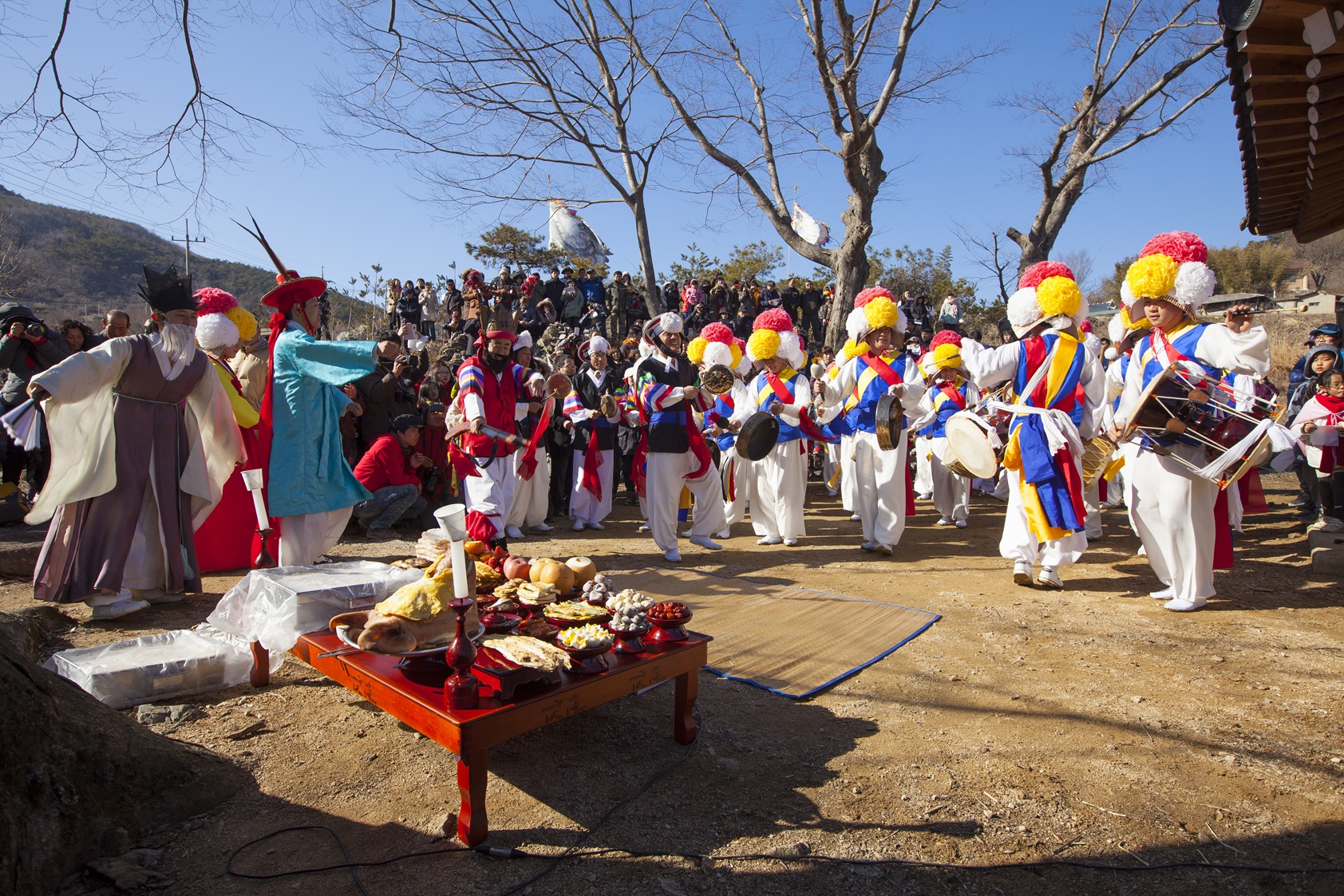
A gut is far more than a sequence of repeated gestures. It unfolds as an epic, omnibus style drama that can last from ten hours to several days. This structure is known as the Twelve Acts, or yeoldu geori, an intricately designed narrative that reflects the cycle of human life, including birth, aging, illness, and death, as well as the cosmic order of the universe itself.
The ritual begins with the Purification Rite, known as bujeong geori, which cleanses all worldly impurities from the space. It then moves into the Invocation Rite, called gamang geori, where deities of nature and ancestral spirits are respectfully invited. This is followed by the Prosperity Rite, or jesok geori, which offers prayers for abundance and longevity.
As the ritual progresses into its middle stages, acts such as Byeolsang geori and Daegam geori generate a surge of dynamic energy. The shaman enters a state of union with the divine and channels supernatural authority. At the same time, participants are drawn into this powerful current and often enter a trance state in which the burdens of everyday life begin to fade.
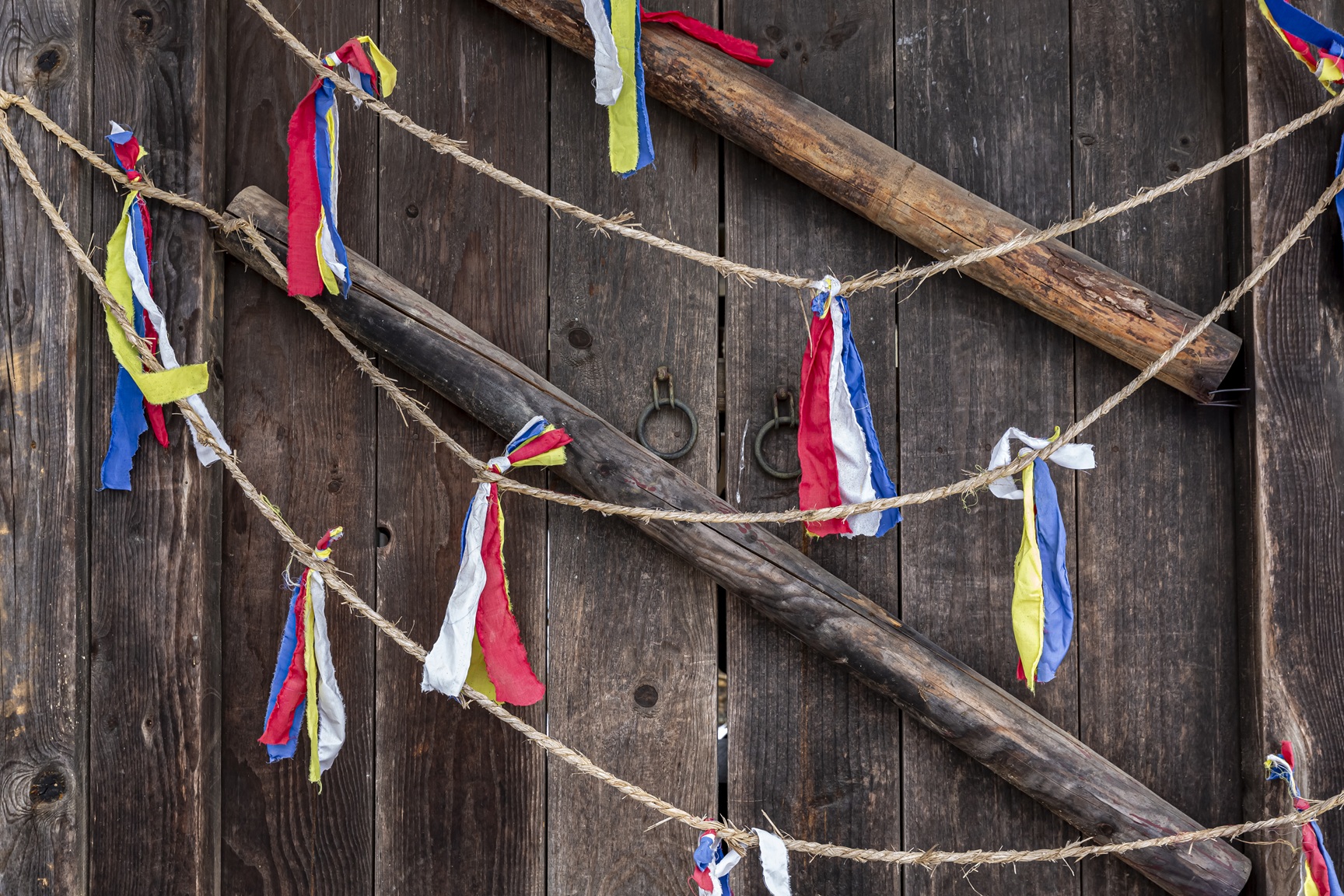
From an artistic perspective, gut can be understood as a living archive of Korean cultural identity. The many costumes, known as mubok, worn by the shaman represent the height of traditional fashion and embody the philosophy of Obangsaek, the five cardinal colors of yellow, blue, white, red, and black. Each color corresponds to a direction and an elemental force, transforming the ritual space into a field of sacred energy.
The music of gut, known as sinawi, is equally remarkable. Instruments such as gongs, janggu, and kkwaenggwari each produce independent melodies that come together to form a complex and harmonious whole. This improvisational style is often compared to the experimental spirit of modern free jazz.
The closing act of the ritual, known as dwitjeon, offers one of the most profound philosophical insights of Korean shamanism.
After the principal deities have departed, the ritual does not end. Instead, it turns its attention to the forgotten, including wandering spirits and restless souls known as heoju, who were never formally invited. These spirits are fed, comforted, and then guided away in peace.
This final act is more than a ritual. It represents a powerful expression of Korea’s unique ethos of sangsaeng, or mutual life giving, and daedong, or great unity. Even resentment and hostility are not excluded, but are instead embraced and transformed.
In this way, gut goes beyond performance. It becomes a complete sensory experience and a philosophical expression in which art, ritual, and worldview come together as one living and evolving whole.
Contemporary Value and the Future: A 21st Century Spiritual Clinic and the Heart of K Content
In modern society, gut is being re-evaluated not as outdated superstition, but as a highly sophisticated system of psychological understanding. Leading psychologists and anthropologists around the world describe the Korean gut ritual as one of the oldest forms of collective psychotherapy in human history.
Within this space, the mudang becomes a counselor, a director, and a healer who borrows the voice of the divine. In doing so, the mudang draws out the deeply embedded han, the unresolved emotional burdens at the core of a person’s inner life. A single utterance delivered through gongsu, such as “You have endured so much” or “I understand your heart completely,” can hold a healing power that sometimes goes beyond conventional psychiatric treatment.
Through the process of haewon, which resolves deep grievances, and sangsaeng, which restores life force and balance, participants release long held resentment and regain the strength to move forward in life. In this way, gut provides a form of communal comfort that is often missing in today’s fragmented society.
At the same time, K shamanism is evolving into a powerful cultural force and a rich source of global content. The striking occult aesthetics seen in films such as Exhuma and The Wailing are deeply connected to the narrative structure and visual power found in gut.
For younger generations, gut is no longer seen as an embarrassing relic of the past, but as a rediscovered and meaningful tradition. Rituals that are livestreamed on platforms such as YouTube attract viewers from around the world, who participate in real time by making wishes and offering donations.
Meanwhile, artists and bands that reinterpret shamanic rhythms are gaining global attention, delivering the powerful sound of Korean tradition to international audiences. As technology continues to advance and human life becomes increasingly mechanized, a paradox becomes clear. The more digital life becomes, the more people seek something instinctive, emotional, and deeply spiritual.
The sound of those bells, which has endured for over 5,000 years, now resonates as a source of healing for the weary souls of the digital age. It is emerging as a powerful symbol of imagination and as a defining expression of the global K Spirit.
EPILOGUE: The Dance of Sangsaeng Releasing What Is Knotted and Stepping Toward Tomorrow
When the final rite of the gut, the dwitjeon, comes to an end and the shaman removes their ritual garments, a deep stillness settles over the once vibrant shrine. Yet this silence is different from the emptiness that came before, and those who have wept freely and danced in a state of emotional release now carry a quiet sense of peace on their faces.
A single, unadorned phrase spoken through the shaman’s gongsu, “You have endured so much,” takes root in their hearts with a force greater than any material comfort.
The message of Korean gut is clear. Life is never an isolated struggle that must be endured alone, and even death is not an end, but part of a continuous cycle and another form of continuation.
To live while holding onto unresolved resentment, known as han, is like drinking poison oneself. Gut transforms that poison through song and dance, drawing it outward into the open, and in the space that remains, it plants the seed of hope and the possibility of living again.
Perhaps this is why the world is so captivated by K content today. Beneath its dazzling visuals lies a deep humanity and an honest expression of emotion, and the sound of bells that once rose toward the heavens five thousand years ago now resonates as a source of healing, reaching the weary souls of people around the world.
The ritual may have ended, but another gut, the one we call life, continues. If something remains knotted within you, untie it, and if there is someone you resent, sit down and share a meal. Then prepare yourself once more to greet the sun of tomorrow.
This is the essence of the philosophy of life that gut teaches, the idea of haewon sangsaeng, which means resolving grievances and moving forward together.
Is there still a knot left untied within your heart? If so, now is the time to listen to the quiet voice of your own soul.
Source:
- Naver Encyclopedia of Korean Culture: https://terms.naver.com
- National Folk Museum of Korea: https://www.nfm.go.kr
- National Intangible Heritage Center Digital Archive: https://www.nihc.go.kr