
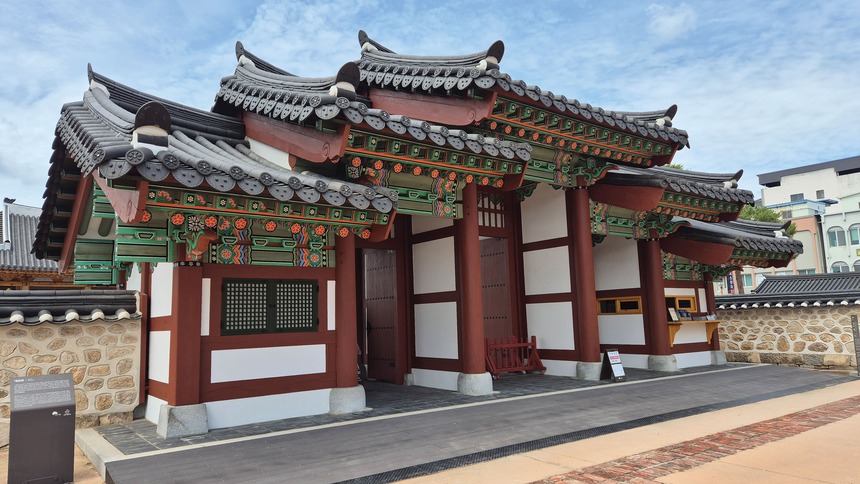
The Grandeur of 500 Years of Jeolla Gamyeong
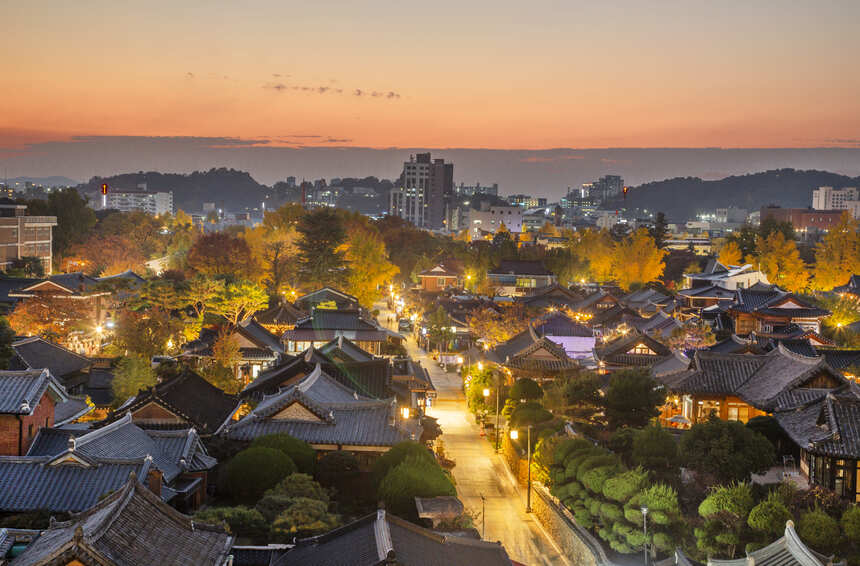
When Seoul’s modern skyscrapers celebrate the aesthetics of speed, Jeonju, Jeonbuk, offers a different narrative—one of slowness, depth, and timeless beauty. In October and November, as autumn deepens, golden ginkgo leaves settle on traditional tiled roofs and cool breezes sweep through the grounds of the old provincial government complex, Jeonju transforms into one of Korea’s most elegant stages for history and traditional culture.
Jeonju is more than a city of hanok villages. It is home to Jeolla Gamyeong, the highest governing institution that once oversaw the politics, administration, military affairs, culture, and economy of the entire Honam region—including Jeolla Province and Jeju Island—for 500 years under the Joseon Dynasty. Restored to its former grandeur after years of reconstruction, Jeolla Gamyeong presents a magnificent autumn landscape, where the refined wooden architecture of Seonhwadang and Gwanpungru blends with colorful foliage to create a majestic aesthetic reminiscent of Korea’s traditional five colors
1. History & Heritage: The 500-Year History and Legacy of Jeolla Gamyeong
Understanding Jeolla Gamyeong means looking into the central axis of 500 years of Joseon history and the history of the Honam region. Jeonju held a special status as the “birthplace of the Joseon Dynasty” (Pungpaejihyang, 豊沛之鄕), as the ancestral home of King Taejo Yi Seong-gye, the founder of the dynasty.
(1) The Rise of the Highest Governing Institution of Honam and Jeju
Established in Jeonju in 1403, the third year of King workshops went under restoration in 2020 Taejong’s reign, Jeolla Gamyeong was one of the largest and most powerful of the eight provincial government complexes of the Joseon Dynasty. At the time, Jeolla Province encompassed a vast territory including present-day Jeonbuk, Jeonnam, Gwangju, and even Jeju Island.
The Jeolla Governor (Gwanchalsa) served as the king’s representative, holding authority over administration, judicial affairs, and military affairs across this vast region while overseeing taxation and military control. More than 40 grand wooden buildings stood within the complex, including Seonhwadang, the governor’s main office, giving the entire site the appearance of a small palace.
(2) A Center of Culture and Publishing: The Birth of Wanpanbon
Jeolla Gamyeong was far more than an administrative center. It housed a specialized printing workshops known as Inchulbang, where books were produced using traditional woodblock printing. Publications produced there came to be known as Wanpanbon.
Jeonju became the largest publishing and cultural center south of the Han River, playing a major role in the widespread circulation of popular literature and classic novels such as The Tale of Chunhyang, The Tale of Sim Cheong, and The Tale of Heungbu during the Joseon Dynasty. The exceptional quality of Jeonju hanji, combined with the cultural influence of Jeolla Gamyeong, helped nurture the flourishing of popular literature in the late Joseon period.
(3) Hardship and Rebirth: Reclaiming Joseon’s Pride After 70 Years
During the Japanese colonial period in the 1920s, the Japanese colonial government demolished key buildings of Jeolla Gamyeong and constructed the Jeollabuk-do Provincial Government Office on the site in an effort to suppress Korean national identity.
After losing its historic appearance for decades, Jeolla Gamyeong finally entered a full-scale restoration project in 2015 following the relocation of the provincial government office. Through extensive historical research and archaeological investigation, key spaces—including Seonhwadang, Gwanpungru, Yeonsindang, Naea, Naea Haengnang, and Gwanpunggak—went under restoration in 2020.
After more than 70 years apart from its original form, Jeolla Gamyeong was reborn as both a symbol of Joseon’s enduring heritage and one of Jeonju’s leading cultural landmarks, connecting the past with the present.
2. Scene: The Views You’ll Discover
The moment you pass through Eungcheonga, the main gate of Jeolla Gamyeong, and step into its courtyard, you feel as though you have stepped back into the Joseon era.
(1) Autumn Foliage and Quiet Reflection at Seonhwadang
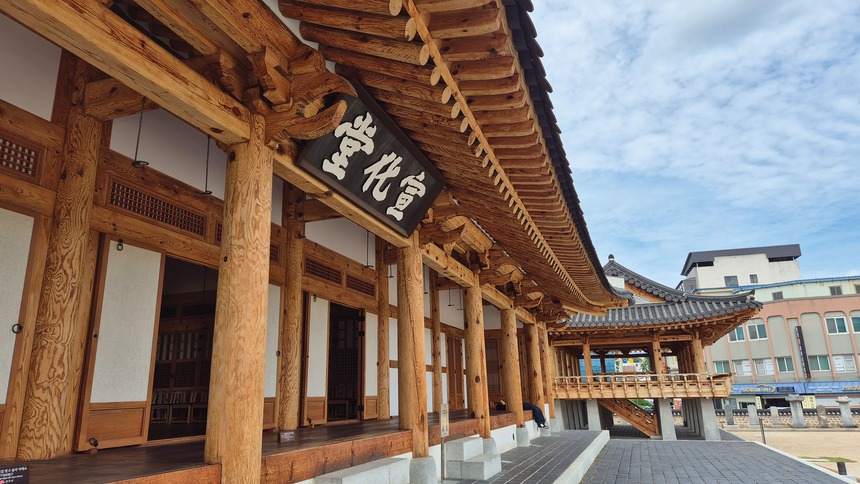
At the heart of Jeolla Gamyeong stands Seonhwadang (宣化堂), the main building where the governor carried out his official duties. Its name carries the meaning of “promoting the king’s virtue and educating the people.”
When the old trees in front of Seonhwadang—the centerpiece of an autumn trip to Jeonju—turn shades of red and gold, they create a striking harmony with the grand wooden pillars and the five-color palette of autumn foliage, embodying the traditional Korean aesthetics of symmetry and negative space.
- The View: Sit quietly on the wooden veranda and take it all in. The sound of the cool autumn breeze passing between the tiled roofs, the rustling leaves beneath your feet, and the clear autumn sky come together to create a profound sense of inner calm and wellness.
(2) The Refined Beauty of Gwanpungru & Yeonsindang
Gwanpungru, a pavilion where officials observed local affairs, and Yeonsindang, the governor’s private residence, showcase the graceful curves of traditional Korean architecture at their finest.
The natural grain of the wooden floors and the warm autumn sunlight filtering through the wooden lattice windows create picture-perfect scenes at every turn—like stepping into a traditional Korean landscape painting.
(3) The Serene Courtyards of Naea & the Servants’ Quarters
Naea, the inner residence where the governor’s family lived, and the surrounding servants’ quarters offer one of the warmest and most tranquil autumn landscapes within Jeolla Gamyeong.
As you stroll along the neatly maintained earthen paths, the gentle sound of the wind evokes the essence of Honam’s traditional pungnyu—a refined appreciation of art, leisure, and nature.
4. Transportation: How to Get to Jeolla Gamyeong from Seoul
Located in the heart of Jeonju, Jeolla Gamyeong is highly accessible. For travelers departing from Seoul, the most convenient options are KTX and express buses.
Option A. By Train (Yongsan Station → Jeonju Station)
- Departure from Seoul: Board at Yongsan Station (Seoul Subway Line 1 / Gyeongui-Jungang Line) ➔ Arrive at Jeonju Station
- KTX: Approximately 1 hr 40 min–2 hr / ₩34,400
- ITX-Saemaeul: Approximately 3 hr 10 min / ₩25,200
- Mugunghwa-ho: Approximately 3 hr 30 min / ₩17,600
- Last Mile (Station → Jeolla Gamyeong):
- Taxi: Approximately 15 min from the taxi stand in front of Jeonju Station / around ₩8,000
- City Bus: Take Bus 119, 535, or 543 ➔ Get off at Jeonbuk Arts Center Bus Stop / approximately 25 min, ₩1,700
Option B. By Bus (Seoul Central City Terminal → Jeonju Express Bus Terminal)
- Departure from Seoul: Board at Central City Terminal (Express Bus Terminal Station, Seoul Subway Lines 3, 7 & 9) ➔ Arrive at Jeonju Express Bus Terminal
- Travel Time: Approximately 2 hr 40 min–3 hr
- Fare: Approximately ₩22,000 for Premium Economy Express / ₩28,600 for Premium
- Last Mile (Jeonju Express Bus Terminal / Intercity Bus Terminal → Jeolla Gamyeong):
- Taxi: Approximately 10 min from the taxi stand in front of the terminal / around ₩6,000
- City Bus: Take Bus 5002 ➔ Get off at Jeolla Gamyeong · Wansan Police Station Bus Stop / approximately 15 min, ₩1,700
5. Secret Tips: How to Make the Most of Jeolla Gamyeong
(1) Golden Hour (Night View & Lighting): We recommend entering Jeolla Gamyeong after 5:30 p.m. This is the perfect time to capture both the moment when the setting sun casts a warm orange glow over the traditional wooden roofs and the moment when subtle landscape lighting comes on after sunset, bringing an atmospheric glow to the courtyards.
(2) Hanbok & Picture-Perfect Spots: Try renting a hanbok from one of the rental shops near Jeolla Gamyeong before your visit. The graceful lines of a hanbok against the traditional architecture of the Joseon-era government complex make for the perfect photo opportunity.
(3) A Scenic Walk Connecting Hanok Village, Pungnammun & Jeolla Gamyeong: Jeolla Gamyeong is just a 5–10-minute walk from Jeonju Hanok Village and Gyeonggijeon Shrine. Walking the route [Jeonju Hanok Village / Gyeonggijeon ➔ Pungnammun Gate ➔ Jeolla Gamyeong] is one of the best autumn walks in Jeonju, where the city’s past and present intersect. Complete your perfect day trip with a leisurely autumn stroll through historic Jeonju.
[Information]
- Jeolla Gamyeong
- Address: 55, Jeollagamyeong-ro, Wansan-gu, Jeonju-si, Jeonbuk State
- Contact: +82-63-281-2532
- Hours: 09:00–21:00 (Extended hours during summer and festival periods)
- Admission: Free
- Website: Jeonju Tourism Official Website
6. [EXCLUSIVE GOODS] Capturing Jeonju’s Pride in Sound: ‘Pungnammun Sori’
Keeping the Sound of Jeonju: Pungnammun Sori by KOREANOW
Standing along the route to Jeolla Gamyeong, Pungnammun Gate (Treasure No. 308) symbolizes Jeonju’s quiet and timeless beauty. Inspired by this treasured landmark, KOREANOW presents a special souvenir that captures the resonance of autumn in Jeonju.
Selected as One of the Top 100 Jeonbuk Tourism Souvenirs in 2025
Pungnammun Sori is a premium souvenir officially recognized by Jeonbuk State—a special keepsake that embodies the refined spirit of a trip to Jeonju.
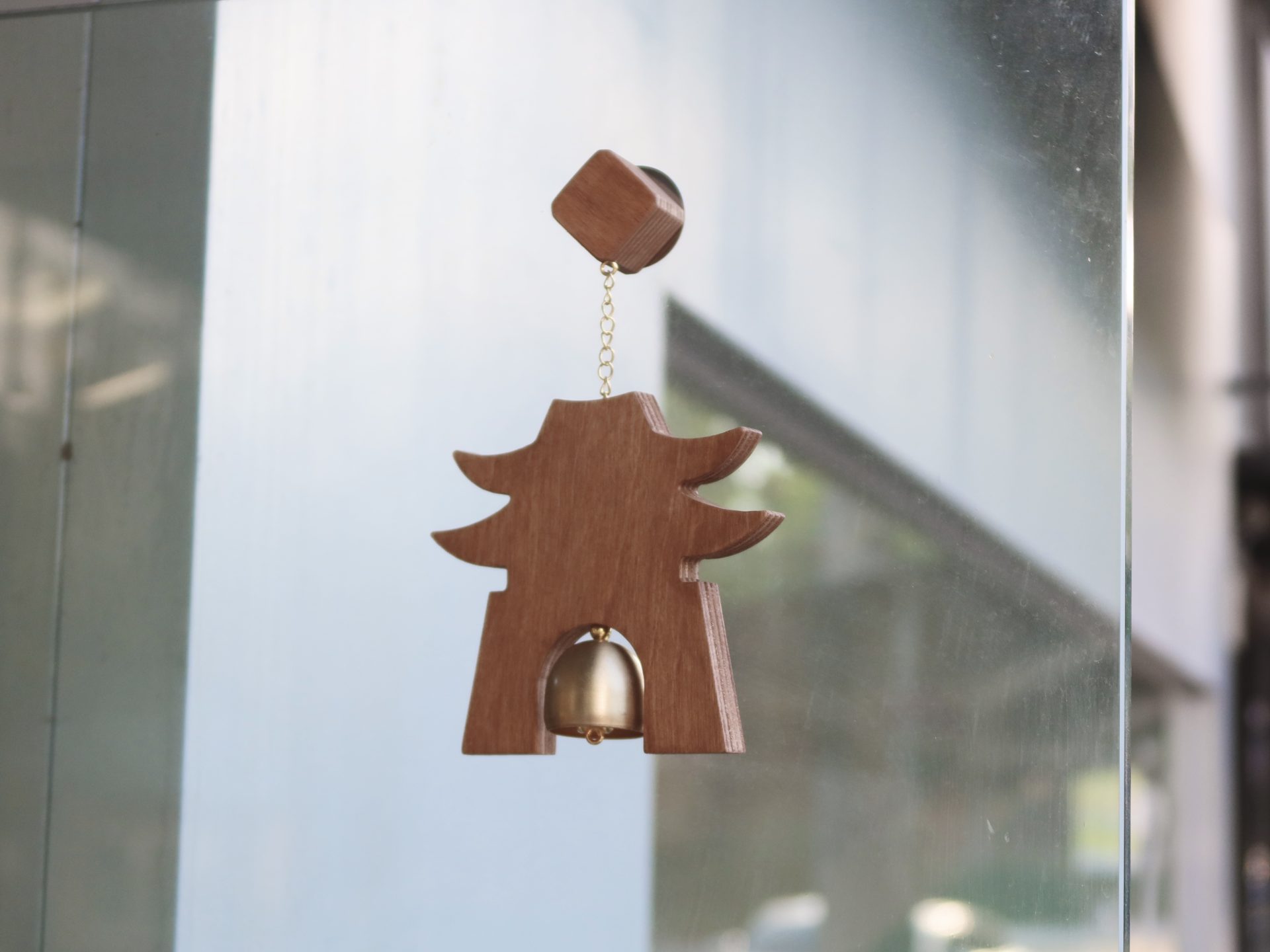
Pungnammun Sori
This handmade wooden doorbell, inspired by a traditional Korean wind chime, recreates the delicate sound of the eaves of Pungnammun Gate. If the colorful autumn foliage represents “Jeonju in sight,” Pungnammun Sori fills the air with “Jeonju’s quiet spaces” through its clear, refreshing sound.
Design & Meaning
Crafted from premium natural wood and finished with a brass bell, it produces a clear, delicate resonance whenever the door opens. True to its slogan, “A sound carried by the winds of Jeonju, a wind chime holding all four seasons,” it brings the crisp autumn breeze of Jeonju vividly to mind, even in everyday life.
Editor’s Tip
Looking for a tasteful gift to bring home for someone special at the end of your journey? Take home a touch of Jeonju’s autumn spirit with Pungnammun Sori, an officially recognized tourism souvenir from Jeonbuk.
※ Purchase & Details: KOREANOW Goods
Epilogue: The Sound Autumn Left Behind, and the Quiet Space Found in Jeonju
If travel is about more than simply collecting breathtaking views, autumn in Jeonju offers a soulful retreat that lingers deep within the heart. The orange sunset viewed from the quiet wooden veranda of the 500-year-old Jeolla Gamyeong, the cool autumn breeze gliding gently between tiled roofs, and the comforting flavors of seasonal autumn delicacies encountered around a neighborhood corner—all of these moments quietly restored the “space in life” that we often forget amid the rush of everyday life.
Even after returning to your busy routine, when you suddenly find yourself longing for the scent of the autumn breeze, remember the gentle sound you brought home from Jeonju. This refined city, where history and culture, pungnyu and gastronomy are layered into every corner, will be waiting for your return with the same warmth in the seasons to come.