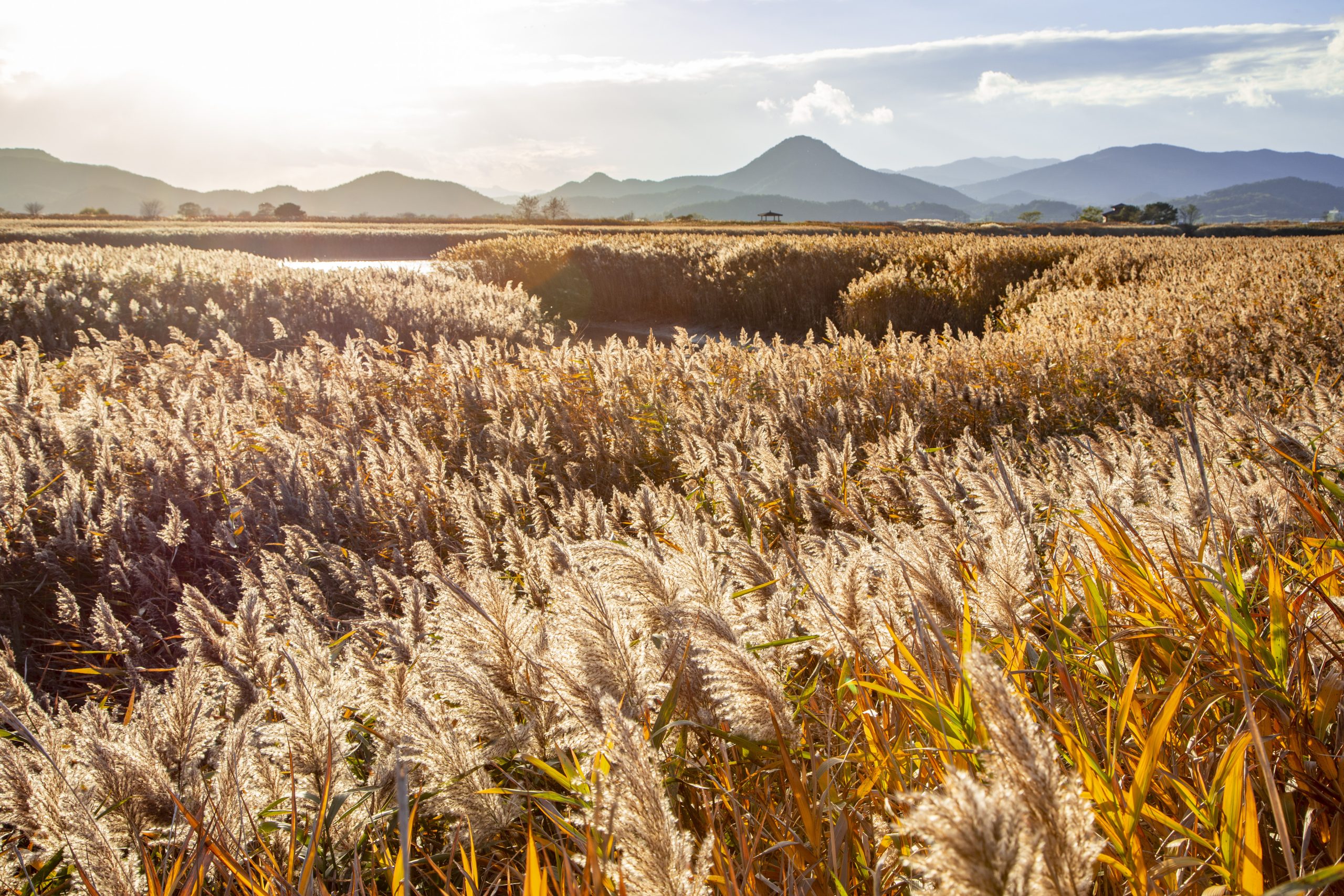
Located in Suncheon, Jeollanam-do, Suncheon Bay Wetland Reed Fields are not only Korea’s top autumn attraction, but also one of the world’s most celebrated ecological tourist destinations. Each fall, this area transforms into an endless sea of golden reeds, captivating every visitor with its spectacular scenery. From late October to mid-November, under the autumn sun, the reeds mature to a radiant golden color, immersing the entire bay in a breathtaking landscape.
Ecological Value and Beauty of Suncheon Bay Wetland
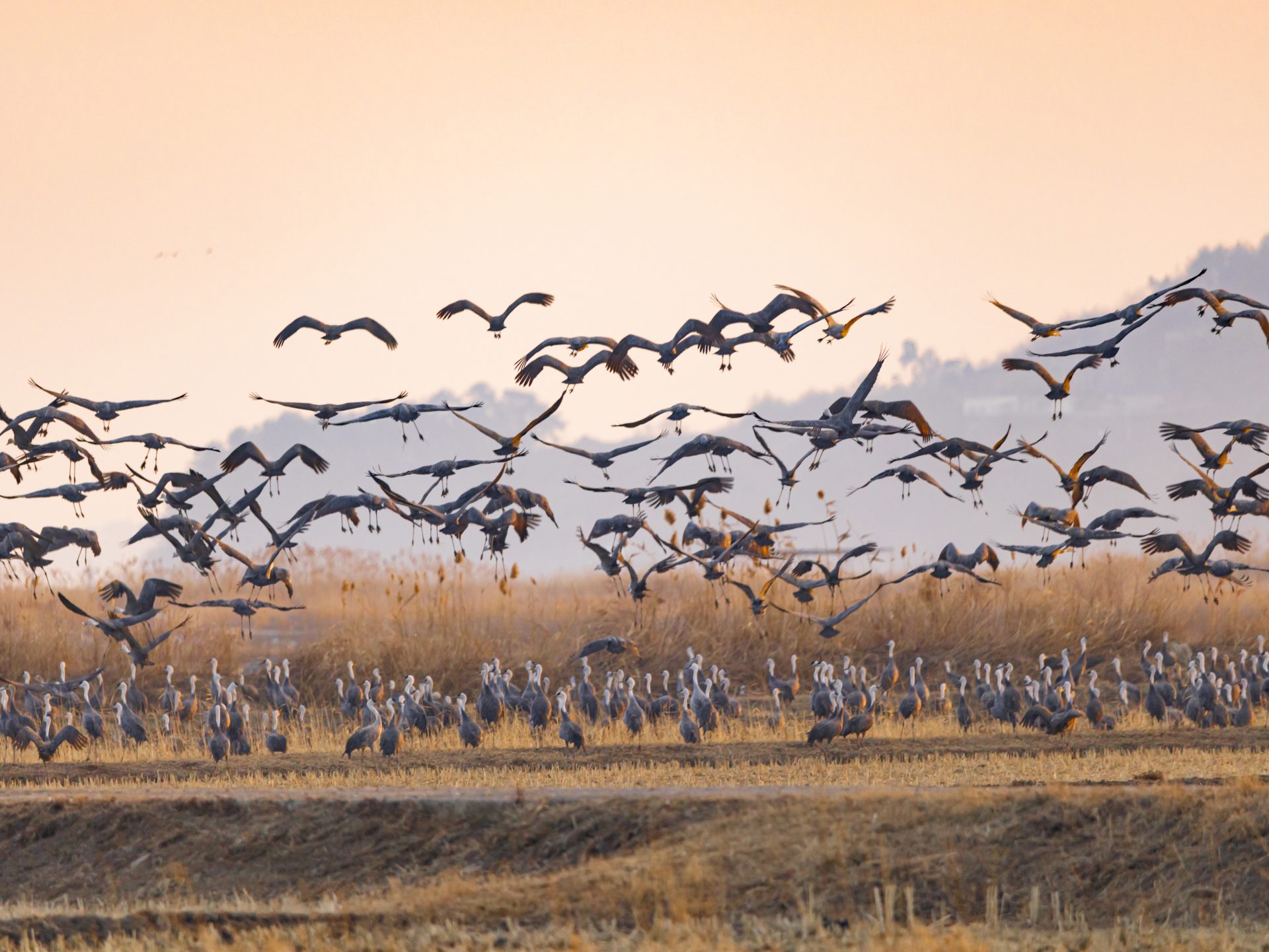
Recognized as one of the world’s five largest coastal wetlands, Suncheon Bay Wetland is a designated UNESCO Biosphere Reserve, renowned for its exceptional ecological value. As Korea’s first Ramsar wetland, it is home to Korea’s largest population of hooded cranes, a natural monument, as well as 25 internationally rare bird species, and over 220 species native to Korea. The vast tidal flats and salt marshes—where the river meets the sea—combine with sprawling reed fields, covering an astonishing 1.7 million pyeong. Unique salt-tolerant plants, such as glasswort, thrive here alongside diverse tidal flat organisms, earning Suncheon Bay its reputation as a cradle of life. The pristine tidal flats, reed fields, and the sweeping vistas beyond also make this region a prime research site for ecologists from around the world.
The Allure of Autumn Reed Fields
- Golden Waves of Reeds
From late October to mid-November, the reeds are at their most beautiful. When the breeze blows, the golden reeds sway like waves, forming a watercolor-like landscape found only in autumn. - Panoramic Views from Yongsan Observatory
Well-maintained reed trails offer an ideal stroll for families and couples. Climb Yongsan Observatory for sweeping views of Suncheon Bay, the S-shaped waterway, reed fields, tidal flats, and spectacular sunsets—an iconic photo spot. - Ecological Experience in the Mudflats
Beneath the reeds lies a living mudflat teeming with life. Visitors, especially families with children, enjoy observing clams, crabs, and marine worms living among the reeds. - Suncheon Bay Reed Festival
At the peak of autumn (late October to early November), the Suncheon Bay Reed Festival takes place, featuring performances, ecological tours, and hands-on experiences. Visiting at sunset during the festival is highly recommended for the golden reeds and dramatic skies.
Travel Tips and Preparation
- Best Visiting Time: Late October to mid-November, when the reeds are at their peak.
- Recommended Attire: The trails are long and offer little shade, so comfortable walking shoes, a hat, and a bottle of water are essential.
- Photography: Numerous photo zones are scattered throughout the reeds. Despite the crowds, the site is vast enough for peaceful, scenic shots.
- Sunset Viewing: For the most striking scenery, visit in the late afternoon to enjoy the sunset from Yongsan Observatory or along the trails.
Significance and Recommendation
Suncheon Bay Wetland Reed Fields are where you can deeply experience both the richness of Korea’s nature and its ecological significance. Walking among the reeds, you can truly appreciate the wonder of life and the changing seasons. More than just sightseeing, your autumn visit here becomes a moment of true connection and healing with nature. As a UNESCO Biosphere Reserve and Korea’s signature autumn destination, Suncheon Bay Wetland is a must-visit for all travelers. Create unforgettable autumn memories amidst golden waves and the vibrant vitality of the tidal flats!
Location: 513-25, Suncheonman-gil, Suncheon-si, Jeollanam-do
Admission: Adults 10,000 KRW, Youth 7,000 KRW, Children 5,000 KRW
Hours: 08:00 – 18:00
A TIP
- Your Suncheon Bay Wetland ticket also grants entry to Suncheonman National Garden.
- The SkyCube tram connects Suncheon Bay Wetland and Suncheonman National Garden.
Operation: 09:30 – 18:00 / Ticket Types – Round-trip: 8,000 KRW, One-way: 5,000 KRW
How to Get to Suncheon Bay Wetland by Public Transit
- From Seoul: Take an express bus from Seoul Central City Terminal to Suncheon Bus Terminal, or take a train from Seoul or Yongsan Station to Suncheon Station.
- From Suncheon Bus Terminal or Suncheon Station, take Bus 66 and get off at Suncheon Bay Wetland (runs from 06:05 to 22:00, at roughly 25-minute intervals).
Travel Time and Fare from Seoul to Suncheon
Bus:
1)Seoul Central City Bus Terminal (Honam Line) – Suncheon Intercity Bus Terminal
- Travel time: 3 hours 40 minutes
- Fare: Standard 20,800 KRW, Premium 30,800 KRW
2)Dong Seoul Bus Terminal – Suncheon
- Travel time: 4 hours 30 minutes
- Fare: Premium 31,500 KRW
Train:
1)Seoul Station – Suncheon Station (KTX)
- Travel time: Approximately 2 hours 50 minutes
- Fare: Standard class 44,300 KRW, First class 62,000 KRW
2)Yongsan Station – Suncheon Station (KTX)
- Travel time: Approximately 2 hours 40 minutes
- Fare: Standard class 44,000 KRW, First class 61,600 KRW
- ITX Saemaeul & ITX-Maum: About 4 hours 20 minutes, Fare: 37,800 KRW
- Mugunghwa-ho: About 5 hours 10 minutes, Fare: 25,400 KRW
3)Suseo Station – Suncheon Station (SRT)
- Travel time: About 2 hours 50 minutes
- Fare: Standard class 40,000 KRW, First class 58,500 KRW
Locker Locations: Suncheon Station, Suncheon Bus Terminal
Enjoy your autumn journey at Suncheon Bay—where golden reeds and the vibrant energy of Korea’s wetlands promise a truly special experience.
Source:
- **Suncheon Bay Wetland Reserve – scbay.suncheon.go.kr/wetland/**
- **Korea Tourism Organization – korean.visitkorea.or.kr/detail/ms_detail.do?cotid=6e2df011-c197-41d5-b87a-38f96734fcf9&big_category=A01&mid_category=A0101&big_area=38**
- KORAIL (Korea Railroad Corporation) – www.korail.com
- Express Bus Integrated Reservation Website – www.kobus.co.kr
- **SkyCube – http://www.skycube.co.kr/**