
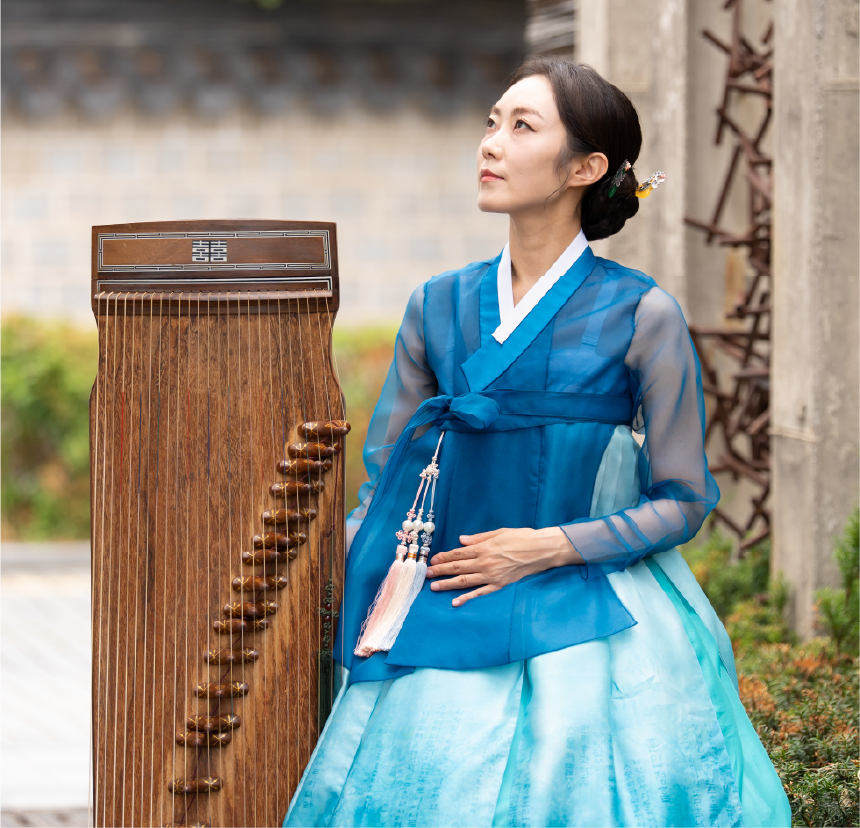
Park Seung-hee is a gayageum artist whose solo career spans the 12-string, 25-string, and metal-string gayageum. As the leader of the traditional Korean music ensemble Daldidala, she reinterprets the essence of Korean traditional music through a contemporary lens. Selected as a 2025 Jeonbuk Tourism Startup, she also leads a cultural arts enterprise bridging art with local tourism. Based in Jeonju, she develops immersive gayageum experiences for international visitors, dismantling the barriers between traditional art and modern audiences. From multisensory programs to her upcoming solo concert on October 18, she shares messages of warmth, inspiration, and healing through the unique heung (joyful energy) and harmonic resonance of the gayageum.
Q1. You have built an extensive performance career through diverse solo performances featuring the 12-string, 25-string, and metal-string gayageum. How does each variation of the instrument offer a different kind of resonance for expressing your inner world?
A1. These three types of gayageum are like “three voices” that express the diverse landscapes within me. The 12-string gayageum, with its silk strings and ability to embody the profound han and heung of Korean music, represents my “roots.” The 25-string gayageum, with its rich harmonies that open possibilities for interdisciplinary art, represents “expansion and communication.” And the metal-string gayageum, with its bright and mysterious resonance, embodies my “intense inner energy.” When these contrasting sounds intersect in three dimensions, I am finally able to present audiences with my own complete musical world—one that embraces both tradition and modernity.
Q2. Working in Jeonju, a hub of Korean traditional music, requires both reverence for tradition and a spirit of innovation. How has the city influenced your musical philosophy and your exploration of traditional sanjo?
A2. Jeonju is both the solid foundation of my music and an endless source of inspiration—a teacher that continues to guide me. By fully absorbing the emotions embedded in this land, I learned the profound breathing of sanjo and developed a deep respect for tradition. Yet Jeonju is by no means confined to the past. Its dynamic vitality, where media art can unfold beneath the eaves of traditional hanok houses, became a clear reflection of the direction I wanted to pursue with Daldidala. The innovative spirit that allowed me to expand the deep musical language of sanjo into an immersive experience for global audiences was born from Jeonju itself, where tradition and modernity coexist.
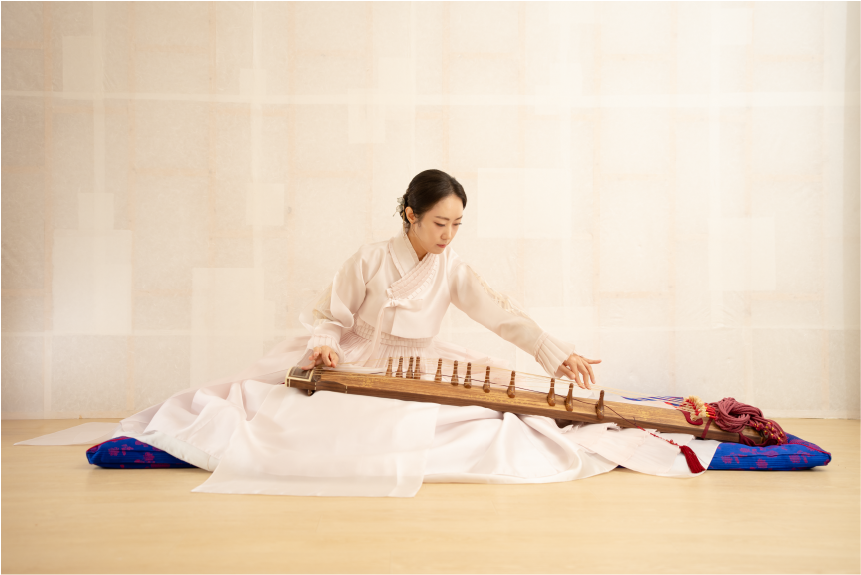
Q3. As the leader of Daldidala, a five-member traditional Korean music ensemble featuring gayageum, daegeum, and vocalists, how do you harmonize these distinct traditional sounds into music that feels accessible and contemporary?
A3. The first key to harmonizing traditional instruments, each carrying its own universe, is “space and compromise.” When the 25-string gayageum provides a solid canvas with contemporary chord progressions, the melodies of the daegeum and the voices of the singers can freely blend above it. The second is telling “today’s stories” that audiences can relate to. While preserving traditional playing techniques, we interpret the joys and sorrows of modern life through a pop and crossover sensibility, making the music feel more approachable. Just as Daldidala hopes to deliver unfamiliar traditional Korean music in a “sweet” way, we continuously fine-tune our individual voices to create music that gently finds its way into the hearts of our audiences.
Q4. Daldidala was selected as a 2025 Jeonbuk Tourism Startup. As the head of a cultural arts enterprise connecting art and tourism, what is your vision for transforming traditional Korean music into a signature immersive tourism experience in Jeonbuk?
A4. Our vision is to invite audiences to step beyond their seats and directly enter the world of traditional Korean music. Our “immersive gayageum experience,” which combines traditional melodies with cutting-edge media art, is not simply a relic of the past but a living moment of healing that can soothe the stresses of everyday life. Through Gayatdal, our art merchandise inspired by the gayageum, we also hope to extend the sense of immersion and wonder experienced in Jeonbuk into visitors’ everyday lives. We aim to move beyond tourism that is simply seen—to create a truly immersive form of tourism in which visitors experience the sounds of Jeonbuk with their whole bodies and return home carrying its beauty with them.
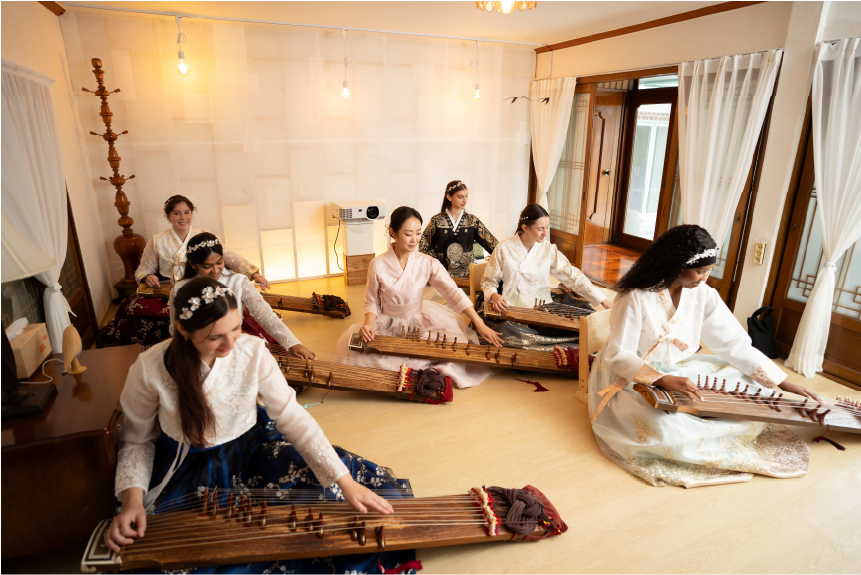
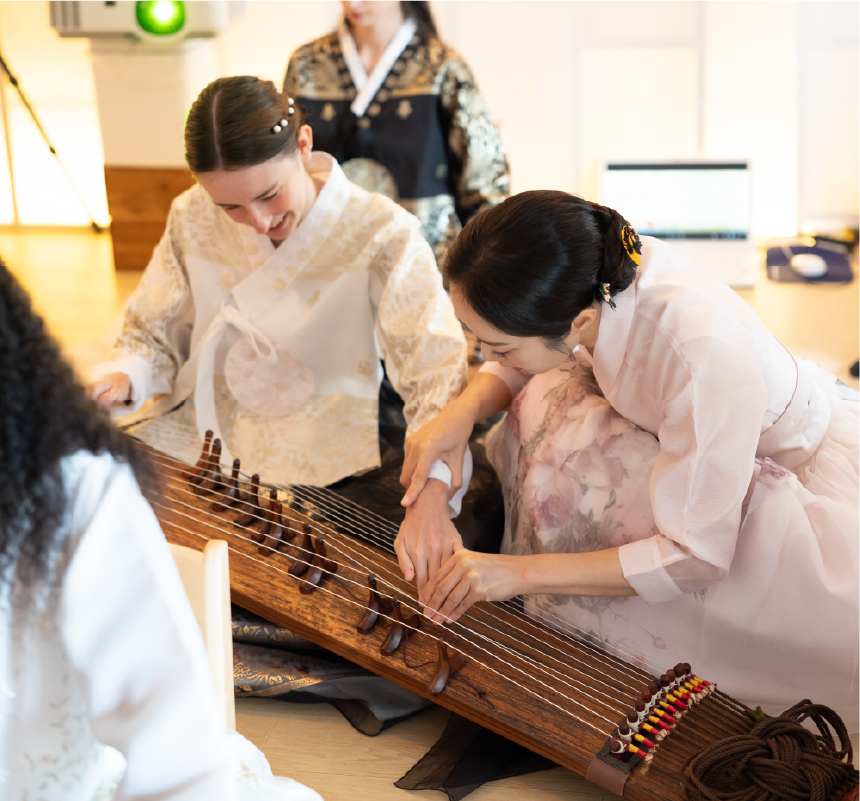
Q5. You currently offer an “immersive gayageum experience” for international visitors in Jeonju. What inspired you to present traditional music through a contemporary and sensory immersive format?
A5. The biggest motivation was the question of how to break down the barriers of language and culture. Simply sitting and “listening” to music had limitations when it came to conveying the true dynamism of the gayageum to international audiences. So we created an immersive space that combines media art and 4D technology, engaging both sight and touch. When light dances in response to the gayageum melodies and the space itself begins to vibrate, our music becomes an “intuitive language of the senses” that needs no explanation. Through this multidimensional experience, I hope unfamiliar traditional art can become a source of warm comfort, gently embracing the tired everyday lives of visitors from around the world.
Q6. Is there a memorable piece of feedback or touching episode from directly connecting with audiences during a performance or immersive experience?
A6. The most memorable moment was when we performed in a serene traditional Korean house in Jeonju, hosting German tourists. Usually, Western audiences consider it polite to quietly enjoy the performance until the stage ends, so they were somewhat stiff at first. But as the performance reached its peak, he became captivated by the lively rhythm, suddenly stood up, and began dancing energetically. She broke the mold of static viewing and fully immersed herself in our unique “pan,” where performers and audience breathe together. I realized that despite differences in language and culture, the “power of music” that moves the heart is one, and the dance moves they showed that day will forever remain to me as the most beautiful chant in the world.
Q7. Balancing your roles as a solo performer, ensemble leader, and head of a cultural enterprise must require tremendous energy. How do these different roles nourish one another in your creative work?
A7. These three roles become the “roots,” “branches,” and “forest” within me, providing powerful nourishment for my creativity. As a solo performer, I strengthen the “roots” of traditional Korean music through solitary practice. As an ensemble leader, I extend the “branches” of accessible melodies by making space for others and finding harmony. And as the head of a cultural enterprise, I plan the “forest” of immersive art from the objective perspective of the audience. Expanding the stage, filling it with harmony, and then returning to reaffirm the depth of the tradition—the virtuous cycle among these three selves is what continues to shape me as the artist Park Seung-hee.
Q8. Your third solo gayageum concert is scheduled for October 18. What central theme and musical story are you preparing to share with the audience through this special performance?
A8. My third solo concert, , is a performance that combines jeongak, the refined court and literati music at the roots of traditional Korean music, with media technology. Moving away from the vibrant energy of sanjo, this concert will feature all nine movements of Hyeonak Yeongsanhoesang, a masterpiece of jeongak known for its restrained and introspective sound. To overcome the somewhat unfamiliar and meditative nature of jeongak, I have incorporated an immersive visual production using Jeonju hanji paper objects and projection mapping. Through a visual narrative in which light changes and dances with the breath of the gayageum, I hope audiences will experience genuine artistic healing and rest within melodies painted in light.
Q9. For the KOREANOW readers in New York, Paris, and all around the world, how would you describe the distinctive sound, spirit, and sweetness of Park Seung-hee’s gayageum and Daldidala in a single sentence?
A9. “Our group name, Daldidala, is a Korean dialect expression that translates to ‘very sweet.’ In English, I suppose it would be something like ‘Sweet, sweet, like a peach!’ Just like our name, we want to share a sweet sound fused with the unique spirit of Korean traditional music—one that can gently find its way into the hearts of people all over.”
Q10. As a featured artist in Notable Koreans, what is your ultimate goal for expanding Daldidala and your immersive gayageum programs onto broader global stages, including New York and Paris, beginning with your solo concert on October 18?
A10. I believe that though nationality and language may differ, the healing power of music is universal. My ultimate goal is to use the upcoming solo concert on October 18 as a stepping stone to taking our unique, multidimensional, and immersive performances globally. Imagine someone surrounded by the skyscrapers of New York or walking through the puzzled streets of Paris, who steps into the melodies of Daldidala and finds a moment of complete rest and sweet comfort. That is what true global expansion means to me.
Instagram @jeonju_gayageum_experience Email neiplove@naver.com