
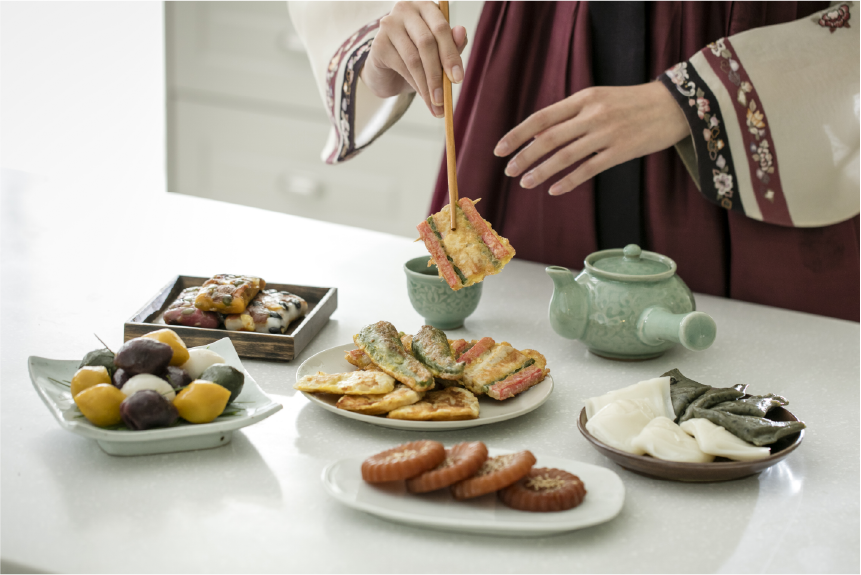
1. The Season of Harvest: Humanity’s Greatest Offering to Nature and Ancestors
Hangawi (Chuseok, the Korean Harvest Festival) is more than a holiday or a day of rest. It marks the joyful culmination of a year of hard work—from sowing tiny seeds in spring to tending crops under the blazing summer sun, finally rewarded with a rich harvest. The sky grows deeper blue, the fields turn into seas of gold, and mountains and orchards overflow with newly harvested grains and fruits.
For Koreans, the Charye table, prepared for ancestral rites during Chuseok, is far more than a formal Confucian ritual honoring the deceased. It is an expression of gratitude to nature, which provides rain, wind, sunlight, and fertile soil, and a celebration of sharing the fruits of honest labor with ancestors, family, and the community.
Dongguk Sesigi (東國歲時記), a record of seasonal customs from the Joseon Dynasty, states that, “On the morning of Chuseok, newly harvested rice cakes, fruits, and freshly brewed rice wine are offered at the family shrine to express gratitude to the ancestors.” In this way, the Chuseok ritual table serves as a sacred bridge, connecting the wisdom of past generations with their descendants across time.
2. The Arrangement of the Charye Table: Cosmology and Culinary Wisdom
The Charye table is not simply a lavish display of food. It is a carefully arranged space where the principles of yin and yang, the Five Elements, and the natural vitality of seasonal ingredients come together in perfect harmony.
(1) The Principles and Symbolism of the Charye Table
- Joyulisi (Jujube, Chestnut, Pear, Persimmon) — The Stages of Human Virtue
- Placed in the front row from left to right, jujubes, chestnuts, pears, and persimmons symbolize the moral virtues expected of future generations.
- Jujube: The tree bears abundant fruit, each containing a single seed. It symbolizes the hope for outstanding descendants and purity of character.
- Chestnut: A chestnut burr commonly contains three nuts, symbolizing the Three State Councillors of the Joseon court. Even after germination, the original chestnut shell remains attached to the roots, representing gratitude toward one’s ancestors.
- Pear: Though golden on the outside, the pear is pure white inside, symbolizing purity. Its six seeds traditionally represent the Six Ministries of the Joseon government.
- Persimmon: A persimmon tree bears quality fruit only after grafting, symbolizing that people become complete through education, cultivation, and perseverance.
- Hongdong Baekseo & Jwapo Uhye — The Order of Yin and Yang
- Hongdong Baekseo places red fruits in the east and white fruits in the west, symbolizing the harmony of yin and yang.
- Jwapo Uhye places dried meat on the left and fish products on the right, while Eodong Yukseo places fish in the east and meat in the west. Together, these arrangements symbolize harmony between land and sea and express a wish for balance throughout the natural world.
(2) Culinary Wisdom Through Simplicity
- Excluding the Five Pungent Vegetables
- Foods prepared for the Charye table—including soups, vegetables, and pancakes—traditionally do not use garlic, green onions, red pepper powder, chives, or other pungent seasonings.
- This practice originated from the traditional belief that strong yang energy and pungent aromas could disturb ancestral spirits.
- From a modern culinary perspective, it also reflects remarkable wisdom. By avoiding strong seasonings, the natural aroma, freshness, and umami of newly harvested grains, vegetables, and fruits are preserved, allowing the pure flavors of the ingredients to take center stage.
3. Four Traditional Chuseok Dishes and Their Origins
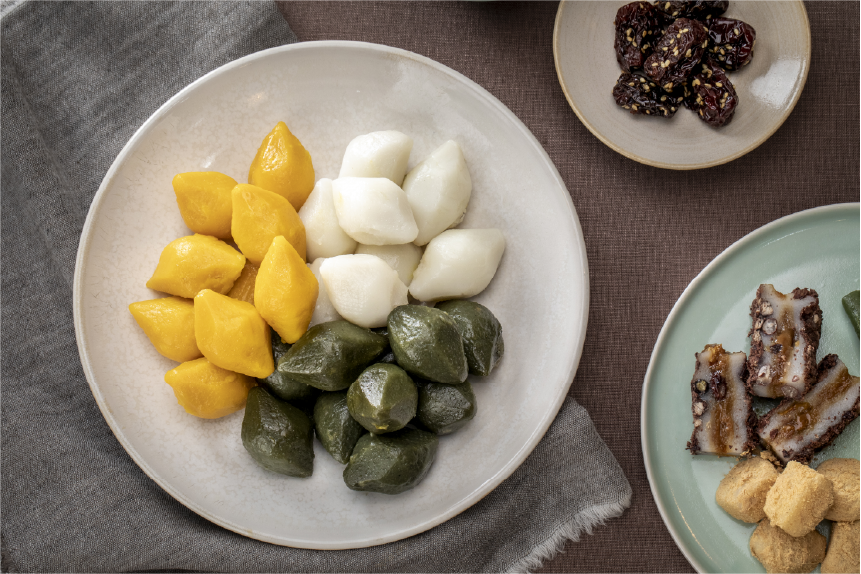
At the heart of the Chuseok table are seasonal dishes that combine the abundance of autumn with Korea’s unique culinary traditions.
(1) Songpyeon — The Science of the Half Moon and Pine Needles
- The Symbolism of the Moon
- Songpyeon, the signature rice cake of Chuseok, is shaped after the moon. The rice dough begins as a full moon, but after being filled with ingredients such as beans, sesame seeds, or chestnuts and folded in half, it becomes a crescent moon.
- While a full moon has already reached its peak, a crescent moon symbolizes growth and hope for the future. Shaping Songpyeon like a half moon expresses the wish for greater prosperity and abundance.
- According to the Samguk Sagi, a turtle discovered during the reign of King Uija of Baekje bore the inscription, “Baekje is the full moon, Silla is the half moon.” It was interpreted to mean that Baekje had reached its peak, while Silla was destined to continue rising. This belief is reflected in the shape of Songpyeon.
- The Culinary Science of Pine Needles
- The name Songpyeon (“pine rice cake”) comes from steaming the rice cakes on a bed of pine needles.
- Pine needles prevent the rice cakes from sticking together and add a subtle pine fragrance. They also contain natural antibacterial compounds such as phytoncides and terpenes, which help slow spoilage during the warm autumn season, acting as a natural preservative.
(2) Taro Soup — Seasonal Medicinal Cuisine
- Instead of the everyday beef and radish soup, the traditional soup served on the Chuseok ritual table is taro soup. Taro reaches its best flavor and nutritional value in early autumn.
- During the holiday, people often enjoy rich foods such as jeon and meat dishes. Taro contains mucin and galactan, which help protect the stomach and aid digestion. It reflects the wisdom of Korean medicinal cuisine in caring for the body during festive meals.
(3) Sindoju — The First Wine of the Harvest
- The ritual wine offered during Chuseok is traditionally called Sindoju, meaning “the wine that brings new vitality.”
- It is brewed from newly harvested rice, fresh nuruk, and clean water. The first liquor made from the year’s harvest is offered to the ancestors, and after the ritual, the family shares it through eumbok, receiving the blessings of both their ancestors and the new harvest.
(4) Braised Chicken and Fresh Seasonal Vegetables
- A traditional Chuseok table includes three-colored seasoned vegetables made with fresh bracken, balloon flower root, and spinach, along with braised chicken prepared from newly raised chickens.
- The three vegetables symbolize three generations: balloon flower root represents ancestors, bracken represents parents, and spinach represents descendants. Braised chicken, rich and nutritious in autumn, was considered one of the finest seasonal nourishing dishes.
4. Modern Chuseok and the Value of Learning from Tradition
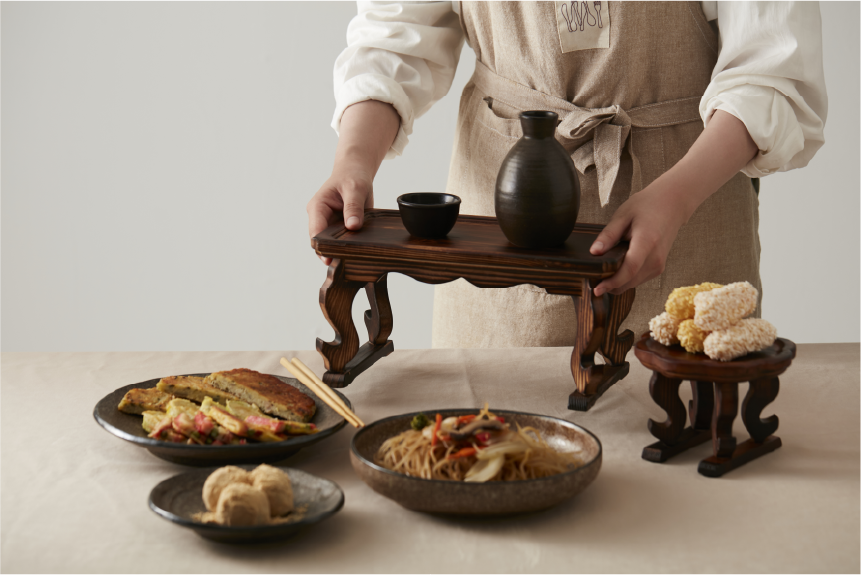
Today, Chuseok celebrations are changing as Korean society shifts from large extended families to smaller households. Preparing dozens of dishes over several days has become a source of stress for many families.
Amid these changes, Korean society is rediscovering the wisdom of “On-go Ji-shin”—learning from the past while embracing the present.
- Simplified Charye Guidelines
- The Sungkyunkwan Confucian Council has officially stated that the heart of Charye lies in honoring one’s ancestors, not in preparing extravagant meals. It recommends a simplified ritual table with no more than nine dishes, typically including Songpyeon, seasonal fruits, rice, soup, and vegetables, while placing greater importance on family conversation and togetherness.
- The Rediscovery of Chuseok Cuisine as K-Food
- Songpyeon, Sindoju, and taro soup are no longer viewed only as ritual foods. Today, they are increasingly recognized as examples of seasonal fine dining, showcasing Korea’s culinary philosophy, seasonal ingredients, and refined cooking traditions.
The Warmth We Share Beneath the Full Moon
As night falls on Chuseok, a bright full moon rises into the autumn sky. Its light shines equally upon every rooftop and every home, without regard to status or wealth.
A bowl of freshly harvested rice, a half-moon-shaped Songpyeon, and a cup of Sindoju shared among family remind us of what truly matters in life: gratitude for the gifts of nature and the generosity to share our blessings with those we love.
In today’s fast-paced world, Chuseok offers us a rare opportunity to pause, look into one another’s eyes, and spend meaningful time together.
As the aroma of the harvest drifts through the autumn breeze, gathering beneath the full moon to share food and heartfelt conversation remains the greatest and most beautiful feast that Chuseok has offered, from generations past to the present day.
[EPILOGUE] A Table Set with the Legacy of Time
From Jeonju Bibimbap, which captures the harmony of autumn sunlight and the five traditional colors, to Korean traditional liquor, crafted through the patient work of time and microorganisms inside earthenware jars, and the Chuseok ritual table, prepared in gratitude for nature’s abundance and the blessings of our ancestors—we have explored the richest and most refined layers of K-Food, shaped by Korea’s four seasons and generations of tradition.
Though these three subjects may appear different in form and flavor, they share one profound philosophy at their core: the harmony born of patience and the warmth that connects people with nature.
The inclusiveness of bibimbap, where countless ingredients come together in perfect balance without losing their individual character; the depth of traditional liquor, created not through artificial shortcuts but through months and years of patient fermentation; and the humility of the Chuseok table, where the fruits of a year’s honest labor are shared generously with ancestors and loved ones—all quietly remind us of the true value a meal can hold.
The reason K-Food is celebrated around the world is not simply its striking appearance or bold flavors. Its true appeal lies in the love for people, the respect for nature, and the stories shaped by time that are woven into every step of its creation.
The Korean aesthetics we have discovered on the dining table are not relics of the past. They continue to evolve, embracing contemporary creativity and innovation while remaining deeply rooted in tradition.
Mixing a bowl of bibimbap, raising a glass of traditional liquor patiently matured through time, and sharing a warm meal beneath the full moon—these simple acts reveal something profound. Korean food is far more than nourishment. It is the warmest comfort passed down by our ancestors and one of Korea’s most profound traditions uniting nature, humanity, and everyday life.