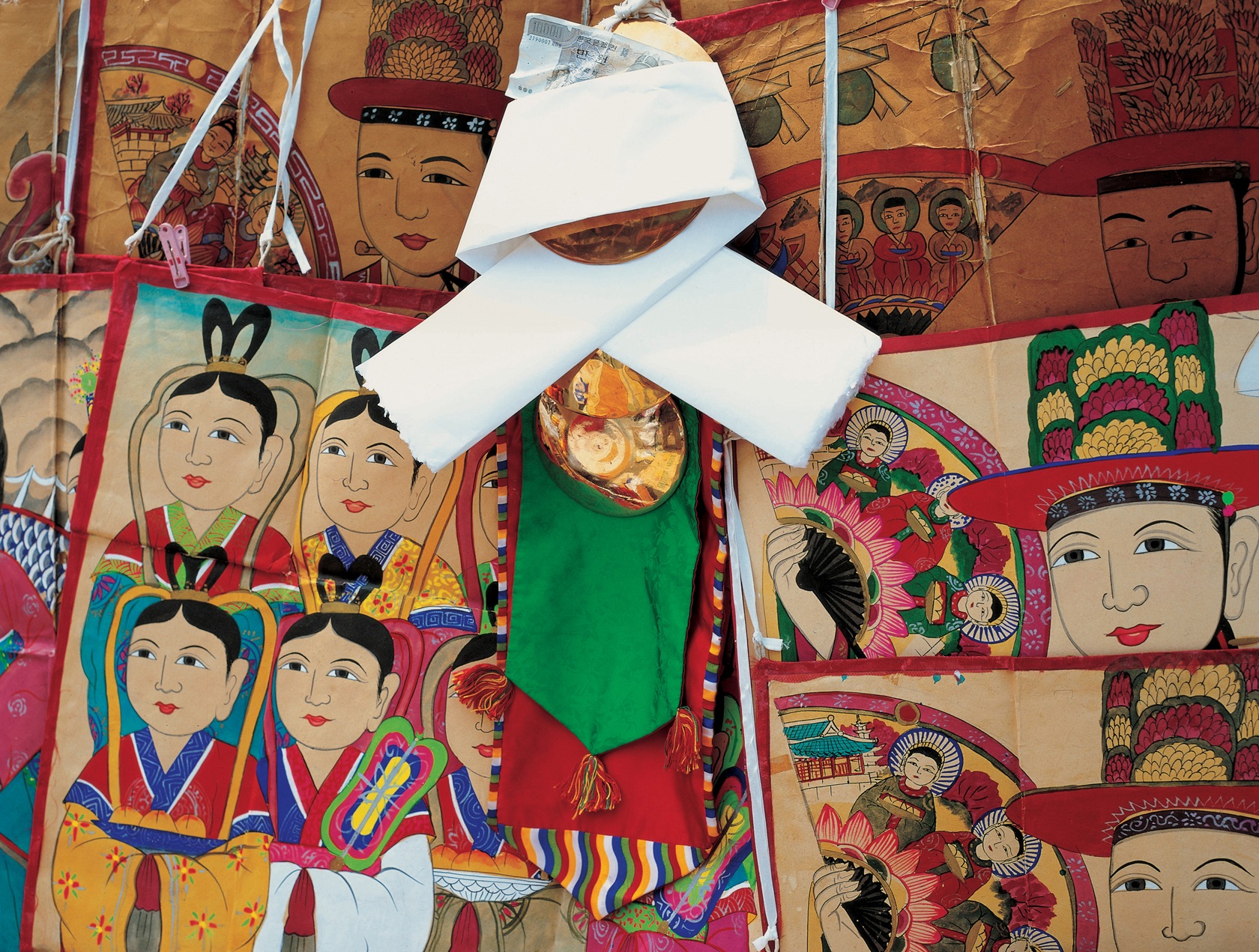
PROLOGUE: A 1.4 Trillion Won Spiritual Business, The Future Strategy Designed by K FATE
In Seoul in 2026, everything seems to be reduced to numbers, as if every answer has already been calculated. The world appears more transparent than ever, yet paradoxically, fewer people feel certain about their own future. In this age of uncertainty, Korea offers one of the most distinctive solutions capturing global attention. Saju is a form of human centered statistical analysis of fate, and shinjeom is a practice of spiritual channeling.
Korean fortune telling is no longer confined to the realm of wishful prayers or passive belief. It has evolved into the central axis of a massive consolation economy worth 1.4 trillion won annually. It has also developed into a form of spiritual consulting that helps individuals understand their temperament and the flow of their lives. Scenes that were once considered unusual have now become both common and fashionable in Korea. Inspired by the charismatic shaman portrayed in the film Exhuma, international tourists visit saju cafés in neighborhoods such as Hongdae. They sit with English interpreters and seek insight into their futures. This has become one of the most recognizable cultural images of Korea in 2026.
Why are we so captivated by these invisible threads of fate? It is because Korean divination offers more than prediction. It provides a practical guide for understanding oneself. While Western astrology often focuses on personality and emotional interpretation, Korea’s saju and shinjeom function more like a strategic forecast for life. They help individuals anticipate change and prepare for uncertainty.
The predictive intensity shown in War of Fate demonstrates the power of data, while thousands of years of accumulated wisdom continue to evolve into a form of K mysticism that resonates with global MZ audiences. When will the most favorable opportunities arise in your life? Now is the time to step into this world, where ancient knowledge meets modern strategy, and discover the business of destiny.
Shinjeom: The Essence of Spiritual Channeling Found Only in Korea
Among Korea’s diverse divination traditions, the most astonishing and enigmatic is shinjeom. Distinct from Western practices such as psychic readings or tarot, shinjeom is a ritual in which a shaman channels a specific spirit they serve in order to perceive the past, present, and future. It belongs to the realm of extrasensory intuition and cannot be acquired through study or memorization.
The moment a client steps into the room, the practitioner often begins speaking before asking for a name or birthdate, addressing the root of the client’s suffering. The divine messages that flow through the shaman’s voice are called gongsu, and they reach into hidden wounds with remarkable precision.
A particularly striking example appeared on the variety show War of Fate. In one of its most widely discussed scenes, shamans were separated by a screen and given only a single photograph. Even with such limited information, they began recounting the subject’s life in vivid detail, with some becoming visibly emotional.
In a state of spiritual possession, they trembled, shook ritual bells, and described the person’s past as if it were unfolding before them in a living scene. For many viewers, it was an experience that could not be easily explained through conventional psychological frameworks.
For international visitors, this has become one of the most intense spiritual experiences available in Korea. The fact that it can only be encountered here has made shinjeom a powerful cultural attraction.
When a Korean shaman accurately reveals deeply personal stories in front of a foreign visitor, the impact can be overwhelming. What might once have been dismissed as superstition is transformed into a deeply compelling cultural experience.
Saju: Life’s Weather Forecast Designed by 5,000 Years of Big Data
If shinjeom is an expression of spiritual intuition, saju is grounded in data and logical structure. This system analyzes the four pillars of a person’s birth, which include the year, month, day, and hour. These are known as saju, or the four pillars, and together they form the eight characters, called palja. Built upon thousands of years of accumulated observation, saju can be understood as a form of human life statistics.
At its core lies the philosophy of yin and yang and the five elements of wood, fire, earth, metal, and water. The balance of these elements within an individual is believed to shape both personality and the flow of life. Compared to modern personality assessments, saju offers a more detailed and multidimensional perspective on human nature.
Those who consult saju do not simply accept fate. They seek to understand and manage it. Practitioners of myeongri, the study of destiny, provide strategic guidance such as the following.
“Your life is currently in a period of winter. This is not the time to begin new ventures, but a time to endure and build inner strength.”
“Next spring will bring a strong fire element. This is a favorable time to expand your activities with confidence.”
In this sense, saju functions much like a weather forecast for life. It helps individuals prepare for what lies ahead rather than waiting passively for events to unfold.
For Western audiences who value logical reasoning, saju is increasingly recognized not as mysticism, but as a structured and practical guide to life. In some ways, it is even seen as more systematic than traditional astrology. Recently, its integration with advanced technology has accelerated this perception. Applications that analyze saju using artificial intelligence are entering the global market, bringing this Korean intellectual tradition into everyday life around the world.
Ultimately, saju is not simply a tool for predicting the future. It is a refined expression of Eastern philosophy that offers insight into the fundamental forces shaping human life.
The Boom Sparked by Content
From Exhuma to War of Fate, the Rise of K Mysticism That Captivated the World
The global surge of K mysticism began as Korean shamanistic themes entered mainstream media. The film Exhuma achieved major success at the box office, while streaming platforms such as Netflix introduced Korean content with shamanistic elements to international audiences.
As a result, Korean divination is no longer perceived by foreign viewers as something strange or superstitious. Instead, it is increasingly recognized as a refined cultural symbol that reflects the resilience, emotional depth, and unique aesthetic sensibility of the Korean people.
This shift has extended beyond the screen into real world travel trends. Spaces that were once quiet fortune telling locations visited mainly by locals have transformed into vibrant cultural destinations. In neighborhoods such as Gangnam, Hongdae, and Ikseon-dong, it is now common to see long lines of international visitors waiting outside well known fortune telling houses.
Many visitors take part in a form of modern pilgrimage, seeking out places rumored to have been visited by their favorite K pop idols or actors, and sharing their experiences on platforms such as TikTok and Instagram.
In particular, services offering shinjeom readings with professional interpreters have grown rapidly. Personal accounts from foreign visitors, such as “the shaman’s message became a turning point in my life,” have helped elevate Korean divination into a distinctive and immersive cultural experience.
The influence of media content has transformed shamanism from a once marginalized and hidden practice into one of Korea’s most compelling global cultural exports.
Power Proven by Numbers – The 1.4 Trillion Won Consolation Economy
Korea’s divination market has grown into a major industry worth approximately 1.4 trillion won, which is about 950 million dollars annually. This figure is comparable to the total revenue of the Korean film industry. At the center of this growth is its integration with digital technology. Platforms such as Cheonmyeong and Jeomsin have attracted significant investment and connect users around the world through real time consultations that do not require face to face interaction.
For the MZ generation, who are navigating an uncertain future and intense competition, divination is no longer seen as simple prediction. It functions as a form of psychological support. Paying for a consultation is often viewed as a way to manage uncertainty and as an emotional investment that helps ease personal isolation.
This growing demand has expanded into related industries, including the production of themed goods, the development of spiritual tourism programs, and subscription based fortune services. Together, these sectors are shaping a distinctive model known as the consolation economy.
Today, international visitors to Korea are not only purchasing material goods but are also investing in experiences that offer insight into their lives and a sense of renewal. This trend, often described as spiritual tourism, reflects a shift in what global travelers seek when they visit Korea.
K-saju and shinjeom have now established themselves as unique cultural assets. They continue to develop into high value industries that respond to the growing global interest in spirituality and emotional well-being.

EPILOGUE: Destiny Is Not a Prison, but a Map That Guides the Way Forward
As the incense smoke in the shrine fades and the fortune teller closes the worn book of myeongri, a quiet truth emerges. The reason we tremble at the sharp gongsu of shinjeom or study the intricate charts of saju is not simply to see the future.
It is a deep desire for reassurance that the hardships in our lives are not entirely our fault. It is the will to survive and the strength to endure today by believing that unseen possibilities still lie ahead.
The reason Korea’s shamanistic and divination traditions have endured for more than five thousand years, despite repeated suppression and dismissal, is that they have served as a final safeguard of human dignity. From unnamed people of the past to individuals living in solitude today, Korean divination has consistently delivered the same message.
“You are not alone.”
“There will come a day when light reaches your life.”
Even in the intense predictive scenes of War of Fate, what remains is not the cold accuracy of numbers, but the deeply human act of understanding someone’s life and sharing their emotions.
Destiny is never an unbreakable chain. Korean tradition emphasizes the wisdom of pihyung chwigil, which means avoiding misfortune and choosing what is beneficial. If we know a storm is approaching, we can pause our journey or prepare more carefully. If we know when the light will return, we can choose the right moment to begin again.
Divination, then, can be understood as the art of timing. It is a guide that helps shape the direction of one’s life.
Today, international visitors write their names in Korean fortune telling houses and step into a new form of self-reflection. Although languages may differ, the human desire to be happy and to be loved remains universal.
Korea’s saju and shinjeom have become a form of global influence that expresses these shared human desires through a uniquely Korean sense of spirituality. Listen carefully to the voice of destiny. The map of your life is already in your hands. The moment you choose to unfold it; your true golden age begins.
Source:
- Naver Encyclopedia of Korean Culture: https://terms.naver.com
- National Folk Museum of Korea: https://www.nfm.go.kr