From Modern Tragedy Carved by Hands and Hammers to the Historical Reflection Offered by a 100-Year-Old Tunnel in 2026
The Deepest Way to Encounter the Soul of Yeosu
Yeosu, literally meaning “beautiful waters,” is a city that hides a cold, weighty narrative behind its dazzling night views and the glowing lights of romantic street stalls. While the brilliance of Dolsan Bridge and the modernity of the Yeosu Expo site define its outward appearance, the true soul of Yeosu resides quietly in the rugged cliffs of Marae Mountain and the black sands of Manseongni on the city’s northeastern edge.
In this special feature, we explore Yeosu’s most unpolished yet honest face: Marae Tunnel No. 2, carved not by machines but by sheer human determination, and Manseongni Black Sand Beach, waiting just beyond it. This is not merely a tourist destination. It is a living museum shaped by a century of labor and thousands of years of relentless waves.
The 100-Year-Old Echoes: Marae Tunnel No. 2
Korea’s Oldest Road Tunnel: A Century of Life
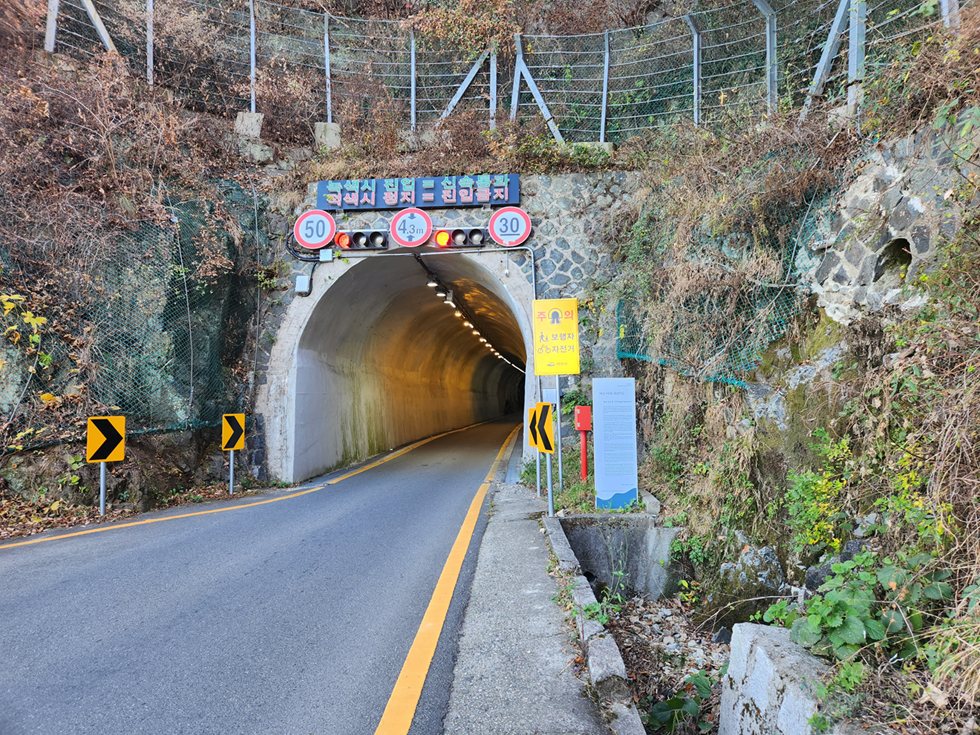
At the foot of Marae Mountain, connecting Deokchung-dong and Manheung-dong in Yeosu City, stands a landmark that marked a turning point in Korea’s road history: Marae Tunnel No. 2, National Registered Cultural Heritage No. 116. Opened in 1926 during the Japanese colonial period, this tunnel turns exactly 100 years old in 2026.
Originally designed as a military road linking the former Yeosu Station area to Mipyeong-dong, it now serves as one of the fastest shortcuts connecting Yeosu Expo Station and Manseongni Beach, continuing to function as a vital passage for both residents and visitors.
Although traffic demand has been partially redistributed since the opening of Route 17, also known as Expo-daero, which bypasses the city center, the tunnel remains an active and heavily used route, especially for access to the Manseongni area. It continues to maintain its role as a living piece of infrastructure rather than a relic of the past.
Chisels, Hammers, and the Sweat and Blood of Ordinary People
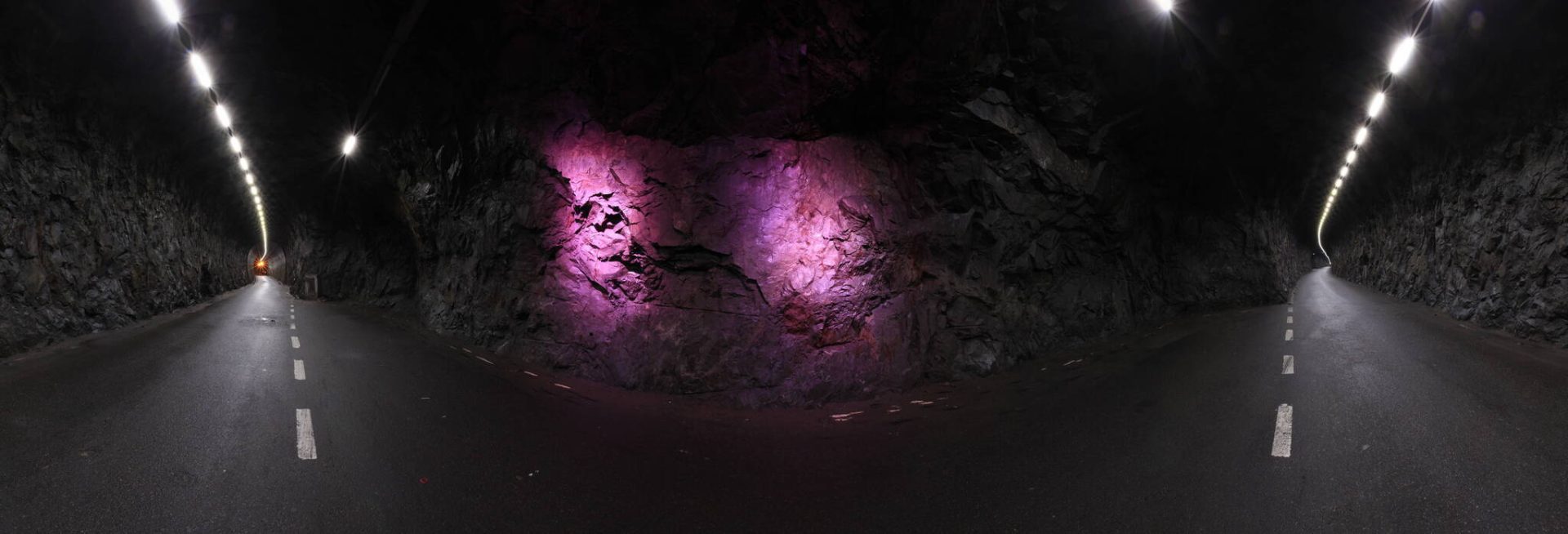
The distinctive value of Marae Tunnel No. 2 lies in its construction method. One hundred years ago, under Japanese colonial rule, Korean and Chinese laborers were forcibly mobilized for its creation. In an era with no modern machinery, they were left with nothing but heavy hammers and iron chisels, driving their tools into the solid bedrock of the mountain.
Excavating a 640-meter tunnel entirely by hand was nothing short of a struggle for survival. Accidents, injuries, and deaths during construction were tragically common. The rough, uneven chisel marks that still remain on the tunnel walls today are not merely traces of construction. They stand as fossilized remnants of breathless labor, suffering, and the silent grief of unnamed workers from a century ago.
The Disappeared Stone Cairn and Ghost Legends
In the past, near the Manseongni-side entrance of the tunnel, there once stood a strange stone cairn formed gradually by travelers leaving behind small stones one by one. Among locals, various ghost stories circulated, such as “if you do not throw a stone into the tunnel, you will see a ghost,” or “you must throw a stone toward the opposite side when exiting.”
However, the reality behind these legends reflects a deeply sorrowful layer of history. The cairn was not born from superstition alone, but from acts of remembrance: stones left by passersby to console the spirits of laborers who died unjustly during construction, and to honor the souls of civilians who were killed nearby during the Yeosu–Suncheon Incident, also known as the October 19 Incident.
Although the stone pile itself has disappeared due to road improvement projects, a memorial monument nearby continues to stand quietly, bearing witness to the suffering and memory of that time.
Order in 2026: The Harmony of Signals and Safety
Over its century-long existence, Marae Tunnel has experienced many twists and challenges. In 2016, it faced a major crisis when two rockfall incidents led to a temporary closure. However, after detailed structural safety inspections and the installation of improved traffic control systems, it reopened in 2017.
Today, the tunnel operates as a one-lane, two-way passage regulated by traffic signals at both ends. Every 100 meters, designated pull-off bays are installed, revealing the tunnel’s unusual and utilitarian structural character, shaped by both history and necessity.
Traffic Guidelines
Although the tunnel is not restricted to automobiles only, and bicycles, motorcycles, and even pedestrians are technically allowed in principle, its narrow width and low-light conditions make walking through it practically hazardous. For safety reasons, using a vehicle or public transportation is strongly recommended.
History and Sensation at Manseongni
From a Healing Sanctuary to a Site of Tragedy – The Day the Sand “Opened Its Eyes,” Lunar April 20:
In the past, Manseongni was regarded as a place of healing, attracting visitors from all over the country every year on the 20th day of the fourth lunar month. It was believed that on this day, the black sand “opened its eyes,” and crowds would gather to bury their bodies in the hot sand, hoping to treat neuralgia, arthritis, and gynecological ailments. The beach would become densely packed with people seeking relief and recovery.
The Wounds of the Yeosu–Suncheon Incident, also known as the October 19 Incident:
Beneath its appearance as a scenic seaside retreat, Manseongni also holds a deep sorrow within Korea’s modern history. During the Yeosu–Suncheon Incident in 1948, the Manseongni hinterland and coastal area became sites of mass civilian killings. In a symbolic sense, the black sand of the beach can be seen as a silent witness that absorbed and concealed the bloodshed of that day, holding history in quiet testimony.
A Black Shore That Awakens the Senses
• The Orchestra of Black Pebbles:
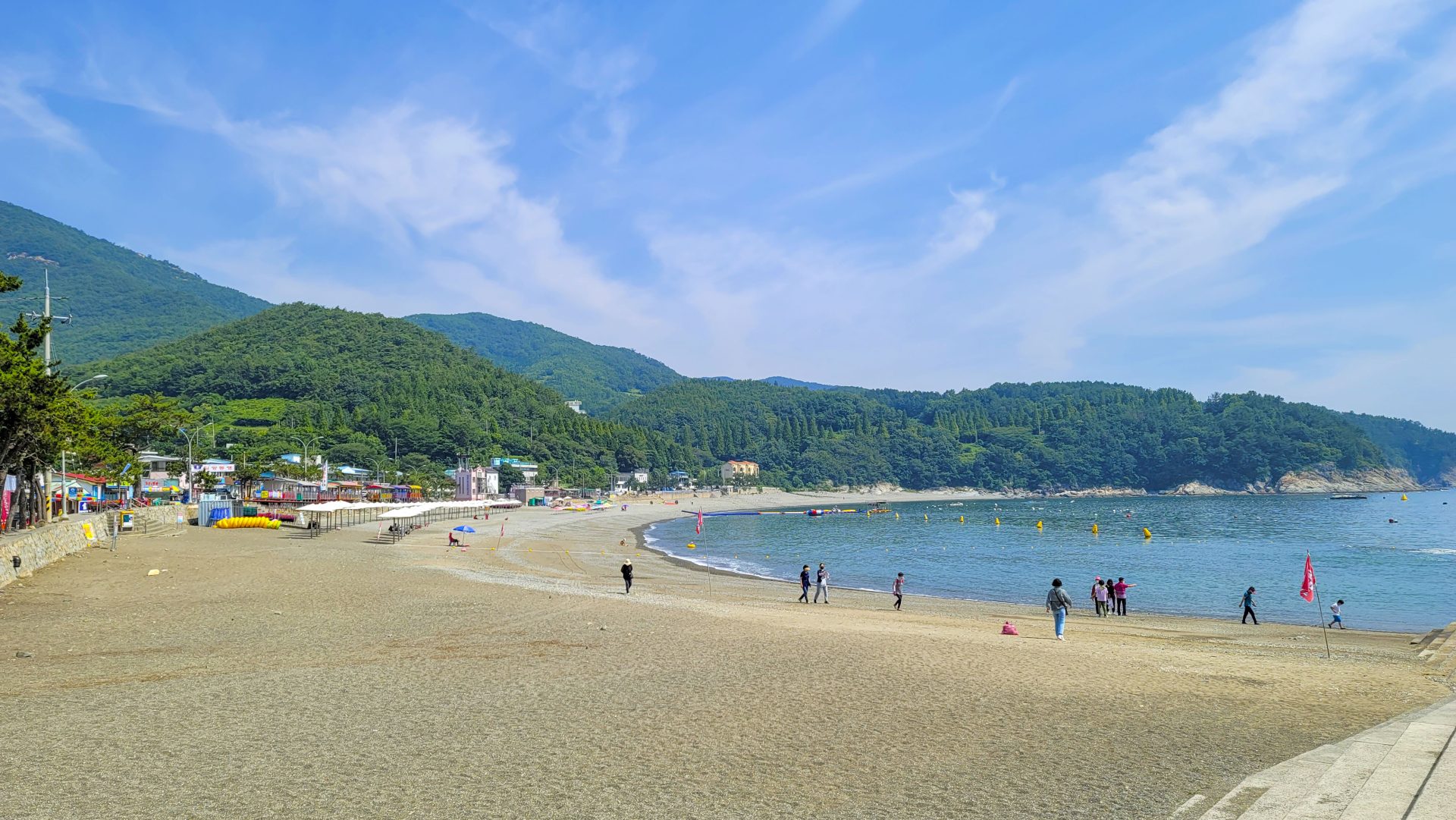
Manseongni is composed of a mix of fine black sand and small pebbles. As waves surge in and retreat, the stones roll against one another, producing a deep, resonant rustling sound far more powerful and immersive than the typical soundscape of ordinary beaches. It feels less like a seaside and more like a natural percussion ensemble shaped by the tide.
• Visual Calm of the Horizon:
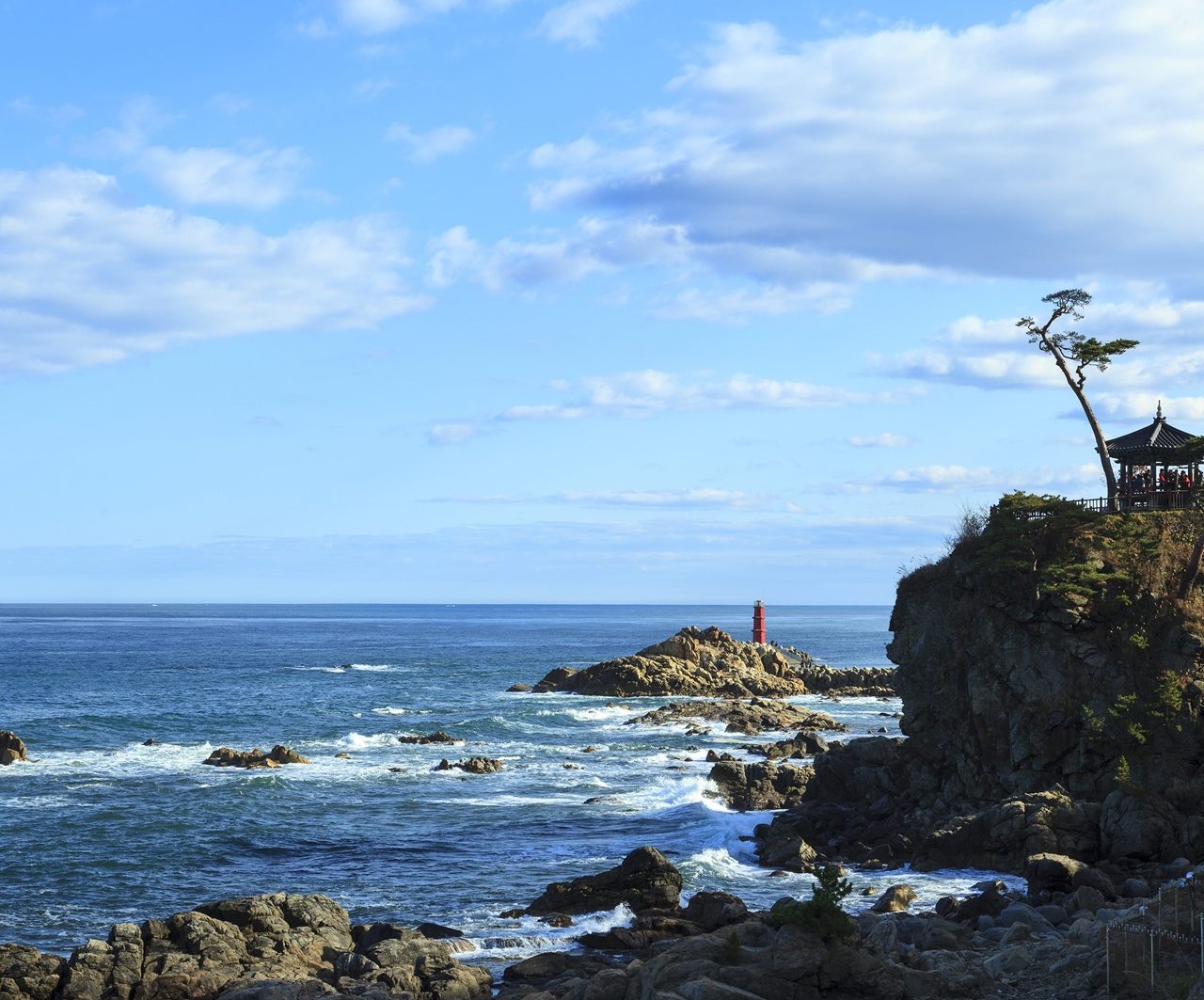
The black shoreline intensifies the contrast of the sea’s deep blue, making the ocean appear even clearer and more vivid. In front of the beach, small islands in the South Sea are arranged like brushstrokes in a traditional ink painting, and on clear days, visibility extends as far as Namhae County in Gyeongnam Province.
Manseongni in 2026 and the Threat of Coastal Erosion
Today, Manseongni Black Sand Beach faces a serious environmental challenge. Due to coastal structures and changing ocean currents, the shoreline is gradually eroding, with sand being steadily washed away.
• Restoration Efforts:
To preserve Korea’s only black sand resource of its kind, the city of Yeosu continues ongoing sand replenishment projects and coastal protection measures, working to maintain the beach’s unique identity.
• Connection to the Marine Rail Bike:
Along the coastline, a rail bike attraction has been developed using a former railway section near Marae Tunnel No. 1. This offers visitors another way to experience the coastal landscape, linking industrial heritage with seaside leisure.
The Meeting of History and Gastronomy: Must-Visit Spots in Manseongni
Historical Coordinates Not to Be Forgotten: Hyeongjemyo and the Memorial Monument
Along the route near Marae Tunnel No. 2 and the path leading toward Manseongni Beach, there are places where travelers are compelled to pause and reflect.
• Hyeongjemyo, or Brothers’ Tomb:
This is a collective burial site for victims of the Yeosu–Suncheon Incident. Its name, meaning “let them rest as brothers even in death,” carries a deeply sorrowful wish that the deceased, regardless of identity, may share companionship in the afterlife.
• Yeosu–Suncheon Incident Victims Memorial Monument:
Located near the tunnel area, this monument stands as a space of remembrance. It quietly reminds passersby of historical pain while honoring the victims, embedding reflection into the journey itself.
The Taste of Manseongni: Hot Dogs and Marinated Crab
• Beach Specialty, Hot Dogs:
A classic hot dog enjoyed while walking along the Manseongni seaside trail has become a symbolic comfort food of the area. The simple combination of sugar and ketchup pairs unexpectedly well with the contrast of the black sea backdrop, creating a strangely nostalgic coastal experience.
• Soy-Marinated Crab Restaurants:
Around the beach, visitors can find restaurants serving Yeosu’s signature dish, ganjang gejang, or soy-marinated crab. Its rich, salty, and fresh flavors offer a deeply satisfying meal, perfect for restoring energy after a day of coastal exploration.
Real Guide: The Journey to Yeosu, A Record of Time and Space
STEP 1: From Seoul to Yeosu Expo Station
Depart from Yongsan Station and take the Jeolla Line train toward Yeosu, the gateway to the southern coast.
Train Type: KTX. Travel Time, One Way: Approx. 3 hours and 10 minutes. Fare, Adult Standard Seat: KRW 46,000 , Features & Recommendations: Fastest and most comfortable option. Ideal for travelers who want to save time.
Train Type: ITX-Saemaeul. Travel Time, One Way: Approx. 4 hours and 40 minutes. Fare, Adult Standard Seat: KRW 41,100 , Features & Recommendations: Comfortable seating with scenic views of southern Korea’s landscapes.
Train Type: Mugunghwa. Travel Time, One Way: Approx. 5 hours and 30 minutes. Fare, Adult Standard Seat: KRW 27,600 , Features & Recommendations: Most economical option, offering the nostalgic charm of classic train travel.
STEP 2: From Yeosu Expo Station to Manseongni Black Sand Beach
Although the distance is short, the travel experience varies depending on the chosen transportation method.
By Bus: A Historically Immersive Choice
• Boarding Location: “Mandeok-dong Community Center” stop across from Yeosu Expo Station
• Routes: Bus No. 6 or No. 7
• Travel Time: Approx. 15 minutes
• Route Experience: This unique route passes through Marae Tunnel, allowing travelers to physically experience a piece of history.
• Note: Bus intervals can be long, so checking the timetable in advance is essential. If timing is difficult, taxis are strongly recommended.
By Taxi: The Fastest and Most Convenient Option
• Travel Time: Approx. 5 minutes
• Distance & Fare: About 3 km, approximately KRW 5,000
• Advantage: With no waiting time and direct access, this is ideal for travelers who value efficiency. Taxis also pass through Marae Tunnel, making even a short ride part of the historical journey.
EPILOGUE: Opening a 100-Year Door and Asking About Tomorrow
In 2026, Marae Tunnel No. 2, the oldest road tunnel in the Republic of Korea, marks its 100th year. Over the course of a century, this tunnel has served different roles for different people: at times a passage of exploitation, at times a route of survival and escape, and today, a symbolic gateway leading toward the sea of romance and healing.
Inside the tunnel, countless chisel marks carved into the dark rock walls seem to speak in silence. They remind us not to forget that the peaceful sound of waves and the blue ocean we enjoy today are built upon the endurance and sacrifice of countless unnamed individuals who once fought through darkness armed only with hammers and chisels.
The moment one steps out of the cold air of the tunnel and onto the warm black sands of Manseongni, the journey feels complete. Standing before this living heritage that spans a hundred years of time, travelers are invited to pause, breathe in the weight of history, and listen closely to its lingering presence.
This summer, Yeosu extends a quiet invitation: a path where the solemn narrative of history and the boundless comfort of the sea exist side by side.
Source:
- Yeosu City Hall Website: www.yeosu.go.kr
Images Courtesy of Yeosu City Hall