3 Cool-Down Zones and Events: Gwanghwamun Square, Cheonggyecheon, and Seoul Plaza
Name: Areum YOO(Seoul Tourism Organization)
Bio: I enjoy observing people and cities, and noticing the subtle moods that exist within them. I love Seoul so much that I often want to stop someone on the street and talk about it. But since there is not really a place for that, I ended up writing instead.
Seoul’s summer is surprisingly hot. Compared to famously hot places such as Spain or desert cities in the Middle East, the actual temperature itself is much lower. Unless you experience it firsthand, however, it is difficult to fully understand the intensity of the heat. The humidity keeps the perceived temperature high, and tropical nights often continue for so long that many people struggle to sleep.
Korea’s air conditioner penetration rate is said to be close to 98%, but is staying indoors under cool air really the only answer? Seoul in summer is far too clear and beautiful to simply watch from inside. Besides, how do Seoulites get through this hot season every single year? If you step into the city and look closely at its landscape, you can begin to discover their own ways of surviving summer.
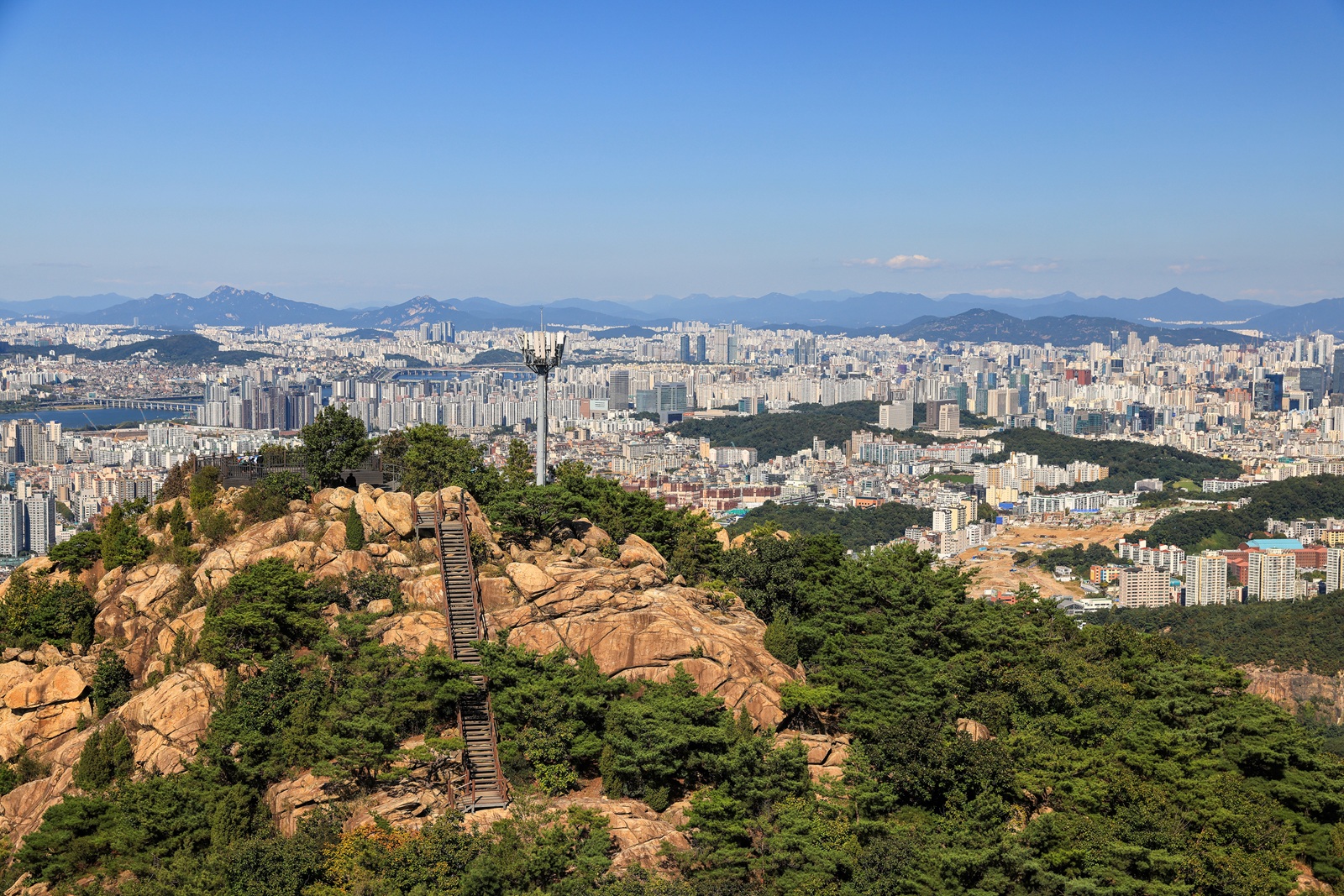
First of all, geographically, Seoul is surrounded by mountains of varying heights. No matter where you stand in the city, mountain ridges and peaks appear at the far edge of your view. Namsan rises in the center of the city, while Bugaksan, Inwangsan, and Bukhansan stand to the north, and Gwanaksan to the south. Not only are these mountains close to the city, but you can also reach their foothills simply by taking the subway, making them easy places to visit even for just half a day.
That is why Seoul’s mountains are loved by citizens throughout all four seasons. Mountains filled with dense trees and flowing valleys become perfect summer retreats. Recently, Seoul Hiking Tourism Centers have opened near the entrances of Bukhansan, Bugaksan, and Gwanaksan, offering hiking gear rentals for foreign visitors. They also provide facilities such as showers, lounges, and lockers, while guides explain hiking courses in multiple languages. You could say they take care of the entire K-hiking experience from beginning to end, making them well worth visiting.
<Seoul Hiking Tourism Center Tip>
Seoul Hiking Tourism Center – Bukhansan
• Address: 5F, Gwanglim Building, 52 Samyang-ro 173-gil, Gangbuk-gu, Seoul
• How to Get There: About 300 m, or a 5-minute walk, from Exit 2 of Bukhansan Ui Station on the Ui–Sinseol Line
• Hours: 09:00–18:00
※ Closed every Monday, January 1, February 17, and September 25
Seoul Hiking Tourism Center – Bugaksan
• Address: 1F, 88 Samcheong-ro, Jongno-gu, Seoul
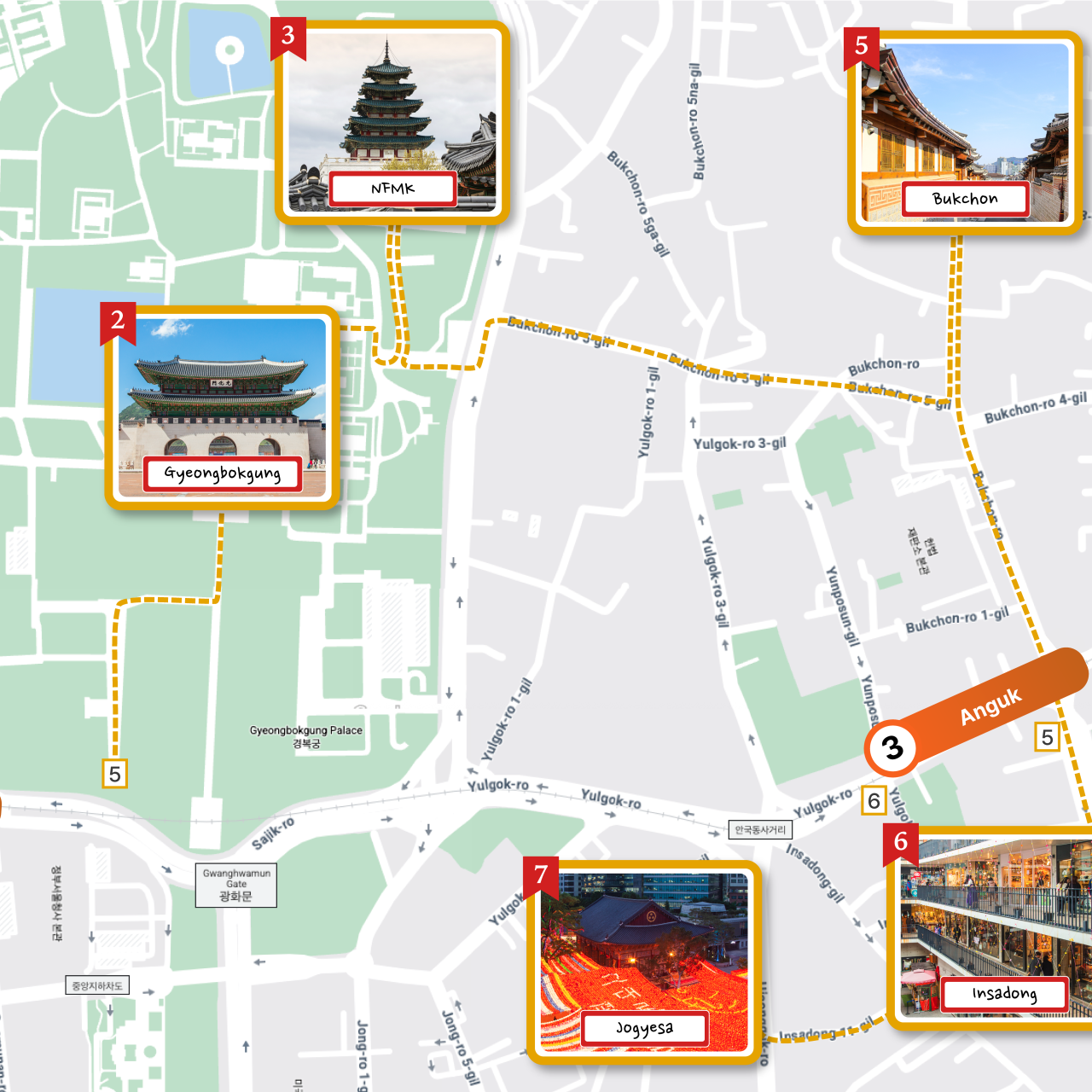
• How to Get There: About 960 m, or a 16-minute walk, from Exit 2 of Anguk Station on Subway Line 3
• Hours: 09:00–18:00
※ Closed every Tuesday, January 1, February 17, and September 25
Seoul Hiking Tourism Center – Gwanaksan
• Address: B1F, Gwanaksan Station, 23 Sillim-ro, Gwanak-gu, Seoul
• How to Get There: Located inside Gwanaksan Station on the Sillim Line Light Rail
• Hours: 09:00–18:00
※ Closed every Wednesday, January 1, February 17, and September 25
Online Channels
• Official Website: https://seoulhiking.or.kr/
• Official Instagram: @seoulhikingtourism_official
But even without heading deep into the mountains, Seoul offers plenty of ways to escape the heat throughout the city itself. This year, Seoul is promoting the idea of becoming a “365-day festival city,” which shows just how serious Seoulites are about enjoying life. That is why it feels almost wasteful to spend the summer simply sitting indoors under air conditioning. Among countless options, here are three especially outstanding ways to fully enjoy summer in Seoul.
Gwanghwamun Square – “Seoul Summer Beach”
Gwanghwamun, the main gate of Korea’s representative royal palace, Gyeongbokgung, stands right in the heart of Seoul. As you enter through Gwanghwamun, Gyeongbokgung Palace and Bugaksan Mountain unfold before your eyes, while stepping away from it brings the city’s towering skyline into view. Standing at Gwanghwamun feels almost like riding a time machine between the past and the present.
One of the biggest reasons why this area is so beloved by citizens is undoubtedly Gwanghwamun Square. Unlike the conventional Western idea of a plaza, it functions as a highly citizen-friendly public space.
• From the ancient Greek agora onward, Western-style plazas traditionally served as political spaces where the public gathered to voice collective opinions. Gwanghwamun Square may share the same openness in structure, but it was designed and is used primarily as a civic space that enhances residents’ leisure and quality of life. Alongside Gwanghwamun Square, places such as Seoul Plaza in front of City Hall and the recently opened Songhyeon Green Plaza are also spaces where citizens can freely rest and enjoy their time. That is why these plazas are filled with greenery, sculptures, fountains, and resting areas. In Seoul, plazas are not simply places people pass through in everyday life. They become destinations in themselves.
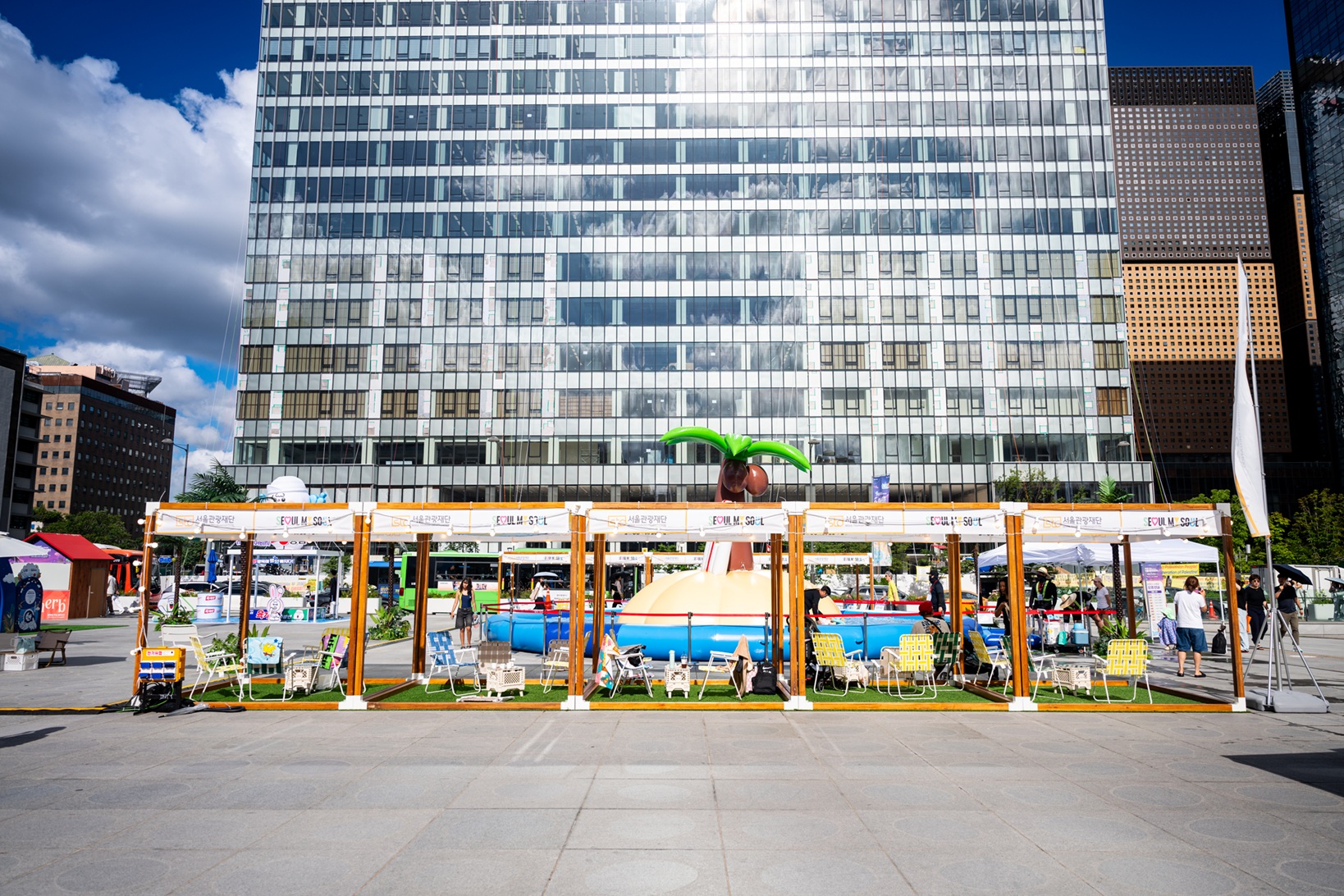
In summer, Gwanghwamun Square becomes an even more vibrant destination. During the seasonal event called Seoul Summer Beach, the entire plaza transforms into a giant water playground. First launched in 2023, Seoul Summer Beach is now celebrating its fourth year. Complete with swimming pools, water slides, and even a sandy beach, it truly lives up to the name “beach.”
• Two different pools and water slides are prepared with varying depths and heights, allowing visitors of all ages to enjoy them comfortably. There is also a separate pool area, known as the “Bounce Pool,” designed especially for younger children and infants.
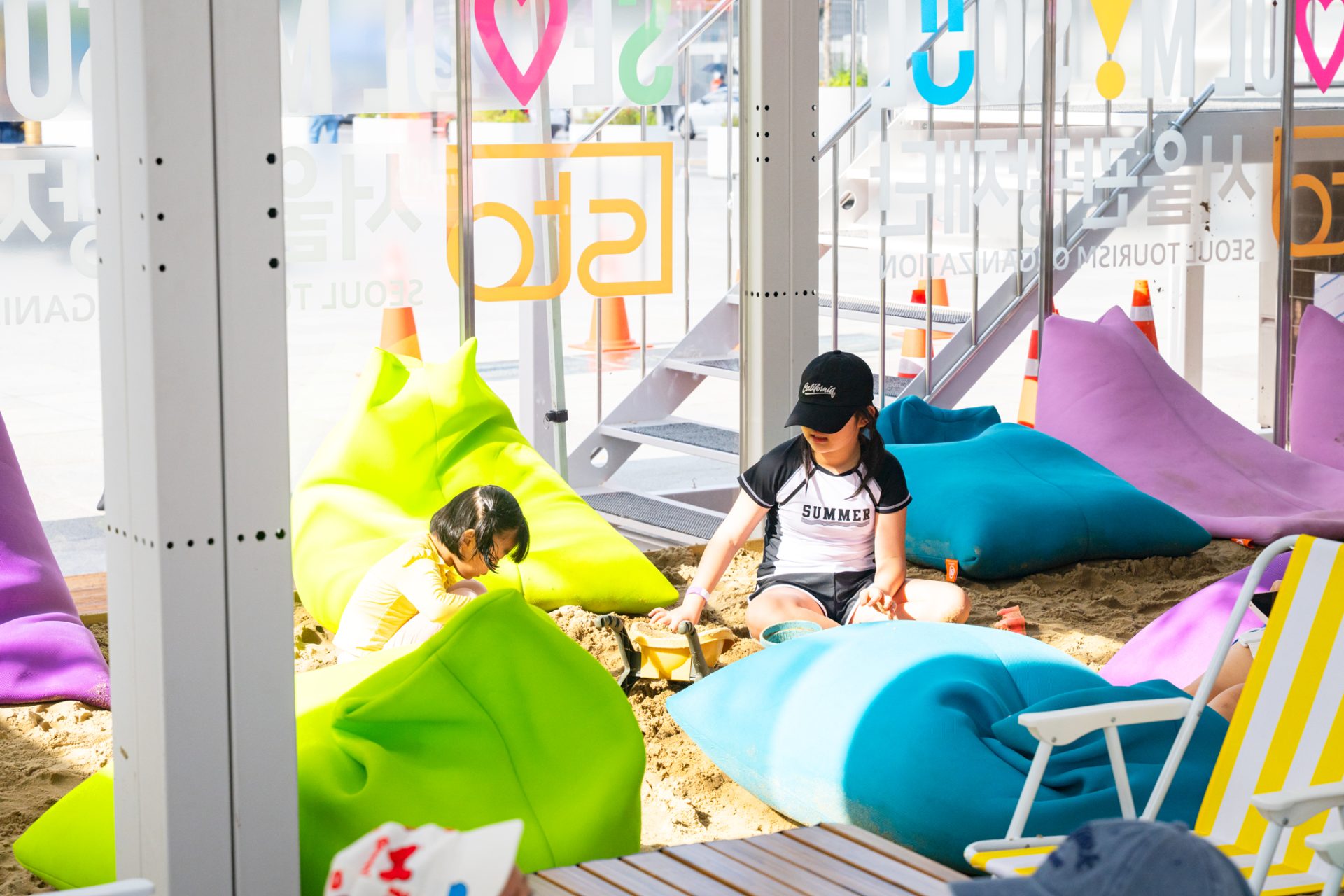
• Beyond the water attractions, one experience you should not miss is the sandy beach. This year, sand has been specially brought in from beaches across Korea to create a more immersive beach atmosphere. Considering sand’s high heat conductivity, the sand area is installed indoors with constant air conditioning, allowing even young children to enjoy it comfortably and safely.
• Around the venue, visitors can also enjoy a variety of interactive programs operated by collaboration booths, along with the “Summer Market,” where local small businesses and vendors participate. Even without entering the water, the area is filled with things to see and experience, making it well worth a visit.
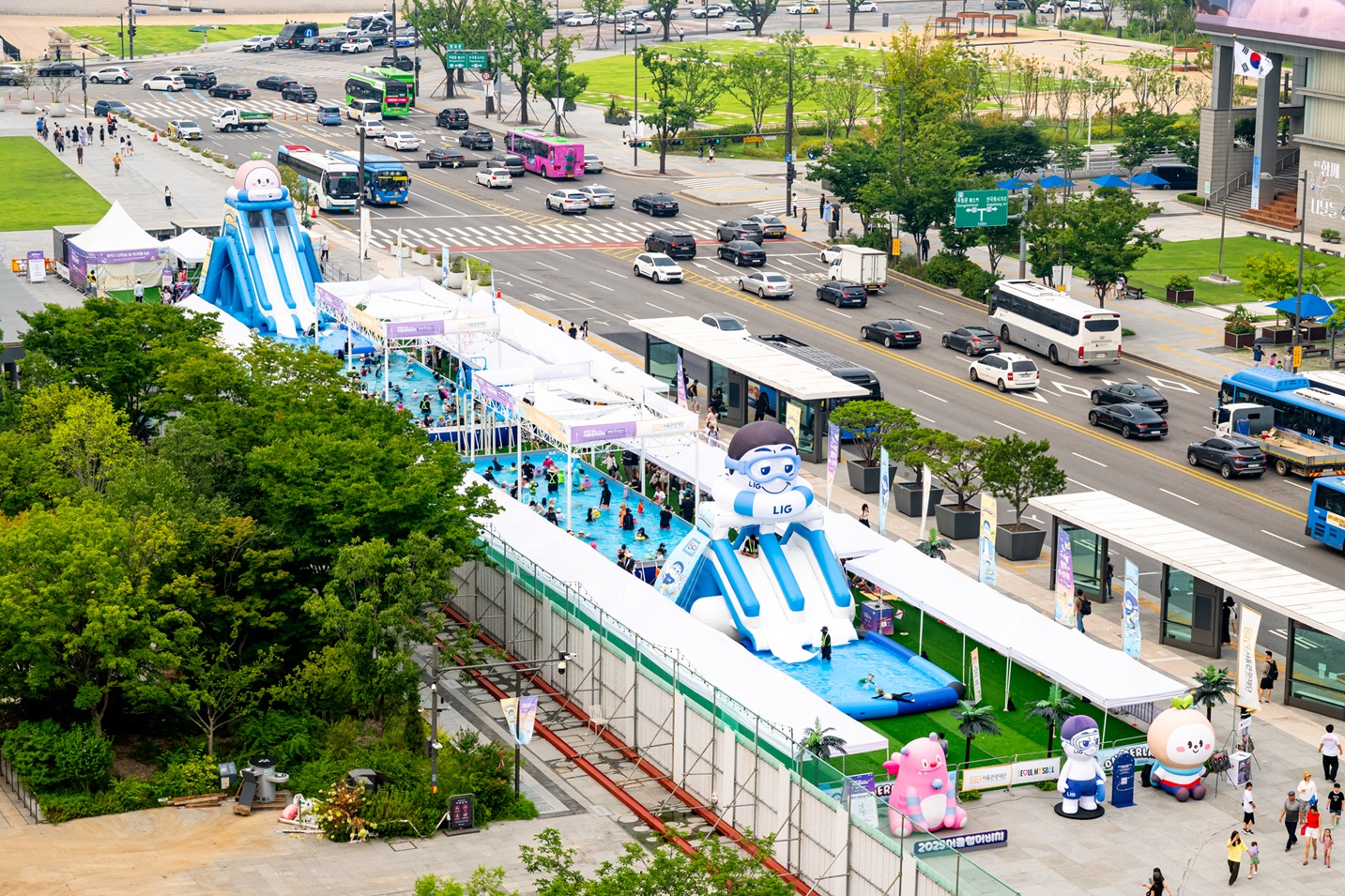
The event runs for 21 days, from July 19 to August 8, and both advance reservations and on-site admission are available. Operating hours are from 1 PM to 9 PM daily, divided into five sessions per day, with each session lasting approximately 50 to 80 minutes. Visitors should note that swim caps are required, and entry is allowed only barefoot or with aqua shoes.
Just imagine it: a thrilling water slide experience surrounded by modern skyscrapers in front, a royal palace behind, and lines of busy city traffic stretching through the middle of downtown. In what other city in the world could you experience something like this? And best of all, it is completely free. Head to Gwanghwamun and experience a true urban summer escape.
<2026 Seoul Summer Beach Tips>
• Getting There: Exit 9 of Gwanghwamun Station, Line 5, then walk about 5 minutes toward Gyeongbokgung Palace
• Reservation: Available through the Naver reservation system
• Operating Hours: Daily 13:00–21:00
Cheonggyecheon – “Cheong-gye Soul Ocean”
If you spent the daytime cooling off at Gwanghwamun Square, then Cheonggyecheon is the perfect place to visit at night. Beginning at the far end of Gwanghwamun Square, Cheonggyecheon is one of Seoul’s historic urban streams and carries nearly 600 years of the city’s history within its flow.
• During the 500 years of the Joseon Dynasty, Cheonggyecheon functioned as a living stream that processed wastewater and helped keep the capital clean. After 1945 and the Korean War, however, the area deteriorated into one of Seoul’s most representative slums. Beginning in 1955, the stream was gradually covered over and transformed into asphalt roads, with an elevated highway later constructed above it. In this form, Cheonggyecheon became a powerful symbol of Korea’s modernization and industrialization.
Cheonggyecheon regained its green and refreshing appearance through a major restoration project completed in 2003. The goal was to reshape the city around pedestrian-friendly culture while restoring the historical heritage and ecosystem connected to the stream, ultimately creating a more sustainable urban environment. After nearly two years of construction, a clean and vibrant waterway emerged between the dense forest of skyscrapers, becoming a place where citizens could briefly escape the summer heat. In fact, the stream is known to lower surrounding downtown temperatures by around 2–5%, helping reduce the urban heat island effect.
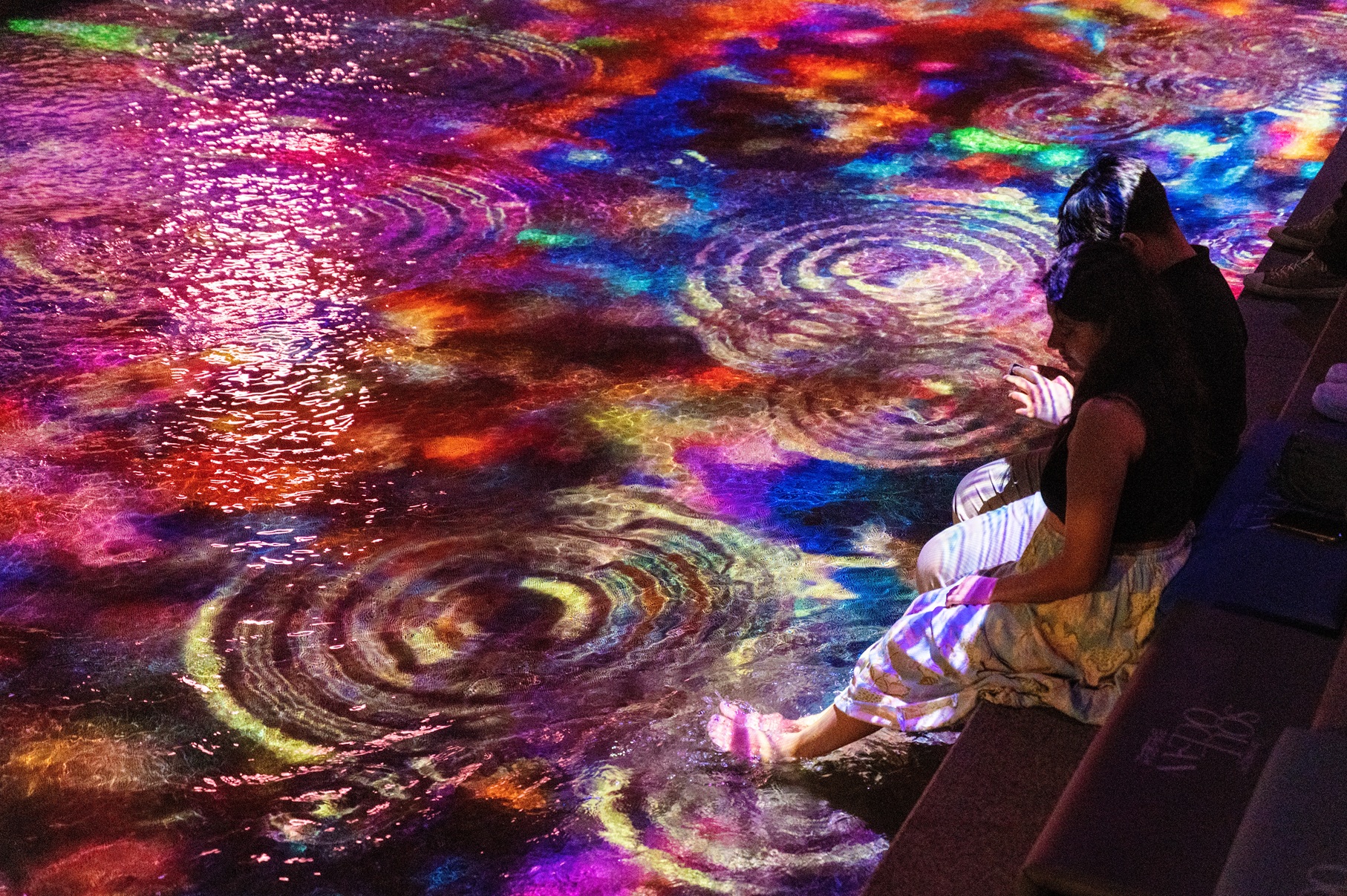
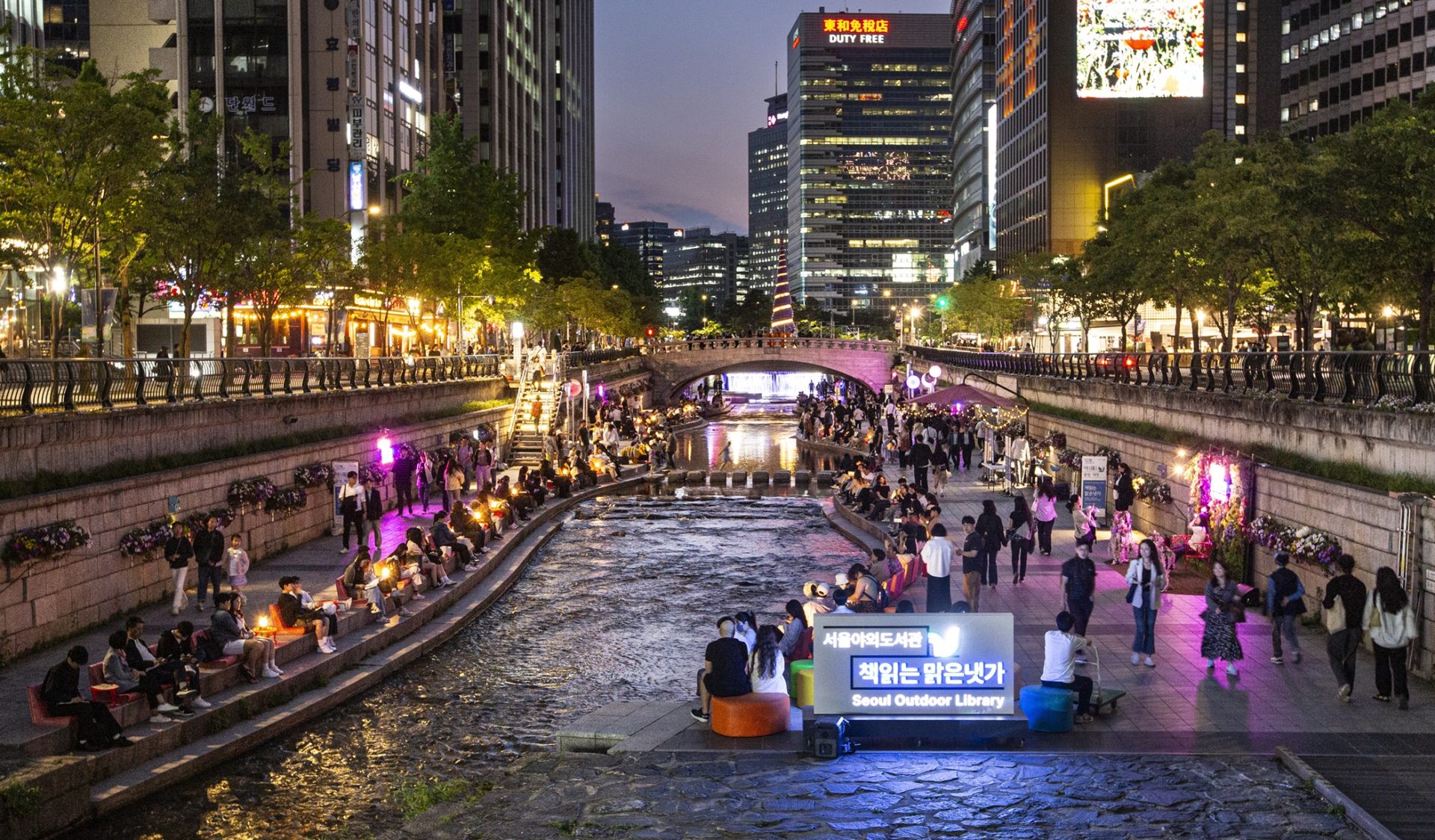
Perhaps because of this, far more people gather here during summer nights in hopes of escaping the tropical heat, even if only for a moment. Cheonggyecheon at night reveals a completely different atmosphere from its lively daytime scenery. Some people stroll along the flowing water while listening to the gentle sound of the stream, while others sit at the edge with their feet in the water, casually splashing around in their own quiet way of cooling down. Among these nighttime attractions, Cheong-gye Soul Ocean has recently emerged as one of Seoul’s newest hot spots.
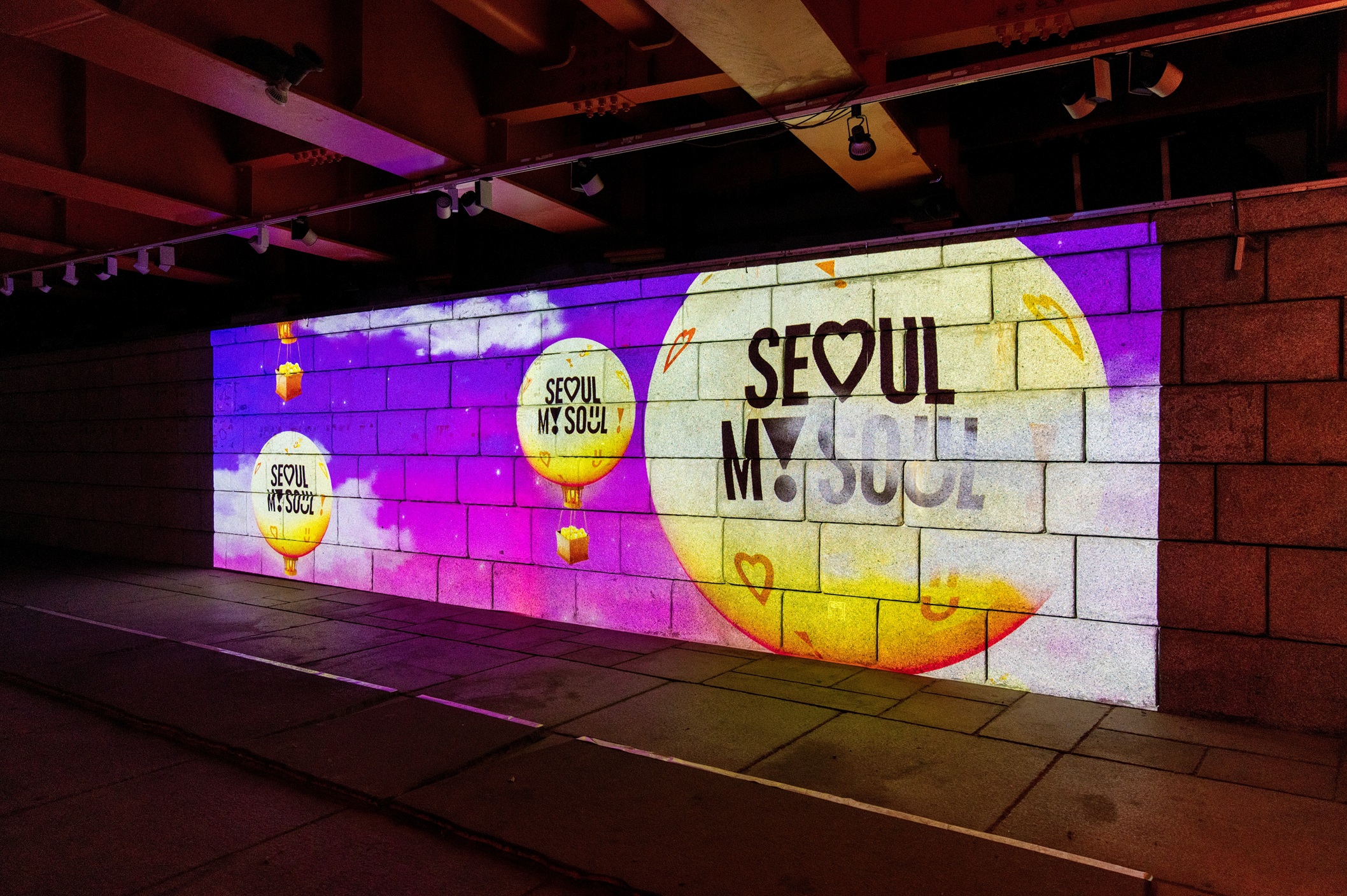
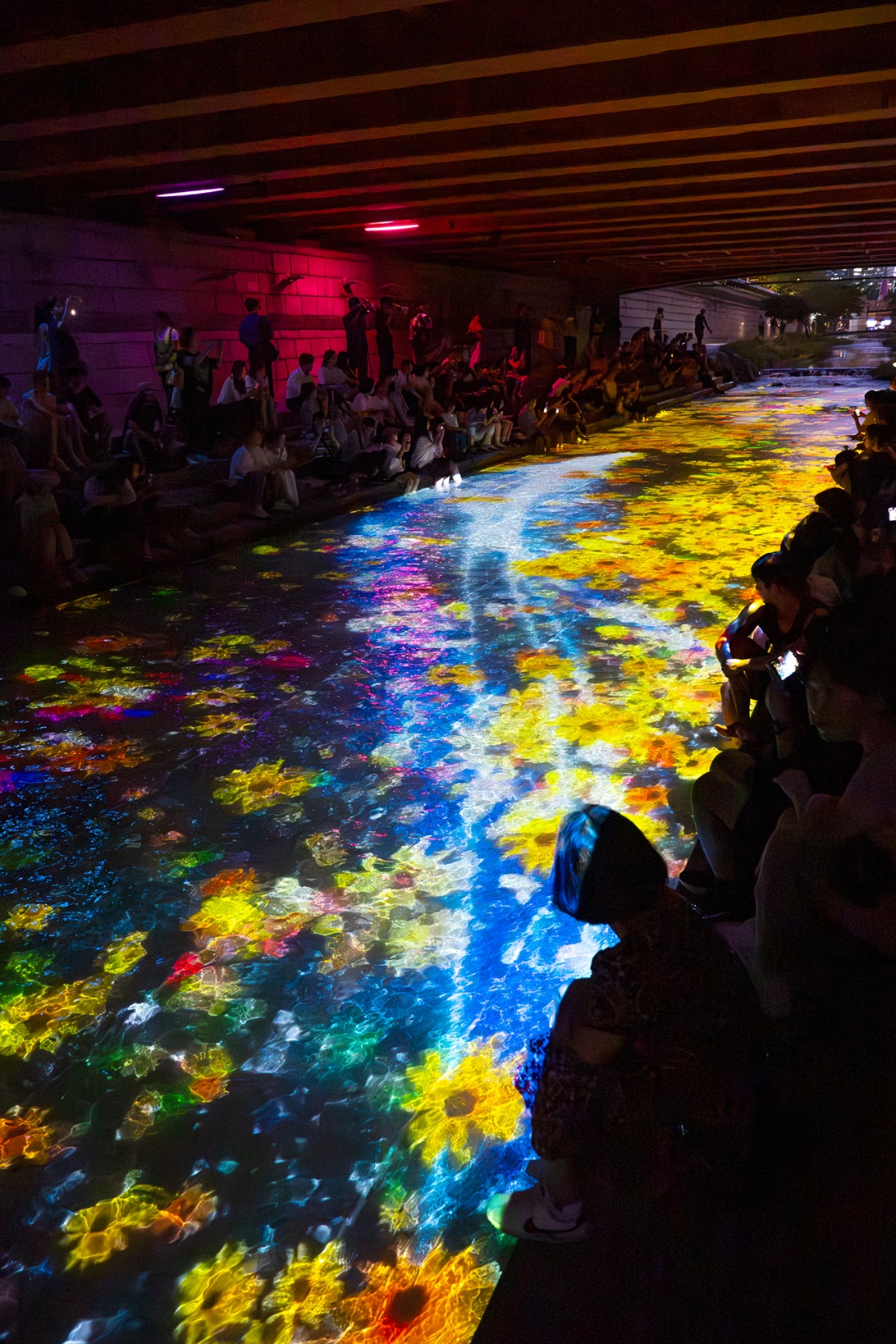
Cheong-gye Soul Ocean is a media art program that utilizes the space beneath Gwanggyo Bridge along Cheonggyecheon. The program is divided into three areas: the stream itself, the riverside walkway, and the inner exhibition space known as the “Gwanggyo Gallery.” Each space offers its own distinct media art experience.
• The most striking attraction is the large-scale media art projection displayed across the 40-meter waterway of Cheonggyecheon. Reimagined works inspired by artists such as Claude Monet and Henri Matisse, along with creative animations featuring Seoul landmarks, mascots, and even swimming whales, are projected directly onto the surface of the stream. Sitting with your feet in the water while the images ripple across the flowing current creates an immersive sensation, as though you are being drawn directly into the scene itself.
• Tucked beneath Gwanggyo Bridge, the “Gwanggyo Gallery” serves as a public exhibition space where the same visual works shown on the stream are also projected onto the gallery walls. Experiencing the artwork continuously across two completely different textures, moving water and rough stone walls, offers visitors a fresh perspective and a new way of interpreting the installations.
Since opening in May 2025, Cheong-gye Soul Ocean surpassed one million cumulative visitors within just five months. It has quickly become one of Seoul’s most popular nighttime attractions, with 41% of visitors reportedly staying for more than 40 minutes.
Beginning in early May this year, the program was renewed with entirely new visual content filling Cheonggyecheon, making it the perfect time to experience its latest scenery before anyone else. Since it is a nighttime media art installation, operating hours are limited to 7 PM through 10 PM. Visitors should also note that access may be temporarily suspended during periods of heavy rain when entry to Cheonggyecheon is restricted, so checking both the weather and visiting hours in advance is highly recommended.
<2026 Cheong-gye Soul Ocean Tips>
• Getting There: Exit 5 of Jonggak Station, Line 1, then walk about 300 m south, approximately 6 minutes
※ You must cross two crosswalks to access the Cheonggyecheon area beneath Gwanggyo Bridge.
• Operating Hours: 19:00–22:00, open year-round
※ Temporarily suspended when access to Cheonggyecheon is restricted.
• Official Instagram: @cheonggyesoulocean
Seoul Plaza – “Seoul Outdoor Library”
Walking about ten minutes south along Cheonggyecheon from the far end of Gwanghwamun Square, you will arrive at the wide grassy lawn of Seoul Plaza. Located directly in front of the former Seoul City Hall building, the plaza features an expansive lawn and ground fountains, while the old City Hall itself now operates as Seoul Metropolitan Library.
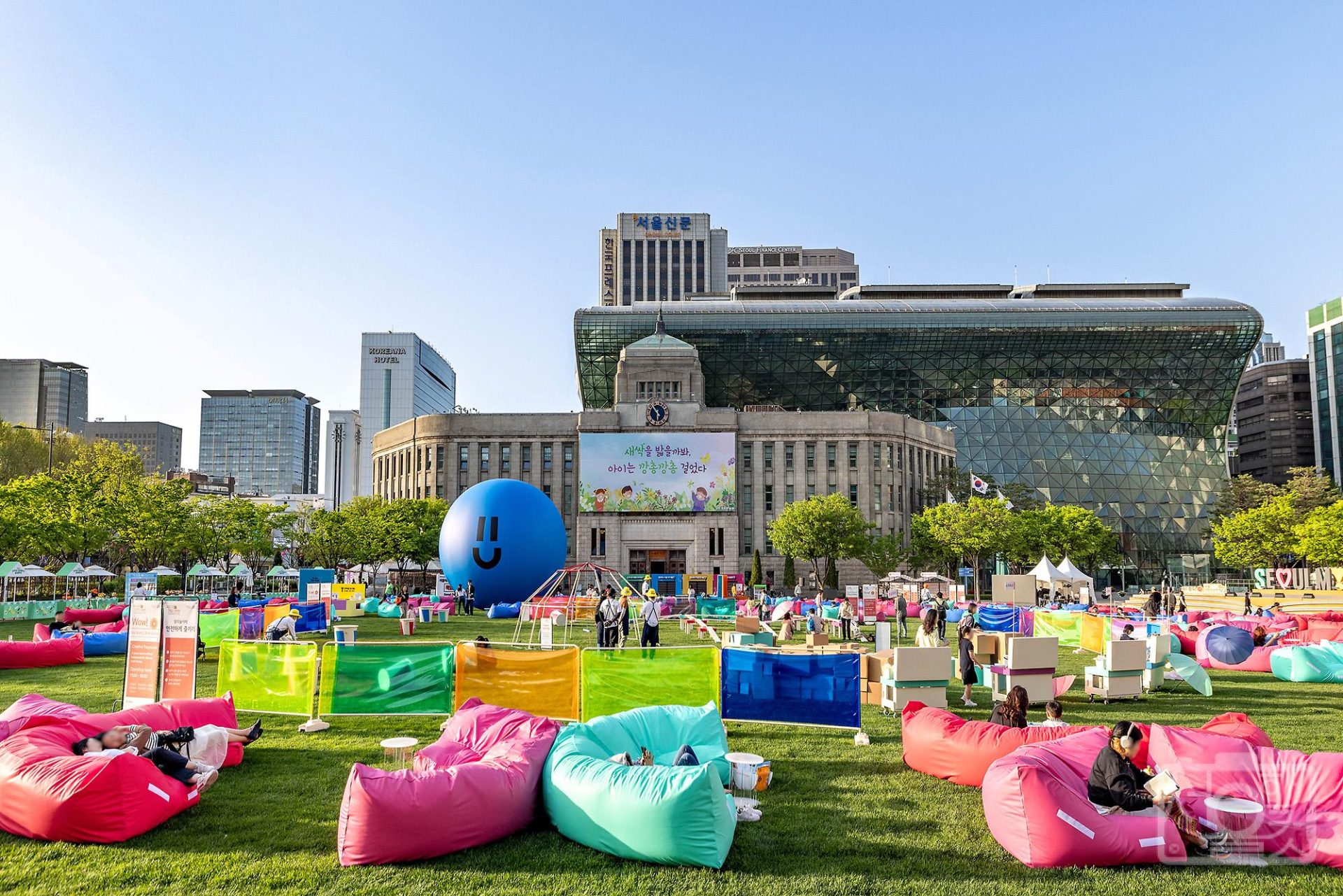
Since 2022, Seoul Metropolitan Library has hosted an event called Seoul Outdoor Library. Its opening date was intentionally chosen as April 23, recognized globally as World Book and Copyright Day. Simply put, the event “moves the library into the outdoor spaces of Seoul.”
• In an era dominated by short-form content designed to deliver information quickly and efficiently, the idea of encouraging people to slowly sit down and read printed books already carries meaningful value in itself. The response has been overwhelming, attracting a cumulative total of over eight million visitors and even being selected as Seoul citizens’ most beloved public policy in 2025. It has now become influential enough that librarians and officials from overseas visit Seoul to benchmark the program as a leading public library model.
So where exactly is Seoul’s “outdoor” library? The program takes place simultaneously across three of the city’s major landmarks: Gwanghwamun Square, Cheonggyecheon, and Seoul Plaza. Each location is designed to reflect the character of its surroundings, while librarians from Seoul Metropolitan Library personally selected around 12,000 books suited to each space in order to create a more immersive reading experience.
• At Seoul Plaza, the wide grassy lawn and scattered beanbags create the feeling of a relaxed picnic. Around 5,000 books themed around “refreshing everyday life” can be found here. Along Cheonggyecheon, a special “Wave Bookshelf” inspired by the flowing stream blends naturally into the landscape, accompanied by roughly 2,000 books selected for “immersion and contemplation.”
• Gwanghwamun Square reflects the rhythm of the surrounding business district, bustling during the day and more relaxed at night. A reading lounge operates during daytime hours, while in the evening, the space transforms into a “Book Bar.” Around 5,000 books aimed at younger office workers are available here, focusing on themes such as personal growth, emotional fulfillment, and “loose connections” between people.
All three locations operate every Friday, Saturday, and Sunday through November, excluding the hottest months of July and August. However, programs may be canceled in cases of heavy rain, typhoons, or other severe weather conditions, so visitors are encouraged to check the official website or Instagram channels before visiting.
Beyond simply offering a chance to read books in open outdoor spaces and discover new tastes, Seoul Outdoor Library becomes even richer through the addition of cultural programs such as performances and exhibitions. During opening week, events included talks with writers such as Bernard Werber, Alain de Botton, and Cheon Seon-ran, along with live band performances and outdoor film screenings. On Children’s Day, the program expanded further with family “Book-Mung” sessions, parenting book talk concerts, and performances including magic shows, ballet, and puppet theater designed for children and parents alike.
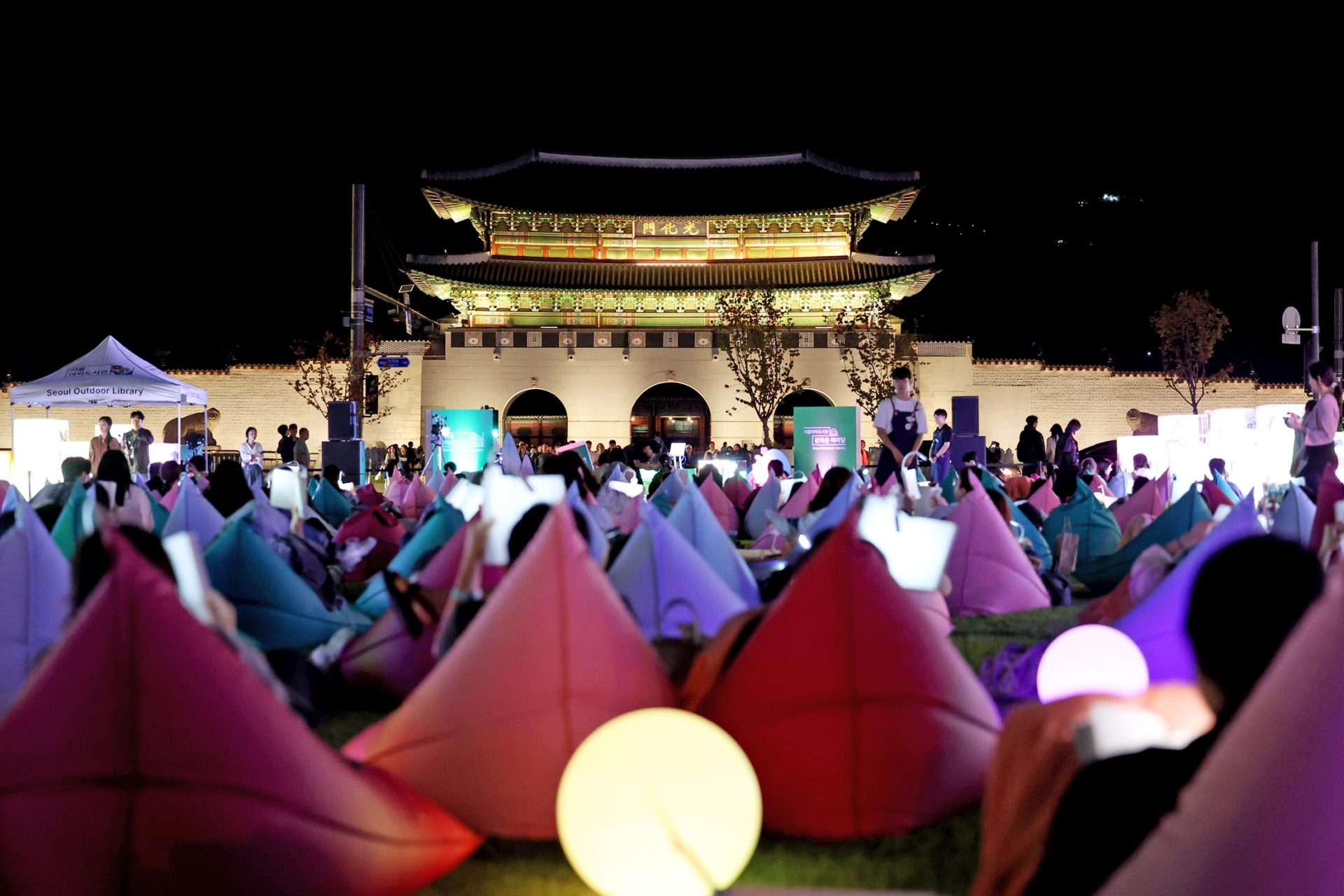
This year, programs aimed at international visitors have also been expanded. Along Cheonggyecheon, the selection of original-language books has grown beyond the existing 20 languages, while a new participation program called the “Seoul Outdoor Library Tour” has been introduced for the first time.
• The tour is a walking program connecting Seoul Plaza, Gwanghwamun Square, and Cheonggyecheon, allowing visitors to experience each reading space firsthand. Dedicated English-speaking guides explain the history and culture of Seoul, while “Youth Partners” accompany participants to share a variety of travel information and local insights. The program operates ten times throughout May–June and September–October, so visitors are encouraged to check announcements through the official website or Instagram channels.
<Seoul Outdoor Library Tips>
Seoul Plaza: Reading Seoul Plaza
• Getting There: Near Exit 5 of City Hall Station, Lines 1 and 2
• Official Instagram: @seouloutdoorlibrary.s
Cheonggyecheon: Reading Clear Stream
• Getting There: Exit 5 of Gwanghwamun Station, Line 5, then enter through the stairs beside Cheonggye Plaza directly ahead
• Official Instagram: @seouloutdoorlibrary.c
Gwanghwamun: Gwanghwamun Book Yard
• Getting There: Exit 9 of Gwanghwamun Station, Line 5, then walk about 300 m toward Gyeongbokgung Palace, approximately 5 minutes
• Official Instagram: @seouloutdoorlibrary.g
Source:
- Seoul Tourism Organization website – sto.or.kr
- Seoul Outdoor Library website – seouloutdoorlibrary.kr
Images courtesy of the Seoul Tourism Organization and Seoul Library