
From the playful energy of Andong and the resonant sounds of Yeongdong’s traditional music to the revitalizing power of Geumsan’s Korean ginseng
As autumn deepens with a refreshing crispness, destinations across Korea transform into vibrant festival grounds where centuries of history and tradition come alive. More than one-off events to simply see and enjoy, these festivals offer travelers an immersive K-Festival Retreat for all five senses—a chance to experience the spirit of millennia-old heritage while restoring both body and mind.
From the playful humor of the Andong International Mask Dance Festival, rooted in the 800-year-old tradition of Hahoe Byeolsingut Tallori; to the Yeongdong Nangye Gugak Festival, carrying on the legacy of master musician Park Yeon and the resonant beauty of traditional Korean music; and the Geumsan World Ginseng Festival, where the vitality of 1,500 years of Korean ginseng tradition inspires wellness—discover our complete guide to three festivals that capture the very essence of Korean autumn culture.
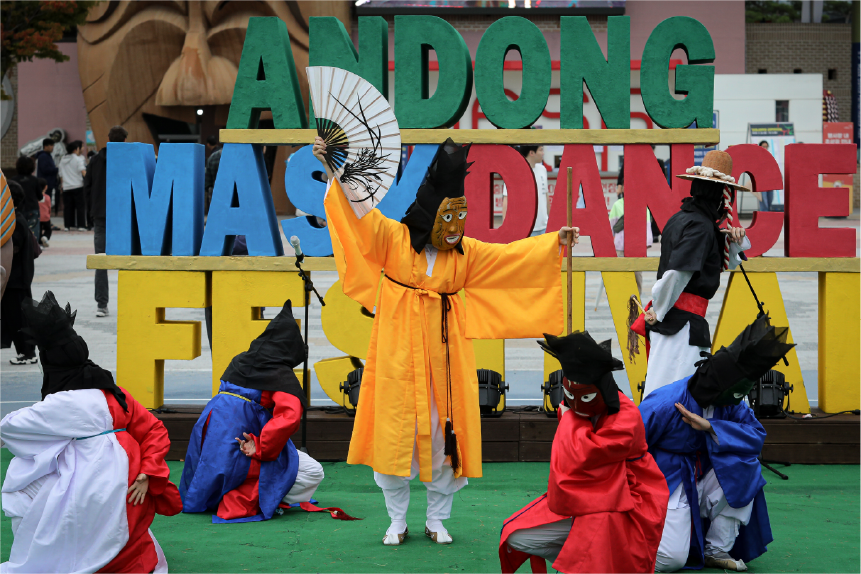
1. Andong International Mask Dance Festival & Hahoe Village: 800 Years of Humor and Festive Spirit, Where the World’s Mask Dances Come Alive at a UNESCO World Heritage Site
- Festival Information (Dates & Venue):
- Dates: September 24 (Thu) – October 4 (Sun), 2026 [11 days]
- Venues: Talchum Park, Jungang Line 1942 Andong Station (the former Andong Station site), the old downtown area, and Hahoe Village, Andong, Gyeongsangbuk-do
- Deep Dive: A Complete Guide to UNESCO World Heritage Hahoe Village (河回村)
- A Scenic Village Embraced by the Nakdong River: The tranquil hanok village takes its name, Hahoe (literally “river returns”), from the Nakdong River as it curves around the village in an S-shaped flow. It is one of Korea’s most representative clan villages, where the Pungsan Ryu clan has maintained its lineage for more than 600 years. With its Joseon-era aristocratic residences and commoners’ homes remarkably well preserved, Hahoe Village was designated a UNESCO World Heritage Site in 2010.
- The Essence of Joseon-Era Scholar Aesthetics: Elegant traditional residences—including Chunghyodang (忠孝堂), the birthplace of the renowned Joseon scholar Ryu Seong-ryong, and Yangjindang (養眞堂), which preserves the architectural style of early Joseon-era homes—line the village’s narrow earthen and stone-walled paths.
- Hahoe Village’s Secret Viewpoints (Buyongdae & Yutpanbawi):
Across the river from the village, climb Buyongdae Cliff (芙蓉臺), a 64-meter-high rocky cliff overlooking the Nakdong River. From the summit, you can take in a panoramic view of Hahoe Village, where thatched-roof and tiled-roof houses blend with the river, sandy banks, and the pine forest of Mansongjeong Pavilion.
- Deep Dive: The Story & Signature Highlights of the Andong International Mask Dance Festival
- 800 Years of Tradition: Hahoe Byeolsingut Tallori & the Essence of UNESCO-Recognized K-Mask Dance:
The Andong International Mask Dance Festival originated from Hahoe Byeolsingut Tallori, a traditional masked dance performed in Hahoe Village for centuries as part of byeolsingut rituals praying for the well-being of the community. The festival itself was launched in 1997. Through satire and humor, the mask dance boldly poked fun at the arrogance of aristocrats and Confucian scholars while portraying the lives of ordinary people. Today, it has evolved into a global cultural exchange festival bringing together Korea’s 17 UNESCO-listed mask dance traditions and mask dance groups from more than 20 countries around the world.
- 800 Years of Tradition: Hahoe Byeolsingut Tallori & the Essence of UNESCO-Recognized K-Mask Dance:
- The Liberation of Anonymity: Daedong Nanjang, the Heart of the Festival:
The true highlight of the Andong International Mask Dance Festival is Daedong Nanjang, where visitors are no longer merely spectators but become the stars of the festival themselves. Wearing paper masks or colorful traditional masks to conceal their identities, people of all nationalities and generations dance together beneath the night sky to the exhilarating rhythms of percussion and music, letting go of the stresses of everyday life. - Street Parades & the World Mask Parade That Bring the City to Life:
International performers and masked dancers in vibrant costumes, together with local citizens, parade through the old downtown area, the former Andong Station site, and the alleys of traditional markets. The entire city transforms into a lively open-air theater filled with music, masks, and festive energy. - Scene & Highlight (What You’ll See):
- Hahoe Seonyujul Bulnori: A traditional fireworks spectacle held beneath Buyongdae Cliff in Hahoe Village. As lines of fire slowly burn across the night, their glowing trails are reflected on the surface of the Nakdong River, creating a dreamlike and atmospheric autumn nightscape.
- World Mask Dance Competition & Mask Dance Performances: Creative mask dance performances by traditional dance troupes and teams from across Korea and overseas compete for prize money and prestige, intensifying the energy of the festival grounds.
- Access Guide:
- From Seoul (Cheongnyangni Station): Take the KTX-Eum ➔ Arrive at Andong Station (approximately 2 hours; around KRW 27,700).
- Last Mile: Take local bus No. 210 from Andong Station/Bus Terminal ➔ Get off at Hahoe Village (approximately 30 minutes). During the festival, shuttle buses run regularly between Andong Station, Talchum Park, and the old downtown area.
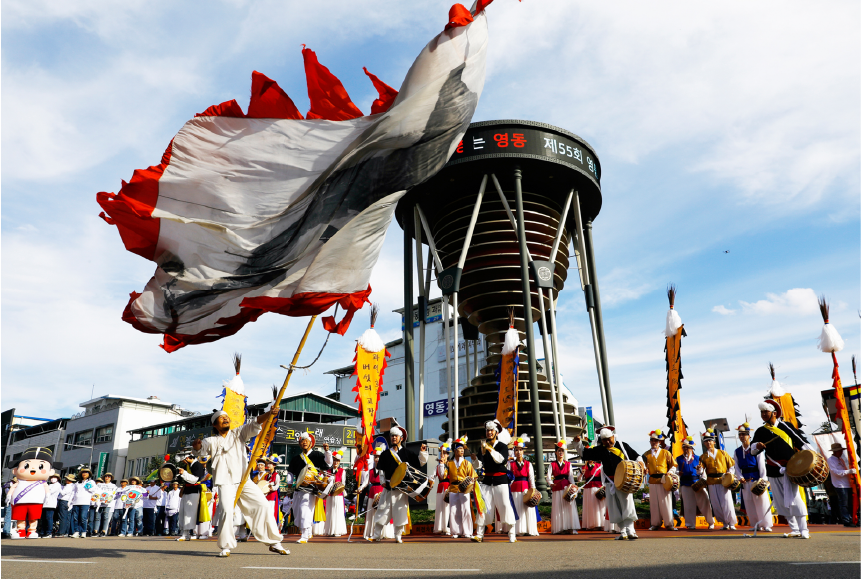
2. Yeongdong Nangye Gugak Festival
The Sounds of Korea, Born from Paulownia and Silk Strings: An Autumn Resonance in Yeongdong, the Sacred Home of Traditional Korean Music
- Festival Information (Dates & Venue):
- Dates: October 8 (Thu) – October 11 (Sun), 2026 [4 days]
- Venue: Yeongdong Rainbow Healing Tourism Area and the Korean Traditional Music Experience Village, Yeongdong-gun, Chungcheongbuk-do
- Deep Dive: The Legacy of Master Musician Park Yeon & Korea’s Only Festival Dedicated to Gugak
- Nangye Park Yeon (朴堧), Musical Companion to King Sejong:
Yeongdong, Chungcheongbuk-do, is the hometown of Park Yeon, one of Korea’s three great musical masters, alongside Wang San-ak of Goguryeo and Ureuk of Silla. During the reign of King Sejong of Joseon, Park Yeon reorganized a-ak (雅樂), the refined ceremonial music of the royal court, and established standards for Joseon-era music by developing instruments such as the pyeon-gyeong and pyeon-jong. Building upon this rich musical heritage, Yeongdong has established a distinctive identity as the “Home of Korean Traditional Music.”
- Nangye Park Yeon (朴堧), Musical Companion to King Sejong:
- A 60-Year Legacy as Korea’s Only Festival Dedicated to Gugak:
Originally launched in 1965 as the Nangye Arts Festival, the event has spent more than half a century preserving and popularizing traditional Korean music. From the elegant melodies of royal court a-ak to contemporary fusion gugak and dynamic percussion performances, Korea’s unique musical traditions blend with the autumn landscape to create a deeply moving experience. - Deep Dive: Signature Healing Experiences at the Yeongdong Nangye Gugak Festival
- Cheongo (天鼓), the World’s Largest Drum Listed by Guinness World Records:
Located at the Korean Traditional Music Experience Village, Cheongo is the world’s largest drum, measuring 5.5 meters in diameter and weighing 7 tons. Visitors can hold the drumstick, make a wish, and strike the drum three times. The immense resonance that reverberates through the air and across the body offers an exhilarating, multisensory experience.
- Cheongo (天鼓), the World’s Largest Drum Listed by Guinness World Records:
- An Unusual Collaboration Between Gugak and Korean Wine:
Yeongdong is also Korea’s largest wine-producing region. During the festival, visitors can enjoy the delicate sounds of the haegeum and gayageum in traditional orchestral performances while tasting premium wines produced by local farms. The Gugak & Wine Festival offers a sophisticated cultural retreat that engages both the ears and the palate. - Feel the Resonance with Your Own Hands:
Instrument-making programs allow visitors to assemble miniature gayageum or geomungo instruments under the guidance of artisans and experience the feel of plucking silk strings themselves. These hands-on activities offer a moment of calm and tranquility through the gentle resonance of traditional Korean music. - Scene & Highlight (What You’ll See):
- Sungmoje & Grand Royal Ritual Music Performances: At Nangyesa Shrine, dedicated to Park Yeon, the Sungmoje memorial ceremony takes place alongside magnificent performances of royal court a-ak, recreating the stately atmosphere of the Joseon royal court.
- Rainbow Healing Plaza Gugak Percussion Nanjang: Energetic traditional percussion performances accompanied by dynamic lighting unfold beneath the night sky, adding an emotional spark to an autumn evening.
- Access Guide:
- From Seoul (Seoul Station): Take the ITX-Saemaeul / ITX-Maum / Mugunghwa train ➔ Arrive at Yeongdong Station (approximately 2 hours 20 minutes by ITX; around KRW 20,400).
- Last Mile: Take the festival shuttle bus from Yeongdong Station to the Rainbow Healing Tourism Area and Korean Traditional Music Experience Village (approximately 10–15 minutes).
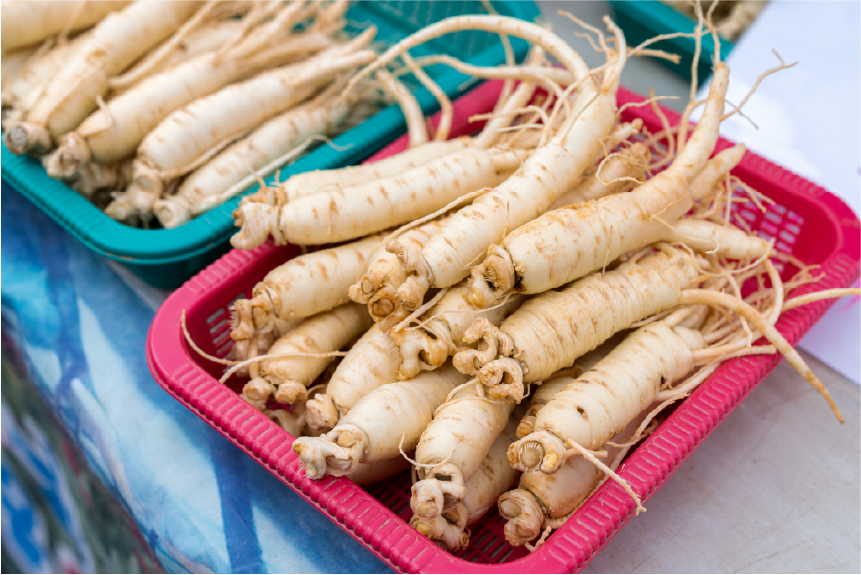
3. Geumsan World Ginseng Festival
The Birthplace of 1,500 Years of Korean Ginseng: A K-Wellness Health Festival to Restore Your Vitality Through All Five Senses
- Festival Information (Dates & Venue):
- Dates: October 2 (Fri) – October 11 (Sun), 2026 [10 days]
- Venue: Geumsan World Ginseng Expo Plaza and Ginseng & Herbal Medicine Street, Geumsan-gun, Chungcheongnam-do
- Deep Dive: Geumsan, Home to 1,500 Years of Ginseng History & a Global Festival City
- The Legend of Gang Cheosa & the Birthplace of Korean Ginseng:
Geumsan carries a history dating back approximately 1,500 years. According to legend, a devoted man named Gang Cheosa prayed at a cave in Jinsan Mountain to cure his ailing mother. A mountain spirit appeared to him and gave him ginseng seeds, which he planted at Gaesamteo, marking the beginning of ginseng cultivation in the region. Surrounded by mountains and blessed with an ideal climate and sandy soil, Geumsan developed into one of the most renowned regions for Korean ginseng, prized for its medicinal properties.
- The Legend of Gang Cheosa & the Birthplace of Korean Ginseng:
- A Wellness Festival Recognized by the International Festivals & Events Association (IFEA):
The Geumsan World Ginseng Festival has successfully transformed ginseng, once known primarily as a medicinal herb, into accessible and contemporary K-health experiences by combining it with beauty, food, spa, and wellness offerings. Recognized as a World Festival City by the International Festivals & Events Association (IFEA), Geumsan has firmly established itself as a global wellness destination. - Deep Dive: Wellness Experiences & Gastronomy at the Geumsan Ginseng Festival
- The Ultimate Vitality Boost: “Red Ginseng Spa & Herbal Foot Bath”:
Soak your feet in a warm herbal foot bath infused with concentrated red ginseng and traditional medicinal herbs while enjoying the crisp autumn breeze. Visitors can also enjoy K-Ginseng beauty experiences, such as applying red ginseng sheet masks or receiving personalized skin-care assessments.
- The Ultimate Vitality Boost: “Red Ginseng Spa & Herbal Foot Bath”:
- The Joy of Digging for Your Own Ginseng: “Ginseng Harvesting in Nature”:
Step into the pristine ginseng fields of Geumsan and dig through the soil to harvest your own six-year-old ginseng roots. The rich aroma of ginseng lingering on your fingertips and the excitement of harvesting it yourself create an unforgettable local experience. - A Taste of Geumsan: “Ginseng Tempura” & “Herbal Samgyetang”:
At the festival, discover the unique pleasure of whole fresh ginseng roots deep-fried until crisp, offering a subtly bitter yet nutty flavor that pairs perfectly with jocheong, traditional Korean rice syrup. For a hearty finish, try herbal samgyetang made with astragalus root, goji berries, and fresh ginseng sourced from the local herbal medicine market—a nourishing autumn meal to warm and restore the body. - Scene & Highlight (What You’ll See):
- Samjangje Ceremonial Rite: A solemn traditional Confucian-style ceremony held at Gang Cheosa’s Gaesamteo to pray for the safety of the festival and a bountiful ginseng harvest, offering a glimpse into the festival’s deep cultural narrative.
- The Red Ginseng Haze of Ginseng & Herbal Medicine Street: Hundreds of shops line one of the world’s largest ginseng and herbal medicine markets. The fragrant aroma of ginseng fills the air as steam and herbal vapors rise from shops preparing traditional medicinal ingredients, creating a unique and atmospheric scene.
- Access Guide:
- From Seoul (Yongsan/Seoul Station): Take the KTX/SRT ➔ Get off at Daejeon Station (approximately 1 hour).
- By Express Bus from Seoul: Take a direct bus from Seoul Express Bus Terminal (Gyeongbu Line) ➔ Geumsan Express Bus Terminal (approximately 2 hours 30 minutes). From Geumsan Terminal, walk to the bus stop at the Geumsan-eup Administrative Welfare Center and take a local bus (210, 330, 440, 232, 740, or 250) for approximately 15 minutes. Get off at Yeongchae Village and walk for about 5 minutes.
[GRAND CLOSING] Completing the Autumn Retreat: A Journey Through a Thousand Years of History, Festive Spirit & Crimson Foliage
Walking beneath the tranquil stone pagodas of the ancient Baekje royal palace site in Iksan, reflecting on the deep history of the Honam region from the wooden veranda of Seonhwadang at Jeolla Gamyeong, and letting go of the worries of everyday life beneath Jeongeup’s crimson maple tunnels. Then surrendering yourself to the playful energy of Andong’s mask dances, the profound resonance of Yeongdong’s traditional music, and the vibrant vitality of Geumsan’s ginseng.
The reason we set out on an autumn journey is not simply to admire spectacular scenery. It is to heal our tired bodies and minds through the gentle comfort offered by Korea’s enduring history, magnificent landscapes, and the exhilarating spirit of its festivals.
From the glorious royal capital of Baekje and the stately heritage of Jeolla Gamyeong to Jeongeup’s crimson autumn trails and lively festivals overflowing with the spirit of the people—why not set off this autumn for Korea’s local destinations, where you can find genuine rest and healing at the most beautiful time of the year?
The moment you leave your weary everyday life behind and take that first step, the opening chapter of your autumn journey begins to unfold.