
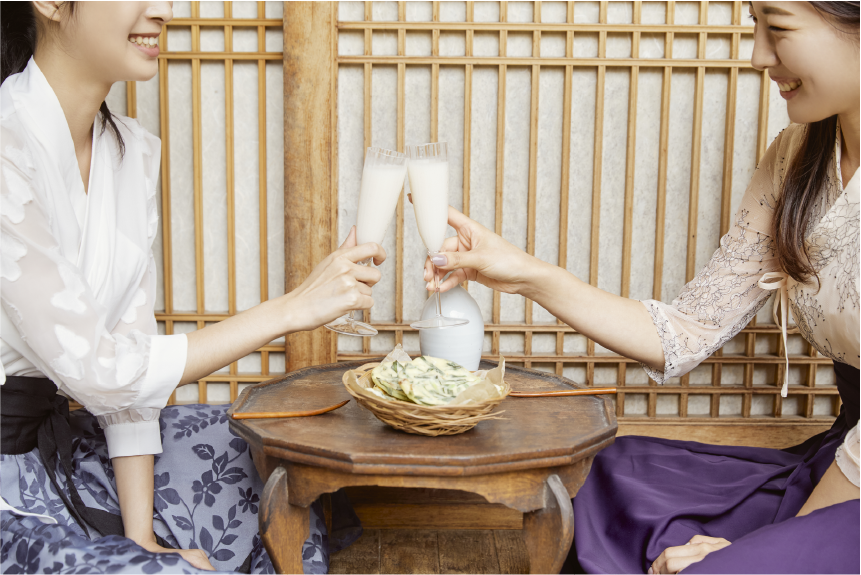
An In-Depth Look at Korea’s Three Great Traditional Spirits: Igangju · Gamhongro · Jukryeokgo (+ Jeonju Moju)
1. The Microbial Artistry Crafted from Rice, Water, and Nuruk
Korean traditional liquor is never created through instant techniques or artificial additives. It is the art of patience, where human dedication and time come together with the work of microorganisms.
Unlike Western wine, which relies on single fermentation, in which yeast ferments the natural sugars in grapes, or beer, which uses malted barley to convert starch into sugar before fermentation, Korean traditional liquor is based on parallel complex fermentation, an advanced process in which saccharification and fermentation occur simultaneously in the same vessel.
Nuruk: The Soul of Korean Liquor
Nuruk, made by grinding wheat, rice, or barley into a cake and exposing it to the natural environment so that wild yeast and molds settle on its surface, is the essence and soul of Korean traditional liquor. Unlike cultured commercial yeast, which produces a uniform flavor, nuruk contains dozens of naturally occurring microorganisms nurtured by fresh air and sunlight.
During the months-long fermentation process, these microorganisms each play their own role, creating layers of flavor—from the sweetness of grains to fruity aromas, delicate floral notes, nutty nuruk fragrance, and deep umami. In other words, Korean traditional liquor is not simply made by people; it is crafted by nature’s microorganisms on a foundation prepared by human hands.
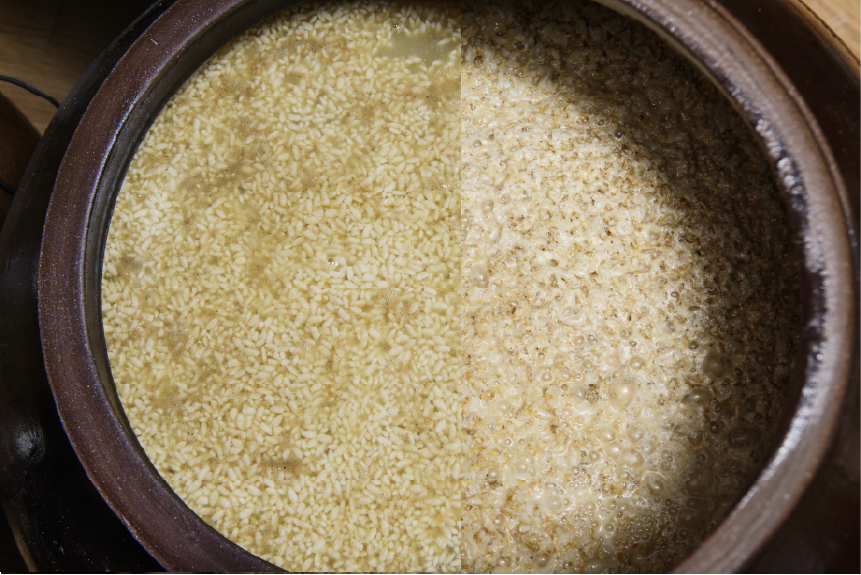
2. Four Expressions Born from a Single Fermentation Jar
One of the greatest charms of Korean traditional liquor is that a single fermentation jar can produce completely different styles of alcohol depending on the stage of the process and the method of extraction. Together with Moju, made by reusing makgeolli or fermented rice lees, they form the full spectrum of Korea’s drinking culture.
- Takju & Makgeolli — The Warmth of the People
- Takju is made by straining the fermented mash together with the rice lees instead of separating the clear liquor. The name makgeolli literally means “roughly filtered.” Enjoyed since before the Three Kingdoms period, it is Korea’s oldest alcoholic beverage. Its soft sweetness from rice, natural carbonation created during fermentation, and refreshing acidity from lactic acid bacteria come together in perfect harmony. Once the drink that refreshed hardworking farmers, it remains a staple of comfort for everyday gatherings.
- Yakju & Cheongju — Elegance of the Scholar
- After fermentation is complete, a bamboo strainer called a yongsu is placed into the jar, allowing only the clear golden liquor to collect inside. This clear portion becomes yakju or cheongju. Favored by the royal court and the scholar-officials of the Goryeo and Joseon dynasties, it develops elegant aromas reminiscent of apples, pears, and Korean melons using only rice, nuruk, and water, without any artificial flavorings or fruit juice. It was the refined drink enjoyed while composing poetry and appreciating the arts.
- Distilled Soju — Crystal Drops Born of Fire
- Distilled soju originated in the late Goryeo period when the distillation technique known as Arak was introduced from the Mongol Empire. Fermented yakju or takju is heated in a pot, allowing alcohol to evaporate before water. The vapor is cooled and condensed using a traditional still called a sojugori, producing clear distilled liquor. It is characterized by its rich grain flavor and remarkably smooth finish despite its high alcohol content.
- Jeonju Moju — A Mother’s Warmth and Korea’s Traditional Hangover Drink
- Moju is a low-alcohol herbal drink made by simmering leftover rice lees or makgeolli with jujubes, cinnamon, ginger, licorice, ginseng, and other medicinal herbs. Most of the alcohol evaporates during the long simmering process, leaving behind the gentle sweetness and soothing herbal qualities of the ingredients. It represents a mother’s care after a night of drinking and embodies the Korean philosophy that food and medicine share the same origin.
3. An In-Depth Look at Korea’s Three Great Traditional Spirits & Jeonju Moju
In Joseon Common Knowledge Q&A, scholar Choe Nam-seon selected Igangju, Gamhongro, and Jukryeokgo as the three finest traditional liquors in Korean history. Together with Jeonju Moju, which embodies the warmth of everyday life in Jeonju, they represent the full spectrum of Korean traditional liquor.
- Igangju (Pear & Ginger Liquor) — Korea’s Diplomatic Toast
- Origin & Base: Jeonju, Jeollabuk-do (Distilled rice and barley spirit / 25% ABV)
- History & Origin: A celebrated liquor of the Honam region, said to have been missed by scholar Jeong Yak-yong during his exile. It was served at the official banquet for the 1882 Korea–U.S. Treaty and was praised by Admiral Shufeldt.
- Brewing & Flavor: Distilled soju is infused for several months in earthenware jars with Naju pears, Bongdong ginger, turmeric, and cinnamon, then finished with honey. The cool freshness of pear, the gentle spiciness of ginger, and the sweetness of honey create perfect harmony.
- Gamhongro — The Finest Spirit of the Gwanseo Region
- Origin & Base: Pyongyang, Pyeongan Province (Distilled millet and rice spirit / 40–45% ABV)
- History & Origin: Praised by Heo Gyun in Domundaejak as “sweet, red, and as clear as dew.” It also appears in the classic novels The Tale of Chunhyang and The Tale of Byeoljubu as a prestigious liquor.
- Brewing & Flavor: The first distillate is redistilled with seven medicinal herbs to remove impurities. It is then colored with gromwell root and sweetened with honey. Despite its high alcohol content, it is smooth, elegant, and rich in herbal aromas.
- Jukryeokgo — The Spirit That Comforted the Donghak Peasant Army
- Origin & Base: Jeongeup and Gochang, Jeollabuk-do (Distilled rice spirit / 40% ABV)
- History & Origin: A medicinal distilled liquor made with bamboo sap. According to legend, after the defeat at the Battle of Ugeumchi in 1894, Jeon Bong-jun, leader of the Donghak Peasant Revolution, regained his strength after drinking Jukryeokgo before standing trial.
- Brewing & Flavor: Bamboo extract, obtained by heating bamboo over charcoal for three days, is combined with medicinal herbs while hot alcohol vapor passes through the mixture during distillation. It offers the fresh aroma of bamboo with the spicy notes of sweet flag and omija berries.
- Jeonju Moju — The Queen Mother’s Tears and a Mother’s Love
- Origin & Base: Jeonju, Jeollabuk-do (Makgeolli and rice lees / Less than 1% ABV, approximately 0.5%)
- History & Origin: One story traces its origin to the mother of Queen Inmok, who sold a herbal drink made from rice lees during her exile after the Gichuk Purge. Another attributes it to Jeonju mothers who simmered makgeolli with medicinal herbs to care for their sons after drinking.
- Brewing & Flavor: Makgeolli is slowly simmered with cinnamon, jujubes, ginger, licorice, ginseng, and other herbs until most of the alcohol evaporates. The result is a thick, dark brown drink with warm cinnamon spice and the sweetness of jujubes—a comforting herbal dessert beverage.
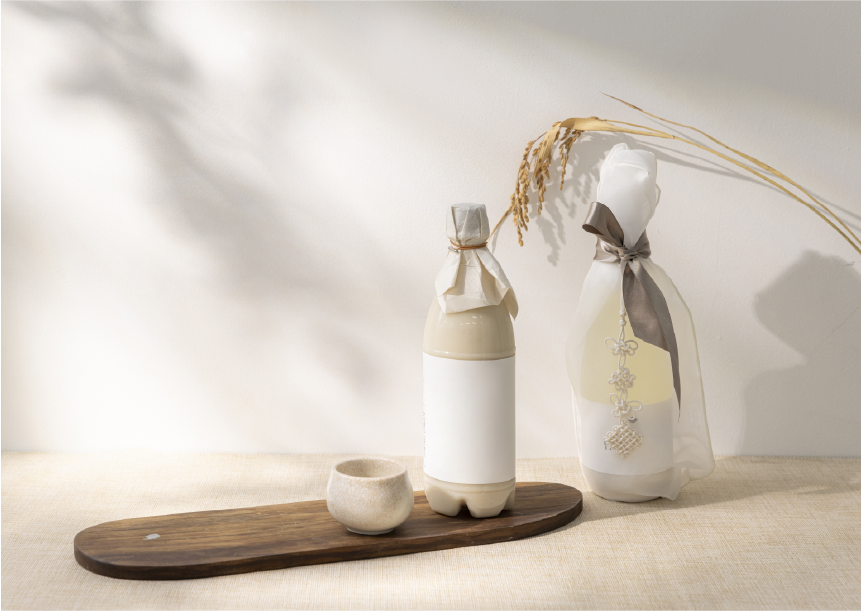
4. A Modern Revival: K-Soju and the Renaissance of Premium Traditional Liquor
Traditional liquor was once regarded as an old-fashioned drink for older generations, something served only at ancestral rites, or an inexpensive alcohol associated with severe hangovers. In the 21st century, however, it has made a remarkable comeback as one of Korea’s most fashionable culinary trends. This renaissance goes beyond nostalgia, combining premium quality, sophisticated design, and a refined food culture.
(1) The Strong Synergy Between the MZ Generation and Craft Traditional Liquor
- Natural Flavor Without Artificial Sweeteners
- Premium makgeolli and yakju now emphasize the original taste of rice by eliminating artificial sweeteners such as aspartame and increasing the rice content two to three times, producing natural sweetness and acidity through fermentation alone.
- Modern Branding and Packaging
- Traditional plastic bottles have been replaced with elegant designs inspired by wine and whisky bottles, featuring artistic labels. This has helped traditional liquor become recognized as stylish and trendy among younger consumers who enjoy sharing their tastes on social media.
- The Advantage of Online Delivery
- Under Korea’s traditional liquor promotion policy, traditional liquor is the only alcoholic beverage that can legally be delivered through online shopping. This has enabled small regional breweries to connect directly with young consumers nationwide and build loyal followings.
(2) From Oak Aging to Cocktail Pairings: The Evolution into Premium Spirits
- The Meeting of Earthenware and Oak Barrels
- Traditional distilled soju continues to be aged in breathable earthenware jars while also adopting Western oak barrel aging. Oak-aged soju develops rich oak aromas, vanilla notes, and a golden amber color comparable to single malt whisky, expanding Korea’s premium spirits market.
- Fusion with Global Bar Culture
- Traditional spirits such as Igangju, Gamhongro, and Jukryeokgo have become distinctive base spirits for high-end bartenders in cities including Seoul, New York, Paris, and Tokyo. Oriental cocktails made with Gamhongro and bitters, or highballs highlighting the pear aroma of Igangju, have gained popularity among global food enthusiasts.
(3) Daily & Healing: The Perfect Pairing with Jeonju Moju
- While premium distilled spirits shine in fine dining and mixology, Jeonju Moju stands out as the perfect companion to everyday Korean cuisine.
- A glass of chilled Moju—or warm Moju in winter—after enjoying Jeonju bibimbap or bean sprout soup cleanses the palate and gently warms the body. It is one of the finest examples of how the Korean philosophy of “food and medicine share the same origin” (Yak Sik Dong Won) continues to shape modern dining.
A Comfort Offered by Time in an Earthenware Jar
We live in an age where everything moves at an astonishing pace. With the touch of a button, food arrives within minutes, and new trends appear in an instant only to disappear just as quickly. Yet Korean traditional liquor, quietly maturing inside breathable earthenware jars, reminds us of the true value that only patience can create.
A single grain of rice meets nuruk, nature’s microorganisms, to become sugar; that sugar then meets yeast and gradually transforms into alcohol and delicate fruit aromas. This process requires changing seasons and the passage of time. Just as only liquor that has patiently matured develops true depth of flavor, our own lives gain meaning through patience and time.
- The refreshing pear aroma of Igangju carries the history of the 1882 Korea–U.S. Treaty and the refined spirit of the Honam region cherished by Jeong Yak-yong.
- The brilliant crimson color of Gamhongro reflects the flavor praised by Heo Gyun and the warmth once enjoyed in Pyongyang’s elegant entertainment culture.
- The refreshing character of Jukryeokgo embodies the unwavering spirit of Jeon Bong-jun, who stood for Korea’s independence even in the face of hardship.
- And the sweet, comforting aroma of Jeonju Moju still holds the sorrow of Queen Inmok’s family in exile and the warmth of a mother’s care for her weary son.
Tonight, pour yourself a glass of Korean traditional liquor that has been shaped by time. It is more than a drink to quench one’s thirst. It is a work of art created by nature and time together, and perhaps the warmest comfort passed down from the generations who once lived on this land to those of us living today.