
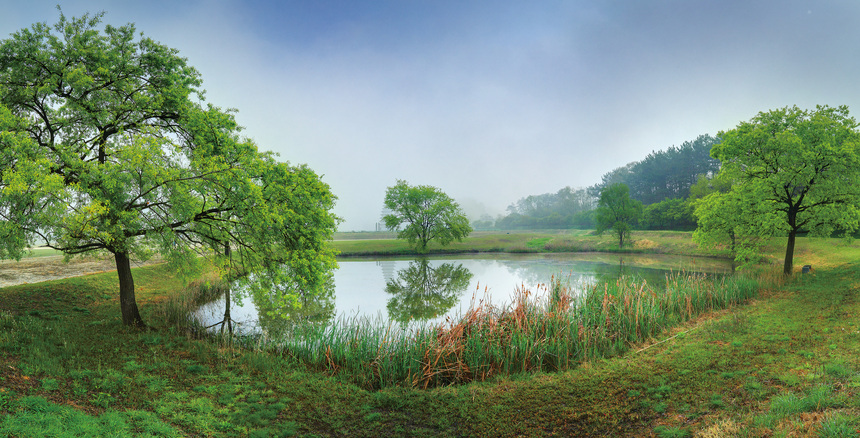
1,400 Years of Quiet at Mireuksa Temple Site, the Glory of the Baekje Royal Palace, and the Essence of Baekje Reimagined Through ICT and Digital Technology
For 1,400 years, Iksan, Jeonbuk State, has stood quietly through the passage of time, offering a story of immense history and vast, profound spaces of silence. In October and November, as autumn deepens, cool winds sweep across the expansive temple site and sunlight falls beneath the shadows of ancient stone pagodas, transforming Iksan into one of Korea’s most serene and refined settings for a soulful retreat.
Iksan is far more than a provincial city. It is a monumental chapter in Baekje history, where King Mu, the 30th king of Baekje, sought to overcome the limitations of Sabi (present-day Buyeo) and establish a new era by pursuing the relocation of the capital. It was also a second capital where the legitimacy of the Baekje royal family was concentrated. Today, the vast temple site beneath Mireuksan Mountain and the Wanggung-ri Historic Site have been designated as UNESCO World Heritage Sites, bearing witness to the height of Baekje civilization.
From the quiet consolation conveyed by monumental stone pagodas to the spectacular vision of the royal palace recreated through cutting-edge ICT and digital technology, Iksan offers a unique harmony between the dreams of Baekje 1,400 years ago and the tranquil beauty of open space. Here is your complete guide to Iksan, where ancient history and contemporary technology meet.
1. History & Story: Three Key Heritage Sites Preserving 1,400 Years of Baekje History
The Baekje Historic Areas of Iksan are far more than remnants of the past. They are living pages of history, where the grand ambitions of King Mu of Baekje, the kingdom’s architectural aesthetics, and the hidden stories of the royal court have accumulated layer upon layer.
(1) Mireuksa Temple Site: Seodong and Princess Seonhwa, and the Story of a 20-Year Restoration
- The Legend of Seodongyo and the Founding of Mireuksa Temple:
According to the story recorded in the Samguk Yusa (Memorabilia of the Three Kingdoms), a young man named Seodong, who sold sweet potatoes and would later become King Mu of Baekje, successfully married Princess Seonhwa, the third daughter of King Jinpyeong of Silla. After witnessing the miraculous appearance of the Maitreya Trinity at a pond beneath Mireuksan (Yonghwasan) Mountain, he filled in the pond and founded Mireuksa Temple, one of the largest Buddhist temples in ancient East Asia.
- The Unique Three-Pagoda, Three-Main-Hall Layout:
The temple complex was divided into three independent sections—the Central, Eastern, and Western precincts—with each featuring its own pagoda and main hall. This distinctive architectural layout embodied the Baekje people’s spatial interpretation of the Buddhist belief in Maitreya’s Three Manifestations, in which Maitreya descends into the world three times to save sentient beings.
- Mireuksa Stone Pagoda (National Treasure) & Golden Sarira Reliquary:
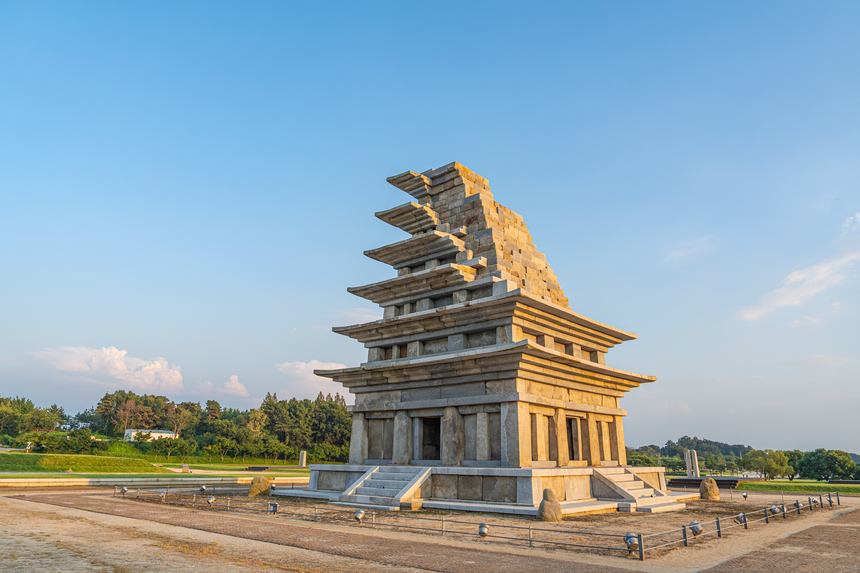
The Mireuksa Stone Pagoda in the western precinct is Korea’s oldest and largest stone pagoda and is considered one of the earliest examples of translating the structural principles of wooden pagodas into stone. After a meticulous restoration spanning 20 years, the pagoda was brought back to its former glory. The discovery of the Golden Sarira Reliquary and Sarira Inscription during its dismantling in 2009 provided crucial evidence for uncovering the historical truth surrounding the Baekje royal family.
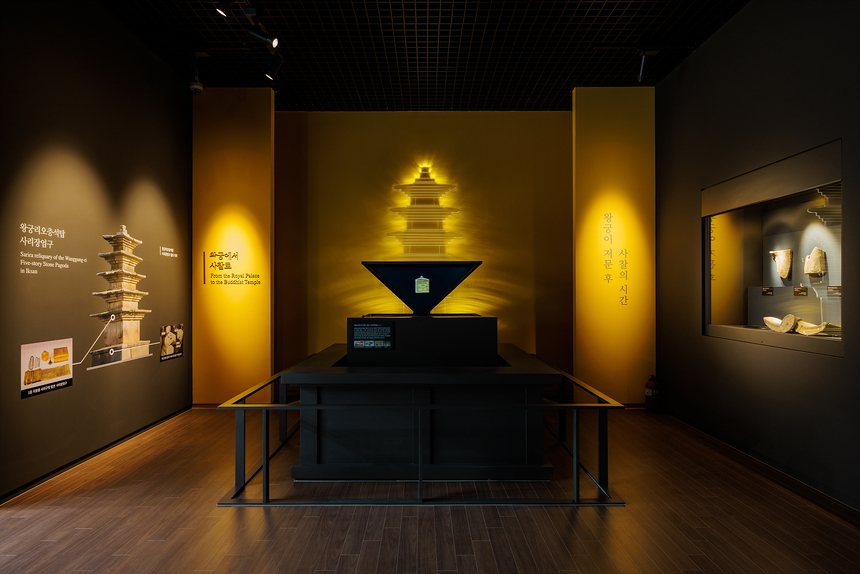
(2) Wanggung-ri Historic Site: From Royal Palace to Temple, the Glory and Transformation of Baekje Royal Power
- King Mu’s Vision of a New Baekje and the Theory of Iksan as a Capital:
The site provides compelling evidence of King Mu’s ambitious plan to relocate the capital in an effort to challenge the established political elite of Sabi and usher Baekje into a new golden age. Enclosed by a vast wall measuring approximately 216 meters east to west and 492 meters north to south, the site once served as a royal palace where the Baekje royal family lived and conducted state affairs.
- Advanced Ancient Construction Techniques & Secret Spots:
- Large-scale Toilet Site: The remains reveal one of the most sophisticated sanitation and waste-management systems found in an ancient East Asian royal palace. The discovery of bundumok, wooden wiping implements, offers a fascinating glimpse into the daily lives of the people of Baekje.
- Workshop Site: Large workshops where gold, silver, and glass were processed have been excavated, demonstrating that the site was a highly advanced technological center dedicated to producing luxury crafts for the royal court.
- Rear Garden & Curved Waterway: The curved waterway and garden featuring unusual rock formations north of the palace offer a glimpse into the refined garden culture of the Baekje royal court, which emphasized harmony with nature.
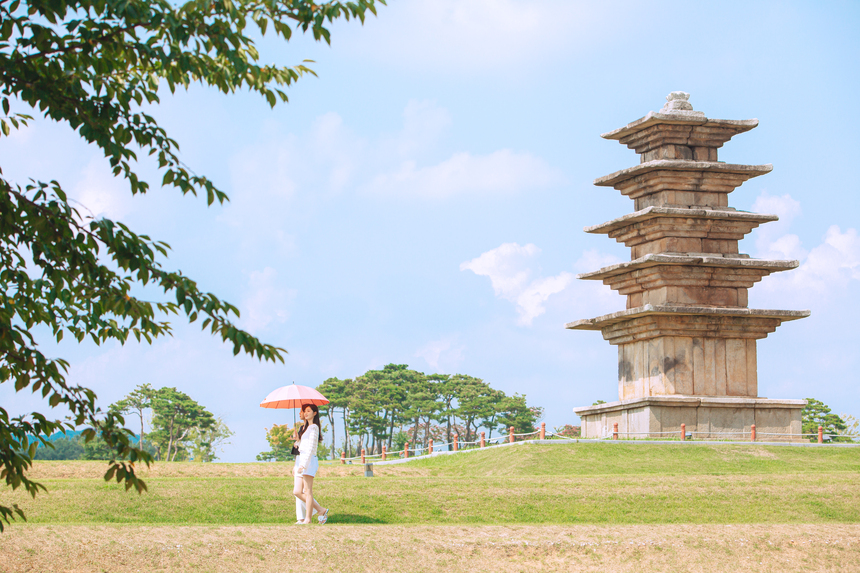
- The Aesthetics of the Wanggung-ri Five-Story Stone Pagoda (National Treasure):
Following the fall of Baekje, the site was transformed into a Buddhist temple, with the Wanggung-ri Five-Story Stone Pagoda becoming its central landmark. Its graceful eaves and balanced vertical proportions embody the understated elegance of Baekje architecture. The Sarira Reliquary and Silver Diamond Sutra Plates (National Treasure) discovered inside the pagoda further enhance its historical significance.
(3) Baekje Royal Palace Museum: Baekje’s Royal Palace Reborn Through ICT and Digital Technology
- An Immersive Digital Space Built Over the Historic Site:
The museum overcomes the limitations of a historic site where only the foundations remain by using advanced ICT and media art. It helps visitors easily understand the historical context of Baekje before exploring the actual archaeological remains.
- Exhibition & Experience Highlights:
- VR & AR Experience Zone: Walk through vivid 3D reconstructions of the magnificent palace buildings and rear gardens that once stood here 1,400 years ago.
- Interactive Media Facade: An immersive exhibition that digitally recreates the four seasons of the magnificent Baekje royal palace, royal banquets, and Baekje artisans crafting gold and silver treasures in their workshops.
- Family-Friendly “Digilog” Experiences: Hands-on content includes making traditional palace roof tiles, trying on Baekje clothing, and exploring the scientific principles behind the large-scale ancient toilet system through immersive displays.
2. Scene: The Views You’ll Discover
(1) Mireuksa Temple Site: The Beauty of Open Space and Silent Contemplation
After passing the expansive lotus pond and entering the Mireuksa Temple Site, visitors are greeted by foundation stones left behind where once-magnificent buildings stood, along with the imposing Mireuksa Stone Pagoda.
- The View: Take a seat in the rooftop garden of the National Iksan Museum or on one of the wooden benches around the edge of the site. With Mireuksan Mountain rising like a folding screen in the distance and a gentle autumn breeze sweeping across the ruins, the site’s profound sense of emptiness and openness offers a deep sense of tranquility.
(2) Wanggung-ri Historic Site: Evening Sunset Beyond the Stone Pagoda
Follow the walking trail along the remains of the palace’s sturdy stone foundations, and you will eventually encounter the Wanggung-ri Five-Story Stone Pagoda standing proudly in the middle of the open fields.
- The View: As the setting sun bathes the pagoda’s graceful base and eaves in warm orange light, capture a picture-perfect moment where the former glory of the Baekje royal palace meets the quiet beauty of autumn.
(3) Baekje Royal Palace Museum: A Digital Panorama Where Past Meets Present
The expansive view of the Wanggung-ri Historic Site beyond the museum’s floor-to-ceiling glass windows creates a striking contrast with the interplay of light and moving images that surrounds the interior.
- The View: Head up to the museum’s rooftop observatory for a sweeping view of the entire Wanggung-ri Historic Site. Here, the grand Baekje royal palace reconstructed through virtual reality and media art appears to overlap with the actual stone pagoda, creating a unique and visually captivating scene where past and present seem to exist side by side.
3. Transportation: How to Get to the Baekje Historic Areas of Iksan from Seoul
As a major transportation hub, Iksan is highly accessible from Seoul and the greater metropolitan area. For travelers departing from Seoul, KTX is the most recommended option.
Option A. By Train (Yongsan Station ➔ Iksan Station)
- Departure from Seoul: Board at Yongsan Station (Seoul Subway Line 1 / Gyeongui-Jungang Line) ➔ Arrive at Iksan Station
- Travel Time & Fares:
- KTX: Approximately 1 hr 20 min–1 hr 30 min / around ₩32,000ITX-Saemaeul: Approximately 2 hr 50 min / ₩23,700
- Mugunghwa-ho: Approximately 3 hr 10 min / ₩16,000
- Last Mile (Iksan Station → Historic Sites):
- Taxi: From the taxi stand outside Iksan Station ➔ approximately 25 min to Mireuksa Temple Site (around ₩18,000) / approximately 20 min to Wanggung-ri Historic Site (around ₩12,000)
- City Bus: From the bus stop in front of Iksan Station, take Bus 41 ➔ for Mireuksa Temple Site, get off at Hyangsan Bus Stop (approximately 60 min, ₩1,700). For the Baekje Royal Palace Museum and Wanggung-ri Historic Site, transfer at Geumma Terminal to Bus 2650D or 2651D, then get off at Baekje Royal Palace Museum Bus Stop (approximately 80 min, ₩1,700).
Option B. By Bus (Seoul Central City Terminal ➔ Iksan Terminal)
- Departure from Seoul: Board at Central City Terminal (Express Bus Terminal Station, Seoul Subway Lines 3, 7 & 9) ➔ Arrive at Iksan Express Bus Terminal
- Travel Time: Approximately 2 hr 40 min
- Fare: Approximately ₩21,500 for Premium Economy Express
- Last Mile (Terminal → Historic Sites):
- Taxi: From the taxi stand in front of the terminal, approximately 25 min (around ₩18,000)
- City Bus: From a bus stop near the terminal, take Bus 41 ➔ for Mireuksa Temple Site, get off at Hyangsan Bus Stop (approximately 60 min, ₩1,700). For the Baekje Royal Palace Museum and Wanggung-ri Historic Site, transfer at Geumma Terminal to Bus 2650D or 2651D, then get off at Baekje Royal Palace Museum Bus Stop (approximately 80 min, ₩1,700).
4. Secret Tips: How to Make the Most of Iksan’s Baekje Historic Sites
(1) Silent Meditation Walk & KOREANOW Exclusive AR Experience
Once you enter the Mireuksa Temple Site, take out your earphones for a moment and listen to the sound of your footsteps and the autumn breeze sweeping across the vast ruins. Alongside this peaceful moment of stillness, activate the exclusive AR (augmented reality) smartphone service available only to KOREANOW tour participants.
Through your smartphone screen, the magnificent wooden pagoda and the original appearance of Mireuksa Temple—lost to the passage of time—are brought back to life in vivid 3D above the existing stone pagoda. It offers a unique, time-transcending experience available exclusively to KOREANOW travelers.
(2) Sunset Golden Hour Spot
Visit the Wanggung-ri Historic Site around 5:30 p.m. When the setting sun washes the graceful curves of the Wanggung-ri Five-Story Stone Pagoda in warm orange light, you’ll find one of the most breathtaking photo opportunities of your trip to Iksan.
[Information]
- National Iksan Museum & Mireuksa Temple Site
- Address: 104-1, Giyang-ri, Geumma-myeon, Iksan-si, Jeonbuk StateContact: +82-63-830-0900
- Hours: 09:00–18:00 (Closed Mondays / Outdoor historic site open year-round)
- Wanggung-ri Historic Site & Baekje Royal Palace Museum
- Address: 132, Gungtteul-ro, Wanggung-myeon, Iksan-si, Jeonbuk StateContact: +82-63-859-4631
- Hours: 09:00–18:00 (Closed Mondays)
[KOREANOW TOUR] Want to Experience the Spirit of Baekje and Complete Relaxation for Yourself?
Planning a trip to Iksan where 1,400 years of history meet deep relaxation, but worried about getting around without a car or where to begin? Experience the emotion beyond the pages with KOREANOW’s specially designed “Iksan Baekje History & Wellness Retreat Tour.”
From a contemplative walk through the Mireuksa Temple Site to an exclusive smart ICT experience at the Baekje Royal Palace Museum, followed by a healing foot bath at Wanggung Forest, every part of this private local itinerary has been carefully selected exclusively for KOREANOW travelers.
※ Tour Reservations & Details: KOREANOW Culture Mall
Discover the exclusive Iksan travel package curated and presented by KOREANOW through the Culture Mall.
Epilogue: The Quietest Comfort Offered by 1,400-Year-Old Stone Pagodas
If travel is about more than collecting spectacular sights, autumn in Iksan offers a quiet kind of comfort to treasure deep within your heart. Standing before the Mireuksa Stone Pagoda and Wanggung-ri Five-Story Stone Pagoda, which have endured 1,400 years of wind and weather, you may find yourself filled with an emotion deeper than any grand words or elaborate descriptions could express.
In an age when everything changes rapidly and life never seems to stop, Baekje’s stone pagodas—standing quietly in the same place for centuries—offer a gentle silence that seems to say, “It’s okay to pause for a moment.” Even after returning to your busy routine, whenever you find yourself longing for a little space in your mind, remember the sound of the wind in Iksan and the graceful lines of its stone pagodas. This ancient city, where the spirit of Baekje still lingers in the distance, will be waiting for your return with the same warmth and quiet sense of space in the seasons to come.