The Sociology of the “Chicken Republic”
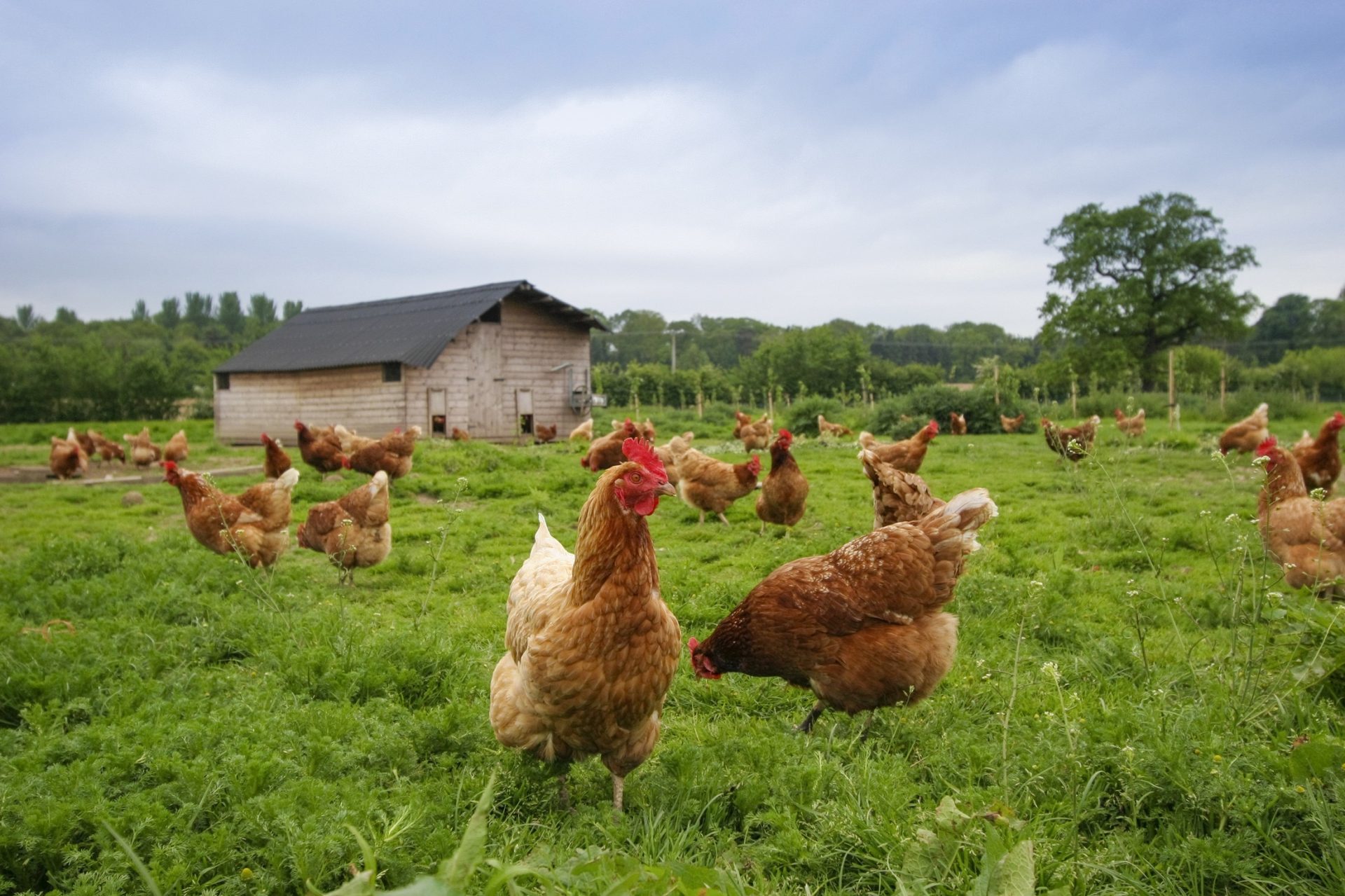
Now, let us shift our focus from the earth to animal protein. What meat do Koreans love the most?
Judging by both consumption volume and cultural influence, the answer is unmistakably chicken.
Korea is one of the countries with the highest density of chicken restaurants per capita in the world.
It is often jokingly referred to as “The Republic of Chicken.” Yet, Korean chicken culture extends far beyond fried chicken alone.
Using chicken as a single ingredient, Koreans have developed it into four entirely different culinary genres through variations in heat control—boiling, stir-frying, braising, and frying—and through the intricate harmony of seasoning.
This culinary evolution closely mirrors the trajectory of modern Korean history itself.
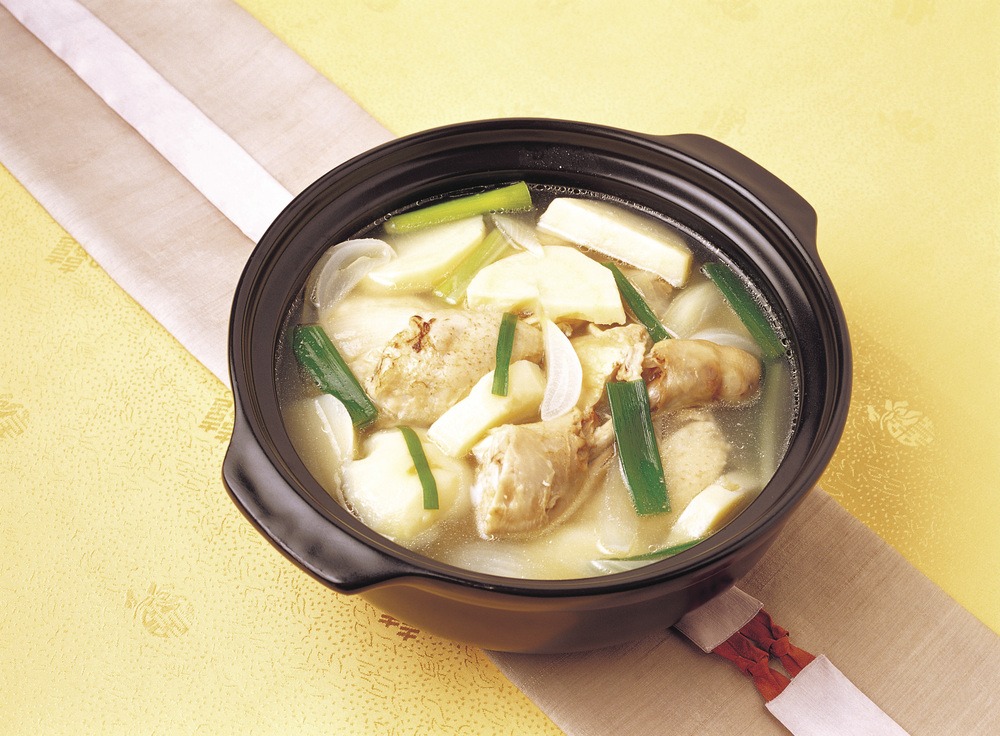
- Samgyetang: The wisdom of an agrarian society and its restorative food culture
- Dakgalbi: The food of workers and youth during industrialization in the 1960s–70s
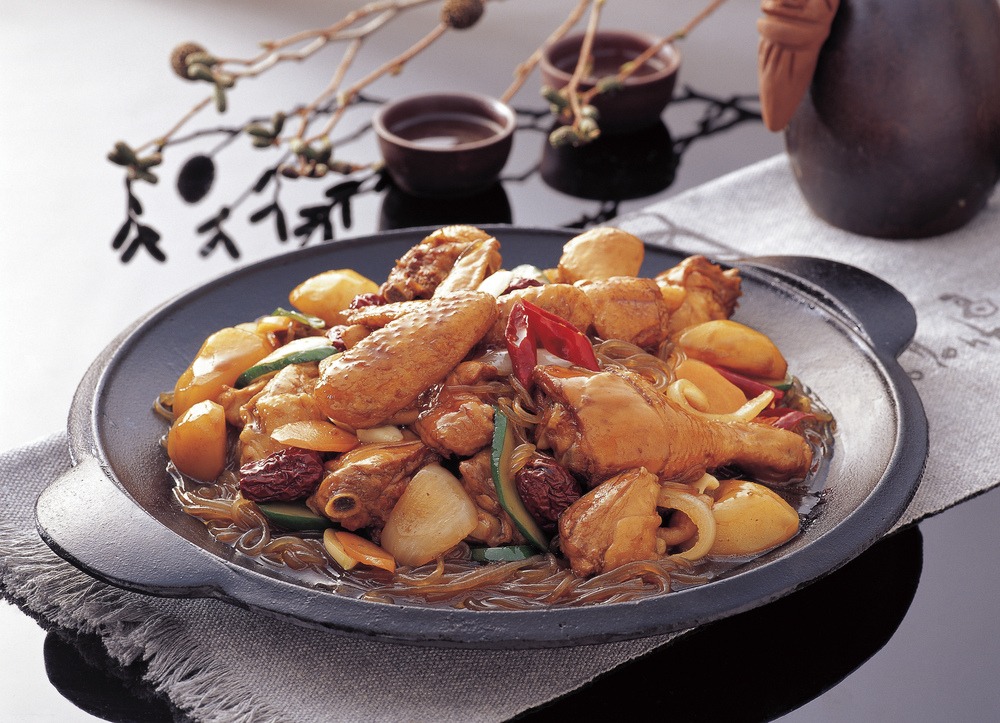
- Jjimdak: The survival-driven creativity of local markets and the dawn of fusion cuisine in the 1990s
- Korean Fried Chicken: A global phenomenon shaped by delivery apps and the Korean Wave since the 2000s
In Korean restaurant kitchens, chicken functions like a painter’s canvas. When deciding what to eat for dinner, Koreans rarely ask, “Shall we eat chicken?” Instead, they ask a far more specific question:
“Should we fry it, stir-fry it, or boil it?”
That choice depends on the mood of the day, the weather, and—perhaps most importantly—the people gathered around the table.
Dakgalbi: Spicy Democracy on a Round Iron Plate
History & Origins: A Working-Class Revolution in Chuncheon
Dakgalbi was born in the city of Chuncheon, in Gangwon Province, during the 1960s.
In the years following the Korean War, Chuncheon was home to both U.S. and Korean military bases, and its streets were filled with young soldiers on leave and university students—hungry, energetic, and short on cash.
They dreamed of eating pork ribs, a symbol of indulgence at the time, but reality rarely allowed it.
Sensing this gap between desire and affordability, one restaurant owner came up with a clever solution:
he marinated chicken, a much cheaper protein, in the same rich seasoning used for pork ribs and grilled it over charcoal.
Thus, dakgalbi—literally “chicken ribs”—was born.
Despite its name, dakgalbi contains no ribs at all.
Instead, it uses deboned chicken thigh meat, prized for its tenderness and juiciness.
As demand grew and customers asked for larger portions, the dish evolved.
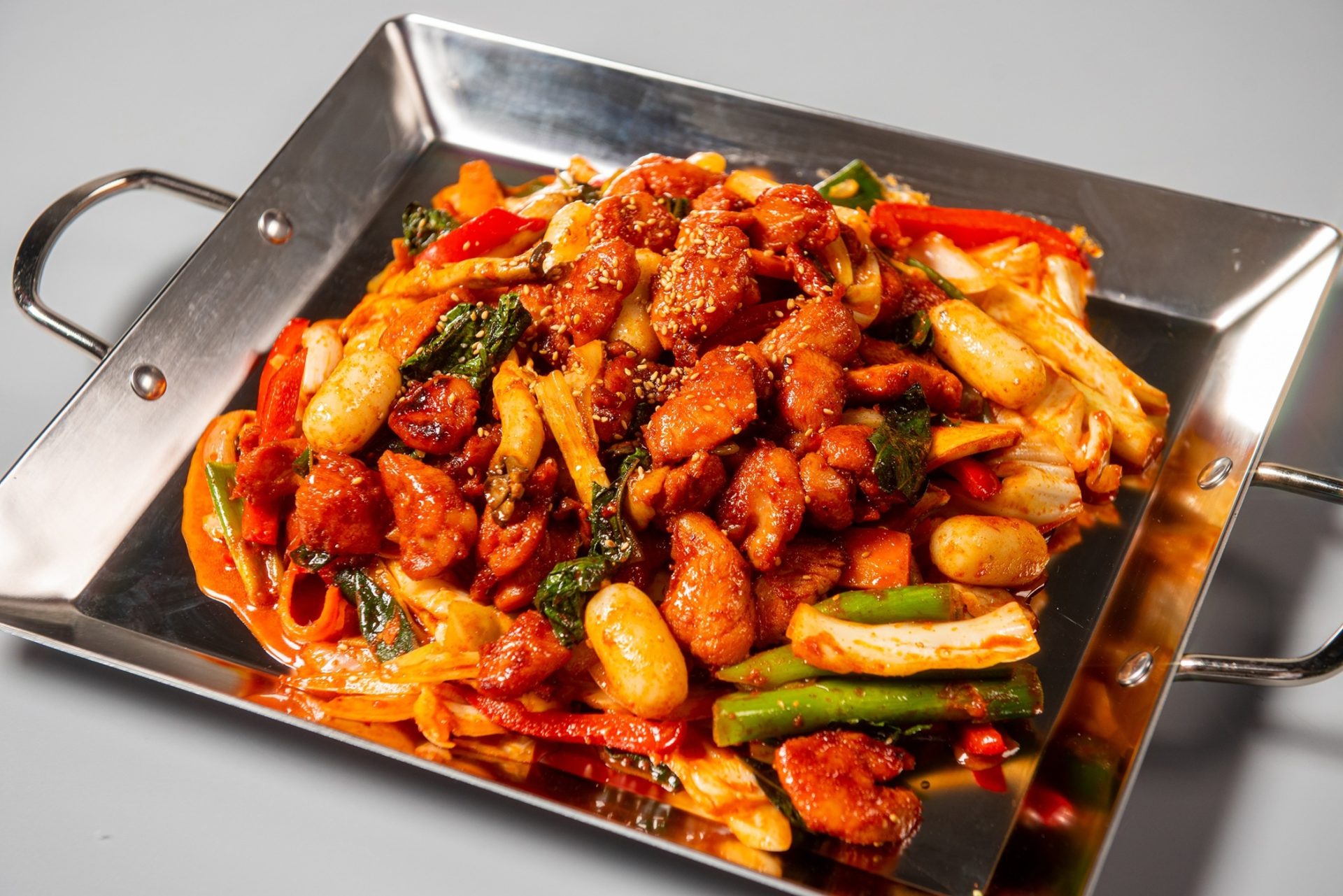
Charcoal grills gave way to massive iron plates, and vegetables like cabbage, sweet potato, rice cakes, and onions were added generously to stretch the meal and satisfy growing appetites.
The name retained the prestige of “galbi,” but the soul of the dish remained firmly rooted in the lives of ordinary people.
The Atmosphere: The Aesthetics of Noise and Smoke
Dakgalbi is never meant to be eaten alone. It is, by nature, a social food.
The moment you step into a dakgalbi restaurant, you are enveloped by energy. Dozens of large round tables fill the room, each crowned with a heavy cast-iron pan more than 40 centimeters wide. Guests tie on oversized aprons to shield themselves from splattering red sauce, and the air buzzes with conversation, laughter, and anticipation.
This is not a quiet dining experience. It is communal, loud, and unapologetically alive.
The Performance: Fire-Watching as Ritual
Once you place your order, the performance begins.
A staff member approaches the table and pours a mountain of marinated chicken, chopped cabbage, sweet potatoes, rice cakes, and fragrant perilla leaves onto the blazing iron plate. The sound is immediate and dramatic—“Sssssss—”—as spicy steam rises into the air.
At this point, newcomers often reach instinctively for tongs or scissors. They are quickly stopped.“Don’t touch it.”
In dakgalbi culture, watching is part of eating. The staff member, an expert, stirs, flips, and chops the ingredients with practiced speed. For the next 10 to 15 minutes, diners sit back, eyes fixed on the pan, as hunger intensifies and anticipation peaks. This shared waiting time is not inefficiency—it is ceremony.
Flavor Analysis: The Magic of Perilla Leaves
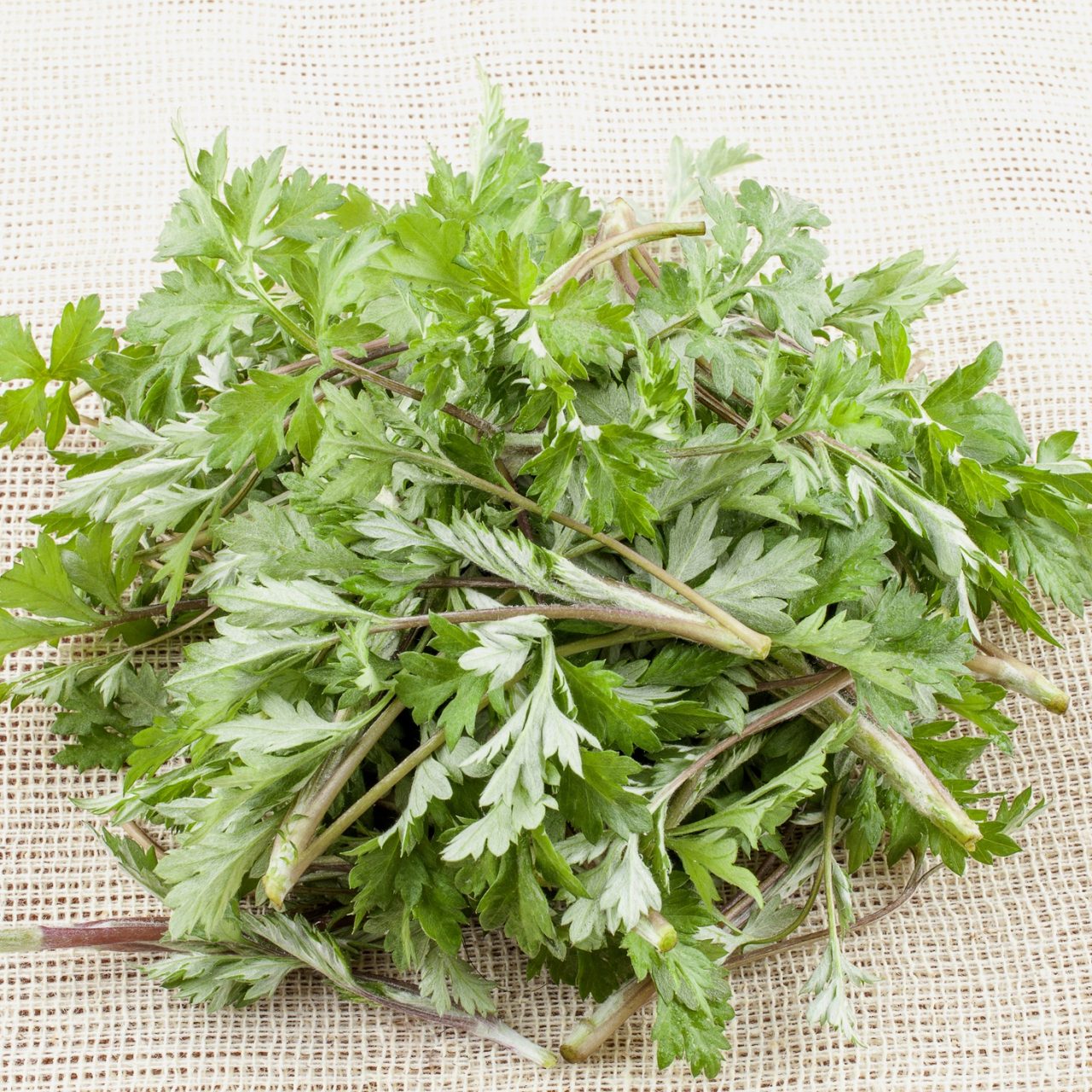
While gochujang-based sauce forms the backbone of dakgalbi’s flavor, the dish’s true secret weapon is perilla leaf.
As this uniquely Korean herb wilts under heat, it releases a complex aroma—somewhere between mint, basil, and anise. This fragrance neutralizes any gaminess in the chicken and elevates the dish from fiery street food to something deeply aromatic and refined.
When the chicken is perfectly cooked, place a piece onto a lettuce leaf, add raw garlic and a dab of ssamjang, then wrap and eat it in one bite. The initial heat is soon softened by the natural sweetness of cabbage and sweet potato, creating a rhythm of spice and relief that keeps chopsticks moving.
The Grand Finale: The Fried Rice Commandment
In Korea, there is an unspoken but absolute rule when eating dakgalbi. You must order fried rice at the end.
After the chicken is gone, rice, roasted seaweed flakes, sesame oil, and any remaining vegetables are added directly onto the iron plate. The mixture is pressed firmly against the surface and left untouched.
You wait.
Slowly, a golden crust of nurungji—crispy scorched rice—forms at the bottom. Then comes the final act: scraping the plate clean with metal spoons, producing a satisfying “scrrrk” sound.
When Koreans joke that they ate the chicken only to get to the fried rice, they are not joking. They are stating a fact.
Jjimdak: The Allure of Black Sauce and the Ideal Balance of Sweet & Salty
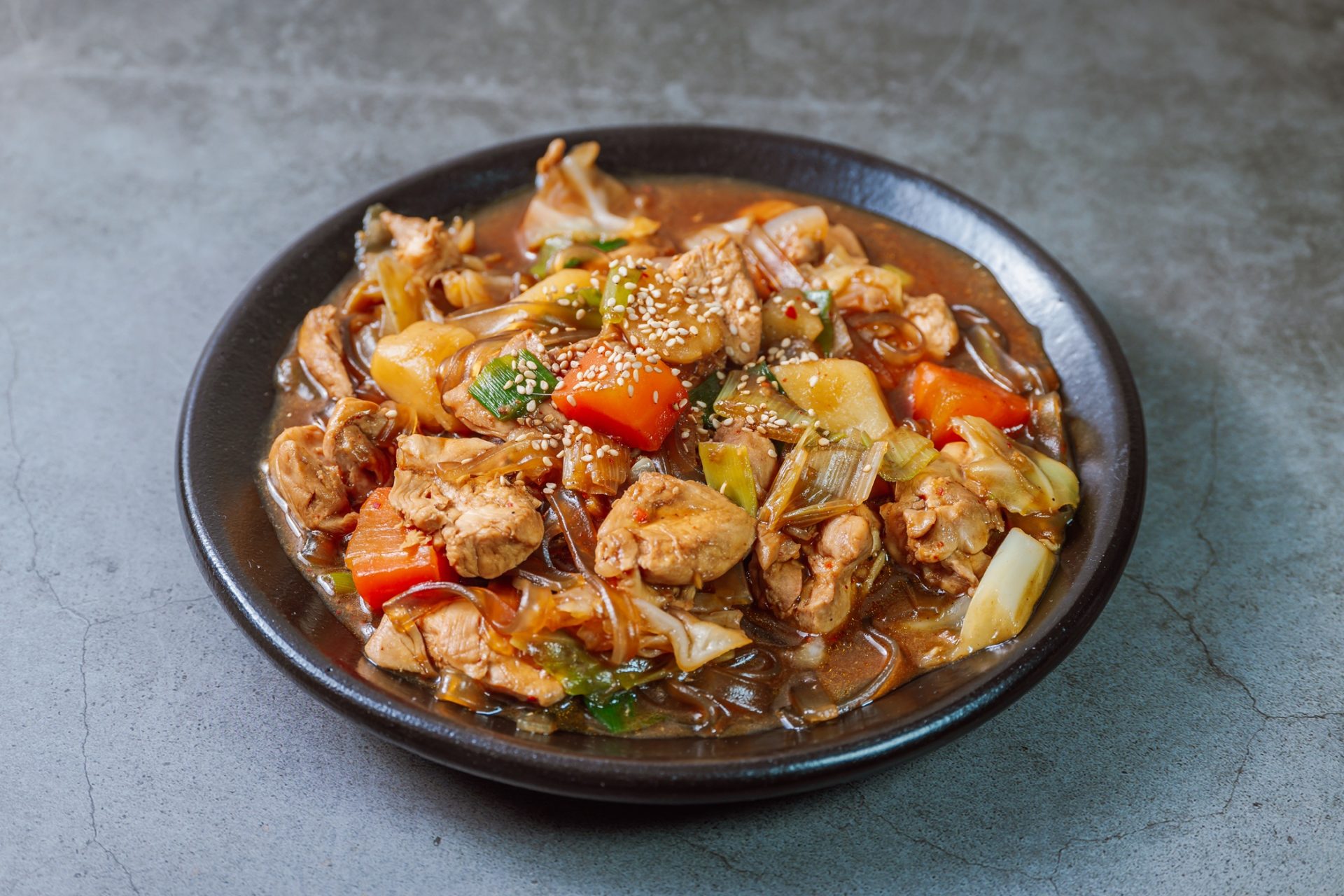
If dakgalbi represents fiery passion in red, jjimdak embodies depth and calm in black.
Originating in the market alleys of Andong, North Gyeongsang Province, this dish is a textbook example of Korea’s beloved flavor balance known as “dan-jjan”— sweet and salty in perfect harmony.
Historical Background: A Dish Born from Market Survival
Despite Andong’s reputation as the birthplace of Confucian scholarship and aristocratic culture,
the origins of jjimdak are surprisingly modern and pragmatic.
In the 1980s, Western-style fried chicken swept across Korea and rapidly gained popularity. Faced with shrinking sales, chicken vendors in Andong’s traditional markets were forced to adapt.
Their question was simple but urgent: “Is there a dish that feels as generous as fried chicken,
yet pairs naturally with rice—the heart of Korean meals?”
The answer was jjimdak.
By braising chicken in a soy-sauce-based seasoning—familiar, comforting, and deeply Korean—
they created a dish that felt both abundant and culturally resonant. What began as a strategy for survival soon became a nationwide favorite.
Culinary Technique: The Aesthetics of Braising
Jjimdak is prepared through braising— chicken simmered first over high heat, then gently reduced over low heat.
Large-cut potatoes, carrots, onions, and scallions are added, allowing their natural sweetness to dissolve into the dark sauce.
Whole dried red chilies—cut directly with kitchen scissors— are dropped into the pot, introducing a gentle, clean heat known in Korean as “kal-kal-ham”: a sharp but refreshing spiciness that prevents the soy sauce from becoming heavy or cloying.
At its core, jjimdak is comforting rather than aggressive, making it one of the most approachable Korean dishes for first-time visitors and children alike.
The Hidden Star: The Battle for Glass Noodles
For many first-time diners, the biggest surprise in jjimdak is not the chicken, but the dangmyeon—wide, translucent glass noodles made from sweet potato starch.
These noodles absorb the soy-based sauce like a sponge, becoming intensely flavorful and irresistibly chewy.
As soon as the dish is served, chopsticks move quickly. Koreans instinctively reach for the noodles first.
Why? Because if you wait too long, the noodles will soak up every last drop of the precious sauce
and swell to their fullest—leaving none behind.
Slurping them up delivers a slippery, elastic texture that is entirely unlike Italian pasta—
a uniquely Korean sensory pleasure.
How to Enjoy It Best: The Art of Mashing
The shallow pool of sauce left on the plate is an open invitation to rice.
Spoon the sauce generously over steamed white rice, then mash the tender, fully cooked potatoes into the mixture.
The result is a deeply satisfying blend of carbohydrates and savory-sweet sauce— a combination so complete that no additional side dishes are necessary.
It is comfort food at its most honest, and one of the reasons jjimdak continues to endure as a household favorite across generations.
Samgyetang: Medicine in a Bowl, Boiling with Vitality
In Korea, samgyetang is not regarded as an ordinary soup. It is treated as medicine.
When Koreans say they feel drained, depleted, or “hollow inside,” they do not hesitate between a hospital and a restaurant. They instinctively head for a samgyetang restaurant.
This single bowl represents the belief that food can restore what time, stress, and exhaustion have taken away.
Cultural Context: The Logic of “Fighting Heat with Heat” (Iyeol Chiyeol)
One of the most puzzling sights for foreigners in Korea occurs during the hottest, most humid days of summer— known as Sambok, the three peak heat days of the year.
Instead of seeking cold drinks or air-conditioned refuge, Koreans line up to eat a steaming-hot, boiling soup.
This philosophy is called Iyeol Chiyeol, meaning “to control heat with heat.”
From a traditional medical perspective, summer heat causes the body’s surface to overheat while the internal organs—especially the stomach—become weakened and chilled due to cold foods and excessive cooling. Consuming a hot, nutrient-dense dish like samgyetang warms the core, stimulates circulation, promotes sweating, and ultimately helps the body regulate its temperature more effectively.
Paradoxically, the fastest way to survive the heat is to confront it head-on.
Ingredient Alchemy: The Five Treasures Inside the Chicken
Samgyetang is served in a stone pot containing a whole young chicken, intact and uncut. The chicken is carefully cleaned, then stuffed with precious ingredients before being slowly simmered.
This process feels less like cooking and more like alchemy.
- Ginseng
Korea’s most iconic medicinal root.
Its bitter earthiness strengthens immunity, restores vitality, and balances the richness of the chicken through its saponin compounds. - Jujube (Red Dates)
Naturally sweet and deeply comforting, jujubes protect the stomach and add warmth to the broth. - Garlic
Essential for removing any unwanted odors from the chicken, while providing powerful antibacterial and detoxifying effects. - Astragalus Root (Hwanggi)
Traditionally used to replenish energy lost through excessive sweating during summer. - Glutinous Rice
Placed inside the chicken, it thickens the broth, aids digestion, and transforms the soup into a deeply nourishing meal.
Together, these ingredients create a broth that is restorative rather than indulgent—
a rare balance of richness and clarity.
The Eating Experience: Breaking Open and Recharging
As the stone pot arrives at the table, the soup bubbles like molten lava. Thanks to collagen released from the chicken and starch from the rice, the broth is thick, silky, and almost creamy in texture.
Using chopsticks and a spoon, the diner gently breaks open the chicken’s body. A rush of steam escapes, carrying with it the fragrance of ginseng and softened rice.
The meat is so tender that it separates from the bone at the slightest touch. Each bite is dipped lightly into a small dish of salt and pepper, enhancing—not overpowering—the natural flavor.
Finally, the glutinous rice hidden inside the chicken is scooped out and eaten with the broth. At that moment, warmth spreads through the body almost instantly, as if energy were being refilled in real time.
For travelers exhausted by long journeys, samgyetang is not just a meal—it is the fastest charging station Korea has to offer.
K-Chicken (Fried Chicken): The Crispiest Sound on Earth
The final protagonist of this chapter is Korean-style fried chicken, a dish that has now become a truly global phenomenon.
Fried chicken may have originated in Kentucky, USA, but over the past four decades, Koreans have completely reinvented it in their own way— to the point that it is now being exported back to the world as a distinctly Korean creation.
The Technical Secret: The Science of Double-Frying
Foreign visitors often ask the same question: “Why is Korean fried chicken still crispy even after it cools down?”
The answer lies in a precise technique known as double-frying.
- First Fry:
The chicken is fried slowly at a relatively low temperature.
This step cooks the meat thoroughly while gently removing internal moisture. - Resting:
The chicken is then allowed to rest.
During this phase, moisture trapped inside the batter escapes, creating balance between the interior and exterior. - Second Fry:
Finally, the chicken is fried again at a much higher temperature.
Any remaining fat is rendered out, and the batter transforms into a thin, glass-like shell with an exceptionally crisp texture.
That iconic “ba-sa-sak” sound you hear when biting into Korean fried chicken is not just a sound—it is science turned into ASMR.
The Sauce Revolution: Yangnyeom Chicken
Another great Korean invention is Yangnyeom Chicken.
After frying, the chicken is coated—not dipped—in a thick, glossy red sauce made from gochujang (red chili paste), ketchup, garlic, and rice syrup.
While Western sauces are typically used for dipping, Korean yangnyeom sauce is glazed directly onto the crispy coating, creating a bold balance of sweet, spicy, and savory flavors.
What surprises many first-time eaters is that despite being covered in sauce, the chicken remains crispy for an impressively long time.
And if choosing feels overwhelming, don’t worry— Korea has a brilliant solution called “ban-ban” (half & half), allowing you to enjoy both plain fried and sauced chicken in one order.
A Cultural Phenomenon: Chimaek
In Korea, fried chicken is not just food—it is a cultural ritual.
This is where the word “Chimaek” comes from, a combination of “chicken” and “maek-ju” (beer).
On a Friday night, imagine sitting on the grass along Seoul’s Han River. You order chicken with your smartphone. Thirty minutes later, a delivery motorcycle arrives—right in the middle of the park.
You open the box. You crack open a cold can of beer—“chik.”
That moment captures one of the happiest and freest scenes of modern Korean life.
Light, highly carbonated Korean lager pairs perfectly with fried chicken, cutting through the richness and refreshing the palate. In this pairing, chicken and beer become soulmates.
Why It Matters
K-Chicken represents more than a popular dish. It reflects Korea’s ability to take something familiar, analyze it deeply, refine it relentlessly, and transform it into something sharper, louder, and unmistakably Korean.
This is why Korean fried chicken doesn’t just travel—it conquers.
The Practical Guide — Toward a Perfect Meal
The Perfect Partner: Side Dishes & Alcohol Pairings
A Korean meal is never complete with the main dish alone. The supporting cast on the Korean table—its side dishes—exists not as decoration, but as an essential force that amplifies, balances, and completes the flavors of the main course.
The Many Faces of Radish: Digestive Allies
In Korean cuisine, chicken’s closest companion is always radish. The reason is both cultural and scientific: radish contains diastase, a powerful digestive enzyme that helps break down fats and proteins.
Depending on the dish, radish appears in different forms, each playing a precise supporting role.
Chicken-mu (Pickled Radish Cubes)
These perfectly cubed, snow-white pickles are inseparable from fried chicken orders. At first, they may feel unfamiliar, but soon become addictive. Cold, crisp, and sharply acidic, chicken-mu acts as a complete reset button for the palate, instantly cutting through grease. Among Koreans, there is an unwritten rule:
one bite of chicken, one cube of radish.
Dongchimi (Water Kimchi)
An essential companion to spicy dishes like dakgalbi. Made by fermenting whole radishes in lightly salted water without chili powder, dongchimi produces a clear, refreshing broth. It functions as a natural digestive aid and an exceptional cooling system, calming tongues inflamed by heat and spice.
Kkakdugi (Cubed Radish Kimchi)
Soft, delicate samgyetang finds its perfect match in kkakdugi. The crunchy texture and bold red seasoning of this radish kimchi provide contrast, sharpening the flavors of the mild, nourishing soup.
Alcohol Pairing Guide: Understanding Korean Drinking Culture
Spring Vegetable Pancakes + Makgeolli
On a rainy day, nothing captures Korean romance quite like a glass of makgeolli.
This milky rice wine, lightly carbonated and rich with natural probiotics, washes away the oiliness of savory pancakes and brings comfort with every sip.
Dakgalbi + Soju
A clear shot of soju shared among friends, voices raised in laughter, is a familiar Korean scene.
The bitterness of soju sharpens the sweetness of dakgalbi’s spicy sauce, cutting through richness while dissolving the stress of the day.
Fried Chicken + Somaek
Beer alone not enough?
Enter somaek—a bold mixture of soju and beer.
When mixed in the right golden ratio, somaek becomes a powerful party drink that maximizes the pleasure of fried chicken, a staple of Korean nightlife.
Ordering Like a Local: Survival Tips
Korean restaurant systems are among the fastest and most efficient in the world.
To avoid confusion—and to blend in like a local—keep the following tips in mind.
Push the Bell
Most Korean restaurant tables are equipped with a call button. Do not struggle to make eye contact with servers or hesitate with raised hands. Confidently press the button. This is not considered rude—it is a system built on mutual efficiency and respect. Moments later, a cheerful “Yes!” will echo from somewhere in the kitchen.
Water Is Self-Service
No water on the table? Look around. If you see a sign that reads “Water is self-service,” simply help yourself. Grab a cup and fill it at the water dispenser or refrigerator. This system reduces labor costs and speeds up service—another example of Korean efficiency at work.
The Hidden Drawer
If you don’t see spoons or chopsticks on the table, don’t panic. Run your hand along the side of the table. A hidden drawer will slide open, revealing neatly stored utensils, napkins, and sometimes even bottle openers. This clever design maximizes limited table space—a small but telling example of Korean spatial ingenuity.
The Role of Kitchen Scissors
Do not be alarmed if a large pair of scissors appears at the table. In Korea, scissors are not stationery—they are dining tools. They are used to cut long noodles, large kimchi pieces, or dakgalbi into bite-sized portions. Few cultures in the world wield scissors at the table as confidently and skillfully as Koreans do.