1. History
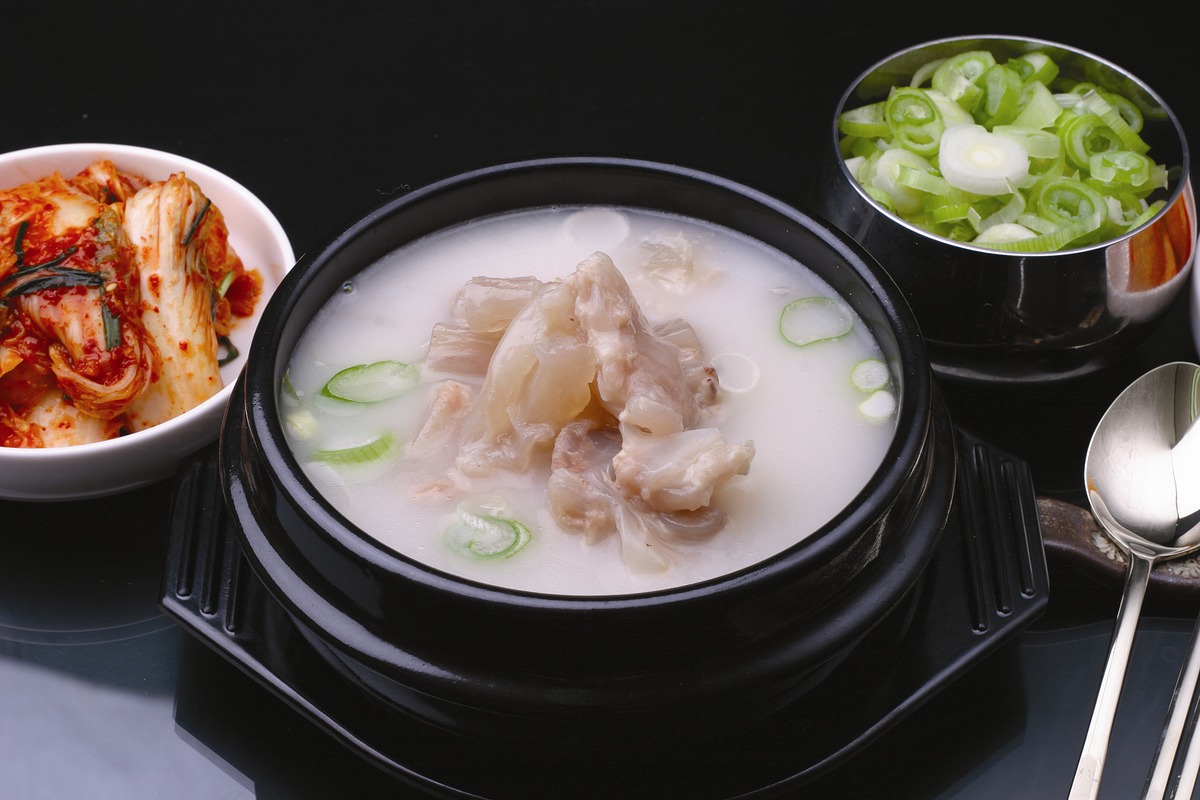
Seolleongtang is a traditional Korean soup made by simmering ox bones, brisket, and other beef parts for many hours until the broth turns milky white. Its origins are often traced back to the Joseon Dynasty (1392–1897).
According to one legend, King Seongjong of Joseon created the dish after attending a “Seonnongje” (a royal ritual for good harvests). The soup was meant to feed large groups of people using minimal ingredients, symbolizing both frugality and generosity. Over time, Seolleongtang became a staple comfort food, loved by commoners and nobles alike.
2. Origin
The dish originated in Seoul, the capital of Korea, and is considered one of the representative Seoul-style soups. Because it was developed in the royal court and then spread to the public, it reflects both royal refinement and everyday simplicity.
Today, Seolleongtang shops are a common sight in Seoul, often serving the same slow-cooked recipe that has been passed down for generations.
3. Regional Variations
While Seolleongtang is most associated with Seoul, several regional adaptations exist:
- Seoul-style: Uses ox leg bones and brisket; the broth is creamy white and lightly seasoned. Salt, green onions, and pepper are added individually at the table.
- Busan-style: Slightly saltier with a clearer broth, often served with thin wheat noodles (somyeon) inside.
- Jeolla-style: Sometimes includes garlic and fermented seasoning for deeper flavor.
- Gangwon-style: Uses a mix of ox bones and pork bones, reflecting the mountainous region’s resourceful cooking traditions.
4. Ingredients
Main ingredients include:
- Ox bones (leg bones, knuckle bones, or marrow bones)
- Beef brisket or shank
- Garlic, onions, radish, and green onions
- Salt, black pepper, and occasionally soy sauce for seasoning
The broth’s distinctive cloudy color comes from the collagen and marrow released during long boiling.
5. Cooking Method
- Blanch the bones to remove impurities.
- Simmer them for 10–15 hours (sometimes longer) until the broth turns milky white.
- Add brisket or shank meat for flavor and texture.
- Serve hot with rice, chopped green onions, and optional noodles.
- Season individually at the table — this personal adjustment is a key part of the Seolleongtang experience.
6. Best Drink Pairings
Seolleongtang pairs well with mild, clean-flavored alcoholic beverages that complement its soft, savory taste:
- Soju: The classic pairing — its sharpness balances the fatty, rich broth.
- Makgeolli (Korean rice wine): Offers a smooth, slightly sweet contrast.
- Baekseju (herbal rice wine): Adds a subtle aromatic note to the meal.
In modern dining, some people also enjoy it with a light lager for a refreshing finish.