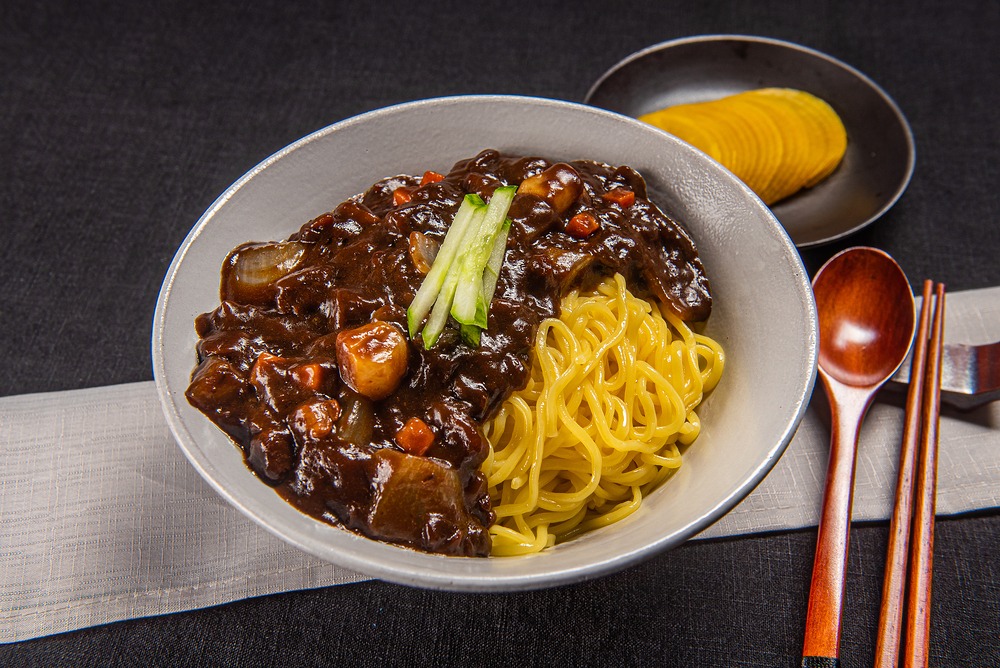
1. History
Jjajangmyeon originated in the early 20th century among Chinese immigrants who settled in Incheon’s Chinatown. They adapted the Chinese dish *zhajiangmian* to suit Korean palates by adding sweetness and a thicker, darker sauce. Over time, it evolved into one of Korea’s most iconic comfort foods, symbolizing nostalgia, celebration, and even single life — traditionally eaten on “Black Day” (April 14) by singles.
2. Origin
The dish was first served at **Gonghwachun**, a restaurant in **Incheon Chinatown**, around 1905. It spread nationwide through railway workers and port cities, becoming an everyday meal for both home dining and takeout culture.
3. Regional Variations
- Incheon-style: The classic version — dark, rich, and slightly sweet with caramelized onions.
- Seoul-style: Lighter and saltier, sometimes mixed with seafood.
- Chuncheon-style: Spicier with added chili oil.
- Modern: Variants include gan-jjajang (dry-style) and samseon-jjajang (seafood-style).
4. Ingredients
Typical components include:
- Fresh wheat noodles
- Black bean paste (chunjang), diced pork or beef
- Vegetables: onion, cabbage, zucchini, and potato
- Seasonings: soy sauce, sugar, garlic, and cornstarch slurry for thickening
- Garnishes: cucumber strips, fried egg, or green peas
These ingredients create a rich, glossy black sauce with sweet-savory depth and chewy noodles coated in umami.
5. Cooking Method
- Stir-fry diced pork with onions and vegetables.
- Add black bean paste and fry until fragrant.
- Add sugar, soy sauce, and water; simmer to thicken.
- Pour sauce over boiled noodles and mix well.
The secret lies in slow caramelization, which deepens both color and flavor.
6. Best Drink Pairings
- Soju: Cleanses the palate after the sweet-savory sauce.
- Beer: Refreshing and mild, complements fried onions.
- Makgeolli: Adds a creamy contrast to the salty umami.
- Cola or cider: A popular modern, non-alcoholic pairing that enhances nostalgia.