
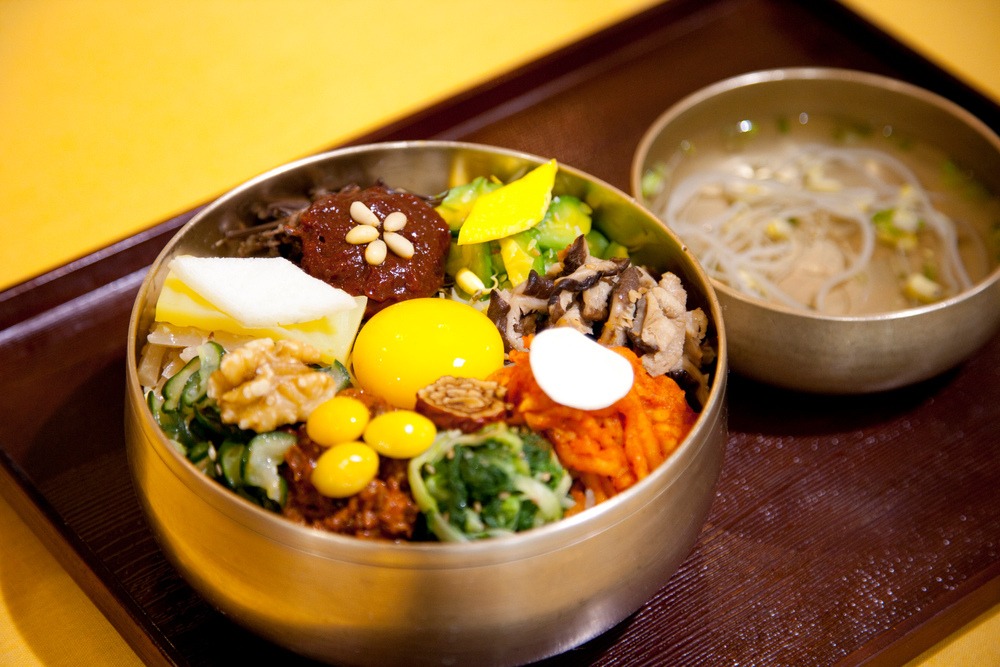
1. History
Jeonju Bibimbap dates back to the Joseon Dynasty, served to royalty and scholars during large feasts. It embodies Korea’s philosophy of harmony through color, flavor, and balance.
2. Origin
Originating in Jeonju, North Jeolla Province, the dish became renowned for its premium ingredients and refined presentation.
3. Regional Variations
- Jeonju-style: Includes raw beef, sesame oil, and beef broth.
- Jinju-style: Features soybean sprouts and spicy sauce.
- Tongyeong-style: Adds seafood for a coastal twist.
4. Ingredients
Typical components include:
- Steamed short-grain rice
- Seasoned vegetables (bean sprouts, spinach, fernbrake, carrot, zucchini)
- Raw beef, egg yolk, sesame oil, and gochujang
- Garnish: sesame seeds or nori strips
Together they produce a colorful, well-balanced bowl that harmonizes textures and flavors.
5. Cooking Method
- Prepare and season all vegetables separately.
- Place rice in a bowl and layer toppings.
- Add raw beef and egg yolk.
- Mix with gochujang before eating.
The dish balances nutrition, aesthetics, and symbolism.
6. Best Drink Pairings
- Makgeolli: Traditional, slightly sweet pairing.
- Cheongju: Light and aromatic.
- Baekseju: Complements sesame oil richness.