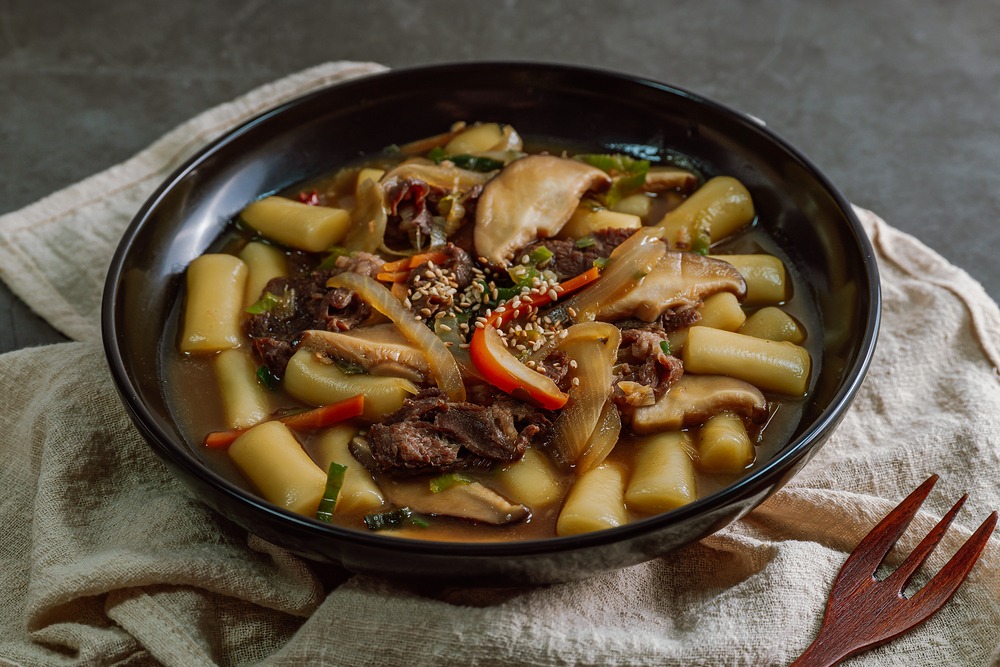
1. History
Gungjung Tteokbokki, literally meaning “Royal Court Rice Cake Stir-fry,” dates back to the Joseon Dynasty (1392–1897). It was served in the royal palace as part of court banquets and festive feasts, long before the modern spicy version became popular.
At that time, chili peppers had only recently been introduced to Korea, so the royal version used soy sauce instead of chili paste, resulting in a savory, mild, and elegant flavor. The dish symbolized luxury, as ingredients like beef, pine nuts, and sesame oil were rare and expensive.
2. Origin
The dish originated in the royal kitchens of Seoul (Hanseong) — the capital during the Joseon period — where court chefs created refined dishes to please the king and his guests.
Later, after the fall of the monarchy, recipes for Gungjung Tteokbokki spread to the public and evolved into regional household versions. The spicy red gochujang tteokbokki known today was inspired by this royal ancestor.
3. Regional Variations
While Gungjung Tteokbokki remains mostly associated with Seoul, variations can be found across the country:
- Seoul-style: Classic royal version made with beef, vegetables, soy sauce, and sesame oil; not spicy.
- Jeolla-style: Adds mushrooms and garlic chives, offering a more earthy and aromatic flavor.
- Gyeongsang-style: Slightly saltier, sometimes includes fish cakes or seafood for deeper umami.
- Modern fusion versions: May incorporate truffle oil, nuts, or Korean pear juice for a luxurious reinterpretation.
4. Ingredients
Typical ingredients include:
- Rice cakes (tteok) – cylindrical garaetteok, sliced into bite-size pieces
- Beef – usually sirloin or tenderloin, thinly sliced
- Vegetables – carrots, onions, mushrooms, green onions, bell peppers
- Seasoning – soy sauce, sugar, sesame oil, minced garlic, black pepper
- Optional garnishes – sesame seeds, pine nuts, egg strips
The combination produces a sweet-salty umami flavor with a glossy sheen, highlighting traditional Korean soy seasoning.
5. Cooking Method
- Marinate thinly sliced beef in soy sauce, sugar, garlic, and sesame oil.
- Stir-fry the beef until half-cooked, then add sliced vegetables.
- Add the softened rice cakes and a bit of broth or water.
- Simmer until the sauce thickens and coats the ingredients evenly.
- Finish with sesame oil and garnish with sesame seeds or egg strips.
The result is a harmonious balance of savory, slightly sweet, and nutty flavors, served warm.
6. Best Drink Pairings
Gungjung Tteokbokki pairs well with refined, light alcoholic beverages that enhance its soy-based umami flavor:
- Baekseju (herbal rice wine): Its ginseng and herbal notes complement the mild sweetness of the dish.
- Makgeolli (traditional rice wine): Offers a creamy texture and subtle tang that balance the soy sauce base.
- Soju (mild or premium varieties): Cleanses the palate after each bite of the savory sauce.
- Light white wine (e.g., Riesling or Sauvignon Blanc): The gentle acidity matches the dish’s delicate sweetness.