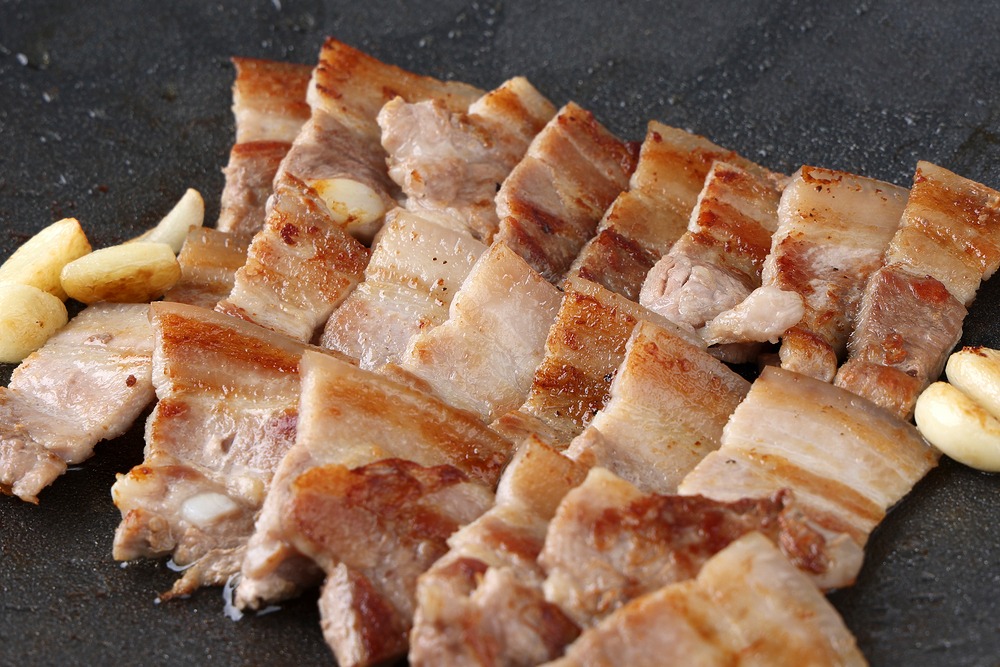
1. History
Grilled pork belly became a beloved Korean staple in the 1970s as pork production increased. Once considered a byproduct, pork belly evolved into a cultural dining ritual enjoyed across all social classes.
2. Origin
It gained fame in Seoul and Gyeonggi Province, where communal barbecue culture thrived. Over time, it became a centerpiece of Korean social dining.
3. Regional Variations
- Seoul-style: Grilled on metal plates, eaten with lettuce and ssamjang.
- Jeju-style: Uses black pork and thicker cuts.
- Busan-style: Served with salted shrimp and kimchi.
4. Ingredients
Typical components include:
- Pork belly slices, salt, black pepper, garlic
- Vegetables for wrapping: lettuce, perilla leaves, chili peppers
- Dipping sauces: sesame oil with salt, ssamjang (soybean chili paste)
These elements combine to deliver smoky richness balanced by freshness and spice.
5. Cooking Method
- Grill pork belly on a hot plate until golden and crisp.
- Cut into bite-size pieces.
- Wrap with vegetables and dipping sauces.
The sizzling aroma and interactive eating make it a quintessential Korean experience.
6. Best Drink Pairings
- Soju: Classic and perfect to cut the fatty flavor.
- Beer: Refreshing carbonation complements the grill.
- Makgeolli: Adds light creaminess to balance salt and fat.