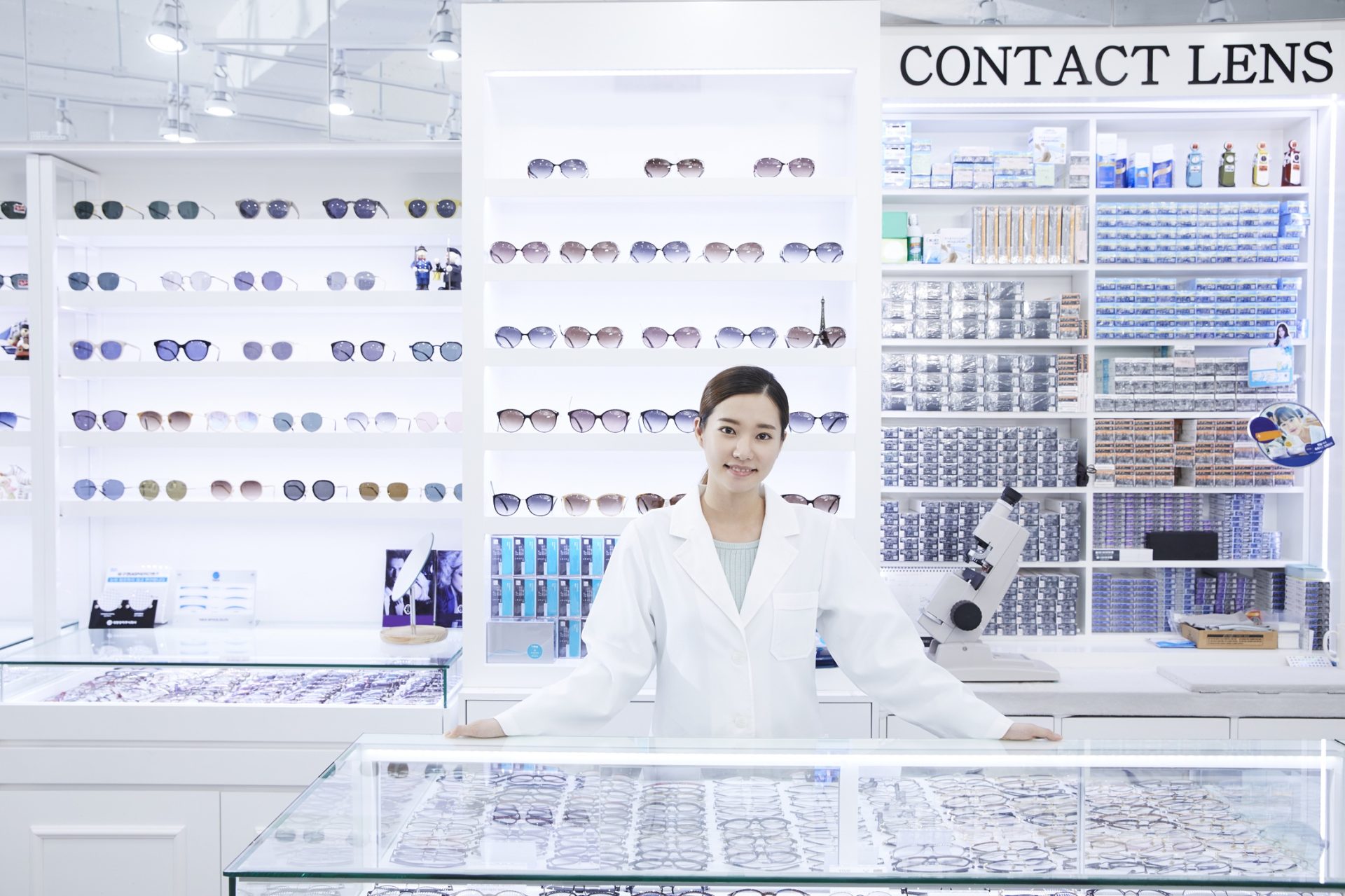
K-Optical Innovation, Powered by the Perfect Trio of Speed, Technology, and System DesignWhy can you get glasses made in Korea in the time it takes to finish a cup of coffee?
“Don’t go to Korea just for kimchi. Get a pair of glasses made.”
Among savvy international travelers visiting Korea, one unexpected destination has become a must-stop on the itinerary. Not Myeongdong’s cosmetics stores. Not Hongdae’s fashion shops. It’s the optical shop.
Search “Korean Glasses Experience” on YouTube. In videos with millions of views, foreigners all share the same reaction: shock.
“I can’t believe it. It took only 20 minutes from the eye exam to pickup!”
“A pair that would’ve cost me $500 in the U.S. didn’t even reach $100 here.”
“What are these machines? Did I just step into the future?”
In the U.S. and much of Europe, it is normal to schedule an optometry appointment, see a doctor, order glasses, and then wait. One week at best, sometimes two or even three. So what kind of magic are Korean optical shops performing to compress the entire process into just 30 minutes?
This report takes a deep dive into the uniquely Korean system behind optical retail: why it is built to be fast, how it stays accurate, and what exceptions and caveats travelers should absolutely check before assuming “30 minutes” applies to everyone.
1. The Secret of Speed (1):
The One-Stop System and a Revolution in Licensing
The most fundamental reason Korean optical shops are astonishingly fast lies in a structural difference in national licensing systems and scopes of practice. To understand this, we must compare Korea with Western countries such as the United States, the United Kingdom, and much of Europe.
1) The Western Model: Strict—and Often Inefficient—Division of Labor
(Optometrist vs. Optician)
In most Western countries, the process of getting glasses is highly segmented, sometimes to the point of inefficiency.
● Optometrist
A primary eye-care medical professional who performs eye examinations, diagnoses eye conditions, and issues prescriptions. Consumers must book an appointment at a clinic or hospital to see an optometrist. The eye exam fee alone typically costs USD 100–200, charged separately from the glasses.
● Optician
A technical specialist who works at an optical shop. Using the prescription written by the optometrist, the optician helps select frames and processes lenses. In many countries, opticians are legally prohibited from performing vision tests.
As a result, consumers must go through a long, fragmented process:
Appointment booking → travel → eye exam → prescription → travel again → frame selection → lens order → waiting period.
This division is designed for medical rigor, but it comes at the cost of time, convenience, and affordability.
2) Korea’s Integrated System:
The “Super-Powered” Licensed Optician
Korea operates under a fundamentally different model: the National Licensed Optician system.
In Korea, opticians graduate from a three- or four-year university program in optometry, pass a national licensing examination, and receive official certification from the Ministry of Health and Welfare. By law, a licensed Korean optician can perform all of the following tasks in one location:
Subjective refraction testing: measuring vision and determining lens power
Lens processing and assembly: cutting and mounting lenses into frames
Fitting and adjustment: tailoring the glasses to the customer’s face
Except for children under six years old (who require an ophthalmologist’s prescription), Korean consumers do not need a doctor’s prescription to get glasses. Vision testing and fabrication happen immediately, on site.
In other words, the eye exam, prescription, lens processing, assembly, and fitting are all completed in a single, seamless workflow—often by the same professional or within the same shop.
This true one-stop system is the first and most decisive reason why Korean optical shops can deliver finished glasses in as little as 30 minutes.
In-Store Processing Equipment and an Unmatched Lens Inventory
An integrated system alone cannot magically eliminate physical time. Behind the speed of Korean optical shops lies a powerful combination of advanced in-store machinery and a uniquely efficient logistics model.
1) Universal In-Store Ownership of Edging Machines
Eyeglass lenses are originally manufactured as round blanks. The machine that cuts these blanks precisely to match the shape of a chosen frame is called an edging machine.
In many overseas markets, edging machines are expensive and difficult to maintain and therefore are not installed in every store. Instead, optical shops send frames and digital measurements to a central processing lab. The lenses are cut off-site and shipped back. This process adds days or even weeks.
Korea operates on a completely different assumption.
Whether it is a flagship store in Gangnam or a small neighborhood shop in a rural town, Korean optical shops almost universally own high-performance automatic edging machines on site.
The moment a vision test is completed, the optician sends the data directly to the machine. Lens cutting begins immediately in the store’s back-room lab.
Cutting a single lens takes approximately two to three minutes.
This alone eliminates the single biggest bottleneck in the global eyewear supply chain: off-site processing.
2) An Unmatched Stock of Ready-to-Use Lenses
Even the fastest machine is useless without lenses.
Korean optical shops maintain massive in-store inventories, often stocking thousands of lens pairs organized by:
Prescription strength
Refractive index (thinness level)
Functional features (blue-light filtering, UV protection, etc.)
Coverage
Most shops can immediately accommodate over 90% of customers with common prescriptions, including typical myopia (−0.00 to −6.00D) and astigmatism (up to −2.00D), without placing a special order.
Strength of the Domestic Lens Industry
This system is supported by globally competitive Korean lens manufacturers such as Chemi and Daemyung. Because lenses are produced domestically at scale, supply is fast, stable, and cost-efficient.
3. [Checkpoint]
“Wait. Why Aren’t My Glasses Ready in 30 Minutes?”
Four situations where same-day pickup is not possible
Even in Korea, where “30-minute glasses” are the norm, there are cases where immediate pickup is physically impossible. These occur when a customer’s prescription falls outside the range of stock lenses kept in-store. In industry terms, these are called RX lenses (custom-made lenses).
That said, Korea’s definition of “slow” is still faster than what many countries consider “fast.”
1) High Astigmatism & Extremely High Myopia
(High-Power Prescriptions)
Situation
When prescriptions are unusually strong, typically myopia beyond −8.00 diopters or astigmatism exceeding −2.25 diopters, most shops do not keep these lenses in stock. This is because demand is limited.
Processing Time
Same day to 1 day
Thanks to Korea’s same-day courier culture (often motorcycle delivery), lenses ordered in the morning can frequently arrive from wholesalers by afternoon for evening pickup.
2–3 days
If the wholesaler also lacks stock and the lens must be manufactured at the factory, production usually takes two to three days.
(In many overseas markets, this can take several weeks.)
2) Progressive Lenses
(Multifocal / Presbyopia Correction)
Situation
Progressive lenses incorporate multiple focal powers into a single lens and are 100% custom-made. Precise measurements are required, including pupil position, frame shape, and reading distance. These lenses must be manufactured at the factory.
Processing Time
5–7 days
This timeframe reflects actual production and coating processes. Many Korean optical shops offer added convenience by shipping completed glasses directly to a customer’s hotel or arranging international delivery (EMS) after departure.
3) Prism Lenses
Situation
Prism lenses are prescribed for conditions such as strabismus or double vision (diplopia), where eye-alignment correction is required. These lenses demand high-precision customization.
Processing Time
3–5 days
4) Imported Premium Lens Brands
Situation
When customers request specific premium imported lenses from brands such as ZEISS, Rodenstock, HOYA, Nikon, Tokai Optical, or Essilor, particularly high-end or specialty lines, additional time is required.
Processing Time
2–3 days if stock is available at the Korean distributor
1–2 weeks if lenses must be sourced directly from headquarters in Germany or Japan (e.g., specialty glass lenses)
The Bottom Line
If your glasses are not ready in 30 minutes in Korea, it does not mean the system has failed.
It means your eyes required something beyond mass optimization.
Even then, Korea’s turnaround time for custom lenses remains among the fastest in the world, supported by efficient logistics, strong local manufacturing, and a customer-oriented service design.
4. Korea’s Differentiated Competitive Edge: The Experience
Foreign visitors do not fall in love with Korean optical shops simply because they are fast. Speed is only the entry point. What truly sets Korea apart is a rare combination of price, technology, service, and design, delivered as a seamless, end-to-end customer experience.
1) The Price Revolution
“It Pays for Your Plane Ticket. And More.”
Free Eye Examinations
In the U.S. or Europe, a comprehensive eye exam often costs USD 100 to 200 on its own. In Korea, when purchasing glasses, a full vision test conducted with hospital-grade equipment is typically completely free.
Affordable Lenses with Premium Features Included
Korean-made lenses rival German and Japanese products in quality, yet remain far more affordable. Options that often add significant cost overseas, such as blue-light filtering, UV protection, super-hydrophobic coating, and high-index thinning, are frequently standard features or available at minimal extra cost in Korea.
Overall pricing commonly lands at one-third to one-fifth of what customers would pay abroad.
2) A Futuristic Tech Environment
“It Feels Like a Cyberpunk City”
This is the moment many foreign YouTubers gasp.
Auto Ref-Keratometer (ARK)
A quick scan—chin placed, eyes focused on an image—produces an initial prescription estimate in seconds.
Digital Phoropter
Instead of manually swapping lenses, opticians fine-tune prescriptions electronically via remote control, enabling faster and more precise refinement.
3D Measurement & Bespoke Systems
Increasingly standard are tablet-based or 3D imaging systems that measure pupil position, frame tilt, and lens alignment down to 0.1 millimeters, creating a near-bespoke fit once reserved for luxury boutiques.
Here, technology is not hidden backstage. It is part of the show.
3) Open Display and Unlimited Fitting
In many Western high-end optical shops, frames sit locked behind glass. Customers must ask staff to unlock cases, creating both psychological distance and subtle pressure.
Korean shops operate differently.
Most use open-display layouts, with hundreds or even thousands of frames freely accessible. Customers are encouraged to try on as many as they like, take selfies, compare styles, and take their time—without sales pressure.
Once a frame is chosen, professional fitting is meticulous and free. Ear height, nose pads, temple angles, and balance are adjusted until the glasses feel weightless, stable, and secure.
4) Korean Jeong (情): The Culture of “Extras”
When the glasses are done, the shopping bag often feels unexpectedly heavy.
Along with the glasses, customers frequently receive:
a premium hard case,
multiple microfiber cleaning cloths,
anti-fog spray or cleaner,
even a small screwdriver kit for minor adjustments.
During the 15–20 minutes it takes to prepare the lenses, some shops offer complimentary drinks, ice cream, or popcorn.
This is not marketing gimmickry.
It is Jeong, Korea’s deeply ingrained culture of warmth, care, and giving just a little more than expected.
5. Conclusion: An Optician Is Not Just a Salesperson
The final point this report seeks to emphasize is the professionalism of Korean opticians. This is why many foreign visitors describe Korean optical shops not as retail stores, but as something closer to an eye clinic.
In Korea, a licensed optician is a healthcare professional. After majoring in optometry at a university, they undergo years of rigorous training in anatomy, physiology, geometrical optics, and eye diseases before passing a national licensing examination. Their role goes far beyond simply finding a prescription that “looks clear.”
Korean opticians analyze each customer’s lifestyle, including driving habits, screen time, and reading distance, and evaluate binocular vision function, assessing how both eyes work together. Based on this, they recommend the most appropriate lenses, balancing comfort, performance, and long-term eye health.
In short, Korean optical shops lead the world for four clear reasons:
Speed
Glasses ready in as little as 30 minutes, enabled by a one-stop licensing system and in-store processing.
Quality
Nationally licensed, university-trained opticians supported by high-quality domestic lenses.
Price
Free eye exams and glasses priced at a fraction of international costs.
Service
Pressure-free shopping, complimentary refreshments, meticulous fitting, and reliable after-sales and delivery support.
If you are traveling in Korea and wear glasses, make time to visit an optical shop. Even if your prescription requires custom lenses that take a few days, there is no need to worry. Your perfectly packaged glasses can be delivered directly to your hotel front desk.
With clearer vision, you will understand exactly why Korea is known as a country of speed and service. Short of laser eye surgery, this may be the fastest and most complete investment you can make for your eyes.