1. History
Sanchae Bibimbap originated as a humble mountain meal created by Buddhist monks and villagers who foraged wild herbs. With no meat allowed in temple cuisine, they used seasonal greens to build nutrition and balance. Over time, it became a symbolic Korean dish representing the harmony between nature, seasons, and spirituality.
2. Origin
The dish developed in mountainous regions like Jiri-san and Pyeongchang, where foraged vegetables were abundant. It reflects Buddhist temple food culture and Korea’s deep respect for natural ingredients.
3. Regional Variations
- Jeonju-style: Uses seasoned soybean sprouts and spicy gochujang.
- Pyeongchang-style: Highlights fresh wild greens with sesame oil and soy sauce.
- Temple-style: 100% vegetarian, often omitting garlic and chili.
4. Ingredients
Typical components include:
- Steamed short-grain rice (bap)
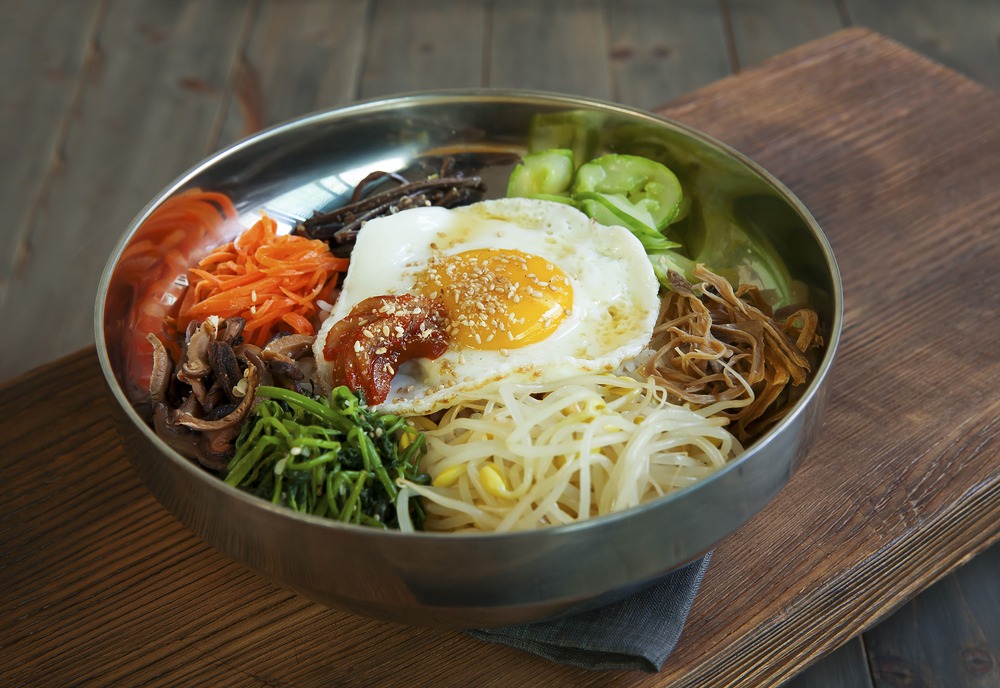
- Assorted mountain greens: fernbrake (gosari), aster (chwinamul), bellflower root (doraji), fiddlehead, spinach
- Sauce & oils: gochujang or soy-based dressing, sesame oil
- Garnishes & protein: sesame seeds; fried egg strips or tofu (temple style omits egg/garlic)
The combination delivers earthy, herbal aromas balanced by nutty sesame and a gentle sweet-spicy lift from the sauce.
5. Cooking Method
- Prepare and season each vegetable separately.
- Place rice in a bowl and arrange the vegetables on top.
- Add gochujang or soy-based sauce and sesame oil.
- Mix thoroughly before eating.
Each component retains its unique aroma, creating layered earthy flavors.
6. Best Drink Pairings
- Makgeolli: Its creamy acidity matches the rustic herbs.
- Baekseju: Enhances the dish’s subtle aromatics.
- Cheongju: Clean rice wine complements the mild seasoning.