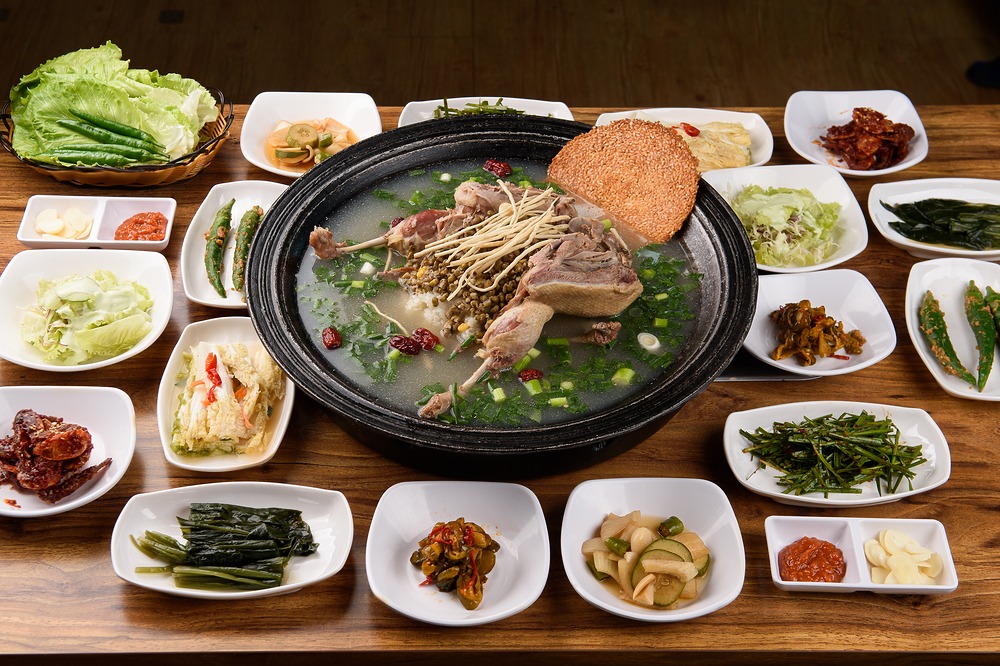
1. History
Ori-tang has long been regarded as a medicinal dish in Korean cuisine, prized for its ability to restore stamina and energy. Traditionally consumed during the summer months, it reflects the belief that eating hot, nourishing food helps balance internal energy — a concept known as iyeolchiyeol (fighting heat with heat).
2. Origin
The dish originated in Jeolla Province, where duck farming was common and perilla seeds were abundant. The hearty, peppery soup became a regional specialty, eventually spreading across Korea as a nutritious and comforting meal.
3. Regional Variations
- Jeolla-style: Spicy and nutty, featuring perilla seeds and chili paste.
- Gangwon-style: Clear and mild, highlighting the duck’s natural richness.
- Seoul-style: Lighter and less spicy, often served with noodles or rice.
4. Ingredients
Typical components include:
- Duck meat (whole or cut pieces)
- Perilla seed powder, soybean paste, garlic, ginger, onion
- Red chili flakes, green onions, and occasionally potatoes or mushrooms
The perilla seeds give the broth a nutty aroma and creamy texture.
5. Cooking Method
- Boil duck pieces briefly to remove impurities.
- Add soybean paste, garlic, and ginger to make the base broth.
- Simmer for 1–2 hours with perilla seed powder and vegetables.
- Adjust seasoning with salt and chili flakes.
- Serve hot with rice and kimchi.
The long simmering time enriches the flavor while softening the duck meat.
6. Best Drink Pairings
- Makgeolli: Its acidity balances the richness of duck fat.
- Baekseju: Enhances the herbal depth of the broth.
- Soju: Complements the spicy, savory profile for a clean finish.