History
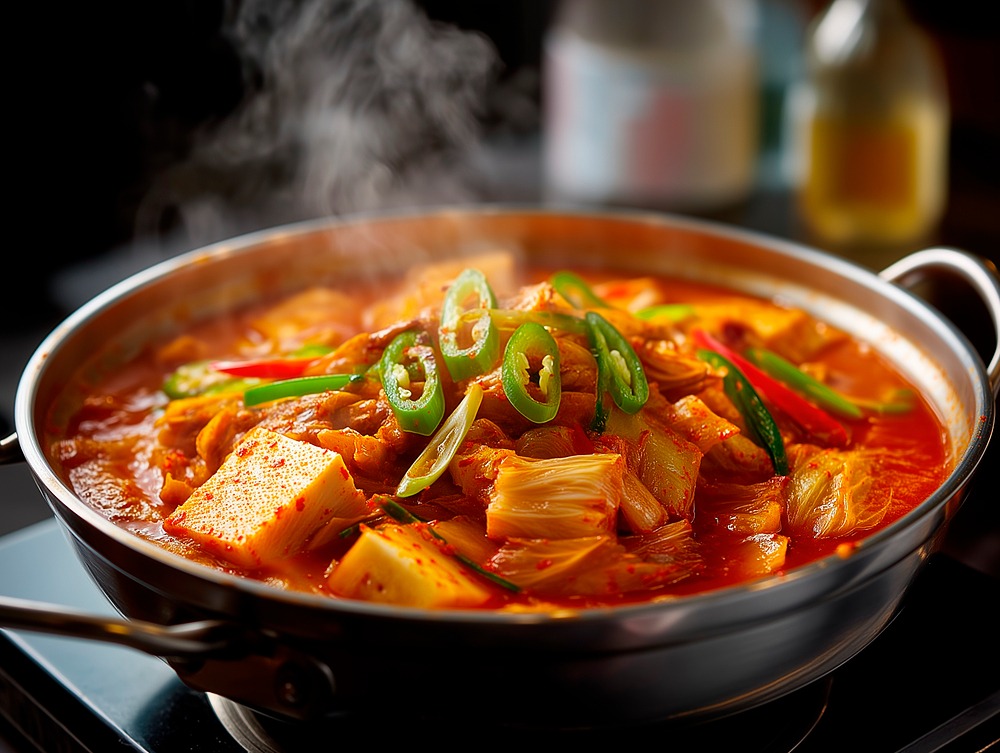
Kimchi jjigae (김치찌개) emerged as a staple comfort food in Korea during the early 20th century, when fermented kimchi became widespread as a preserved food for long winters. The dish reflects Korea’s resourceful culinary tradition — using aged, sour kimchi that might otherwise be discarded, simmered with pork or anchovy broth for depth and warmth.
Origin
Rooted in Korean home cooking rather than royal cuisine, kimchi jjigae is believed to have originated in rural households. It embodies jeong — the Korean sense of communal warmth — as families shared the stew from a single bubbling pot at the center of the table.
Regional Variations
- Seoul/Gyeonggi Province: Typically mild and clean-tasting, often made with tofu and pork belly.
- Jeolla Province: Richer and spicier, sometimes including fermented seafood like saeu-jeot (salted shrimp).
- Gyeongsang Province: Boldly seasoned with more red chili powder and garlic.
- Gangwon Province: Uses anchovy or pollack broth for a lighter, coastal flavor.
- Jeju Island: Often features seafood such as mackerel or tuna instead of pork.
Key Ingredients
- Aged kimchi (ideally 1–2 months fermented)
- Pork belly or canned tuna
- Tofu and green onions
- Gochugaru (Korean red chili flakes)
- Garlic, onion, and soy sauce
- Anchovy or kelp broth
Cooking Method
1. Sauté chopped kimchi and pork in sesame oil until fragrant.
2. Add broth (anchovy, pork bone, or water).
3. Stir in gochugaru and seasoning, then simmer for 15–20 minutes.
4. Add tofu and green onions near the end.
5. Serve bubbling hot in a ttukbaegi (earthenware pot) with steamed rice.
Best Alcohol Pairings
- Soju: Balances the spiciness with its smooth, slightly sweet finish.
- Makgeolli (Korean rice wine): Its creamy texture and mild sweetness complement the tangy, fermented kimchi flavor.
- Beer (especially light lagers): Refreshes the palate between bites of the rich, spicy stew.